
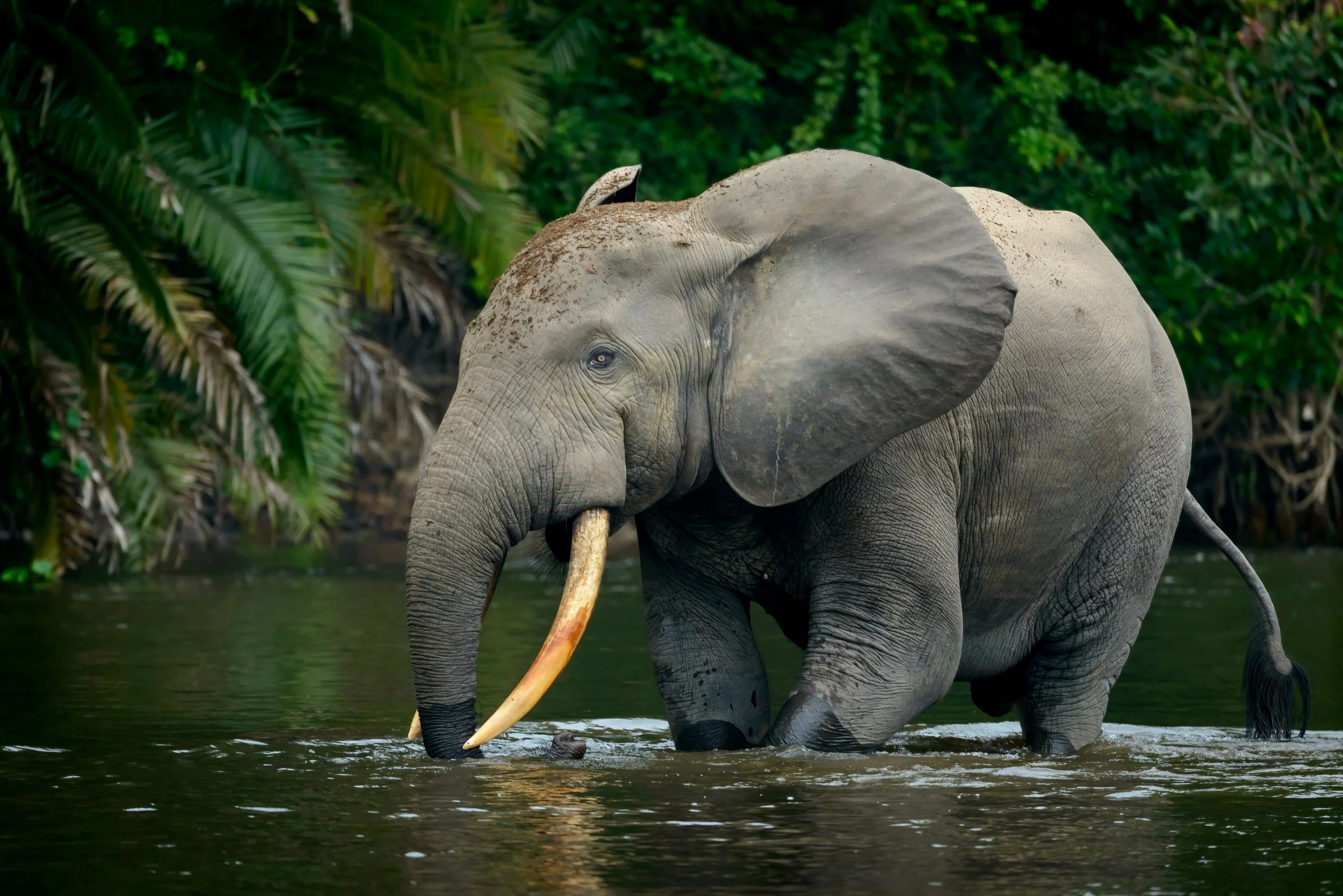
Minkebe National Park, Gabon
The GC Project is centered on Minkébé National Park in northeastern Gabon, one of the largest protected areas in the country and historically home to the highest forest elephant densities recorded in Central Africa. Minkébé forms a key component of the Dja Rainforest Complex and wider TRIDOM Conservation Landscape—both of the highest priority for African Forest Elephants.
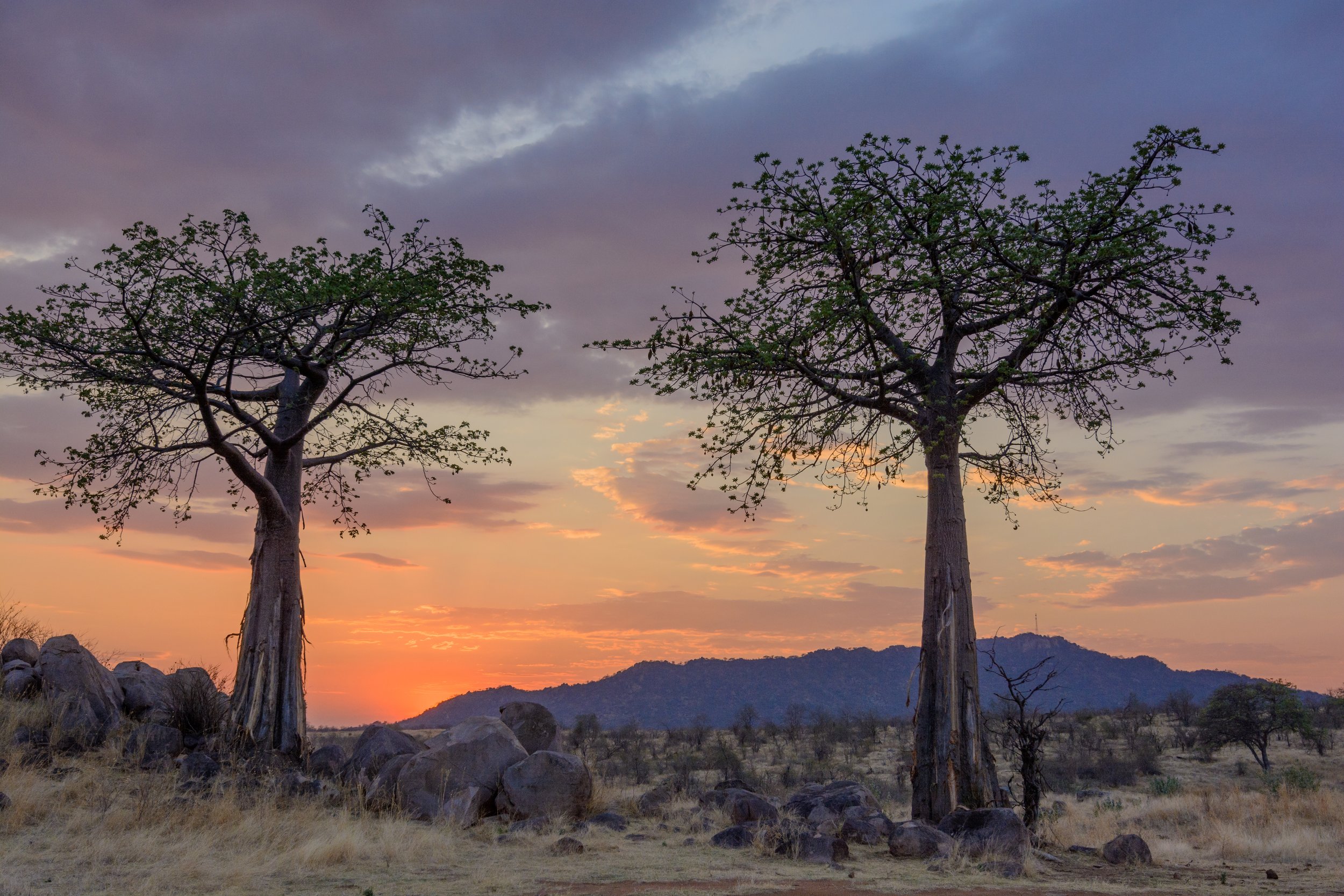
Ruaha National Park, Tanzania
Ruaha National Park is a national park located in Tanzania. In 2008, the Usangu Game Reserve and other important wetlands were added to the park, increasing its size to about 20,226 km² (7,809 sq mi). The park is about 130 km (81 mi) west of Iringa. The park is a part of the 45,000 km² (17,000 sq mi) Rungwa-Kizigo-Muhesi ecosystem [2], which includes the Rungwa Game Reserve, the Kizigo and Muhesi Game Reserves, and the Mbomipa Wildlife Management Area.

Ngorongoro World Heritage Site, Tanzania
The Ngorongoro Conservation Area (8,292 km2) in northern Tanzania represents one of the world’s greatest and most important reservoirs of large mammal biodiversity, and also contains one of the most important paleoanthropological sites in the world.

Murchison Falls National Park, Uganda
Murchison Falls National Park is best known for the most powerful waterfall in the world, which roars with such intensity that the ground trembles around it. But with over 70 mammal and 450 bird species, it is also a critical area for African biodiversity.

Mana Pools World Heritage Site, Zimbabwe
The 220,000-hectare Mana Pools National Park, a UNESCO World Heritage Site, lies in the Lower Zambezi Valley of Zimbabwe, part of a vast unfenced wilderness of over a million hectares where wildlife roams free.

Dja Rainforest Complex, Cameroon
In the southern reaches of the Central African country of Cameroon, near the borders with Gabon and the Republic of the Congo, lies a primeval rainforest called Dja. Here, Global Conservation is entering into our first GC Projects in Central Africa, where we will deploy Global Park Defense to address critical threats.

Kidepo Valley National Park, Uganda
An oasis in the semi-desert, Kidepo Valley National Park covers 1,442 square kilometers of the spectacular Narus Valley. Dramatic mountains and rocky outcrops surround beautiful expanses of savanna and forest.