GC in the News: Opinion-Cambodia Isn’t Ready for India’s Tigers
Data from one comprehensive survey of the relocation landscape by the US-based Global Conservation shows that there is simply not enough large-bodied prey—a prerequisite for tigers—in the intended release area.
Oringinal article by Nirmal Ghosh for The Print
Few wildlife experts familiar with Cambodia’s ground realities think that exporting wild tigers from India under the 2022 MOU is a good idea.
Last year, India’s former Ambassador to Phnom Penh, Devyani Khobragade, said the introduction of wild tigers from India would take place this year. Thus far, however, there is no sign of it. On being asked for the status of the project, a source in the Indian government responded, saying that the “process… has started… but no translocation has happened yet.” They added that India’s Ministry of External Affairs was awaiting reports from India’s Ministry of Environment and Forests.
This apparent delay is not a bad thing; it gives more time to the proposed relocation site—Cambodia's sprawling Cardamom landscape—to recover in every respect, from prey to protection, before the tigers arrive.
The risk is that the export project could proceed anyway, for diplomatic and geopolitical reasons. Once underway and spun as a landmark conservation initiative, it would be difficult to abandon—leaving the tigers to languish in an enclosure with little hope of release into the wild, or, if they are prematurely released, potentially to die from one reason or another.
Neither a permanently captive situation nor releasing the tigers and risking their lives will serve wildlife conservation or biodiversity restoration objectives. The operation may, on the other hand, become a diplomatic embarrassment and potentially elicit public backlash in India.
“Tigers are not going to arrive in the next 6 to 12 months, but I do think in the medium to long term it (introducing tigers) is possible,” said Thomas Gray, who runs the World Wildlife Fund’s Tigers Alive program and has 15 years of experience in Cambodia. He is also the lead author of a study on tiger reintroduction opportunities across the species’ historic range.
“I feel the threat of direct poaching of tigers is relatively limited due to the strong law enforcement approach of Wildlife Alliance,” he told me.
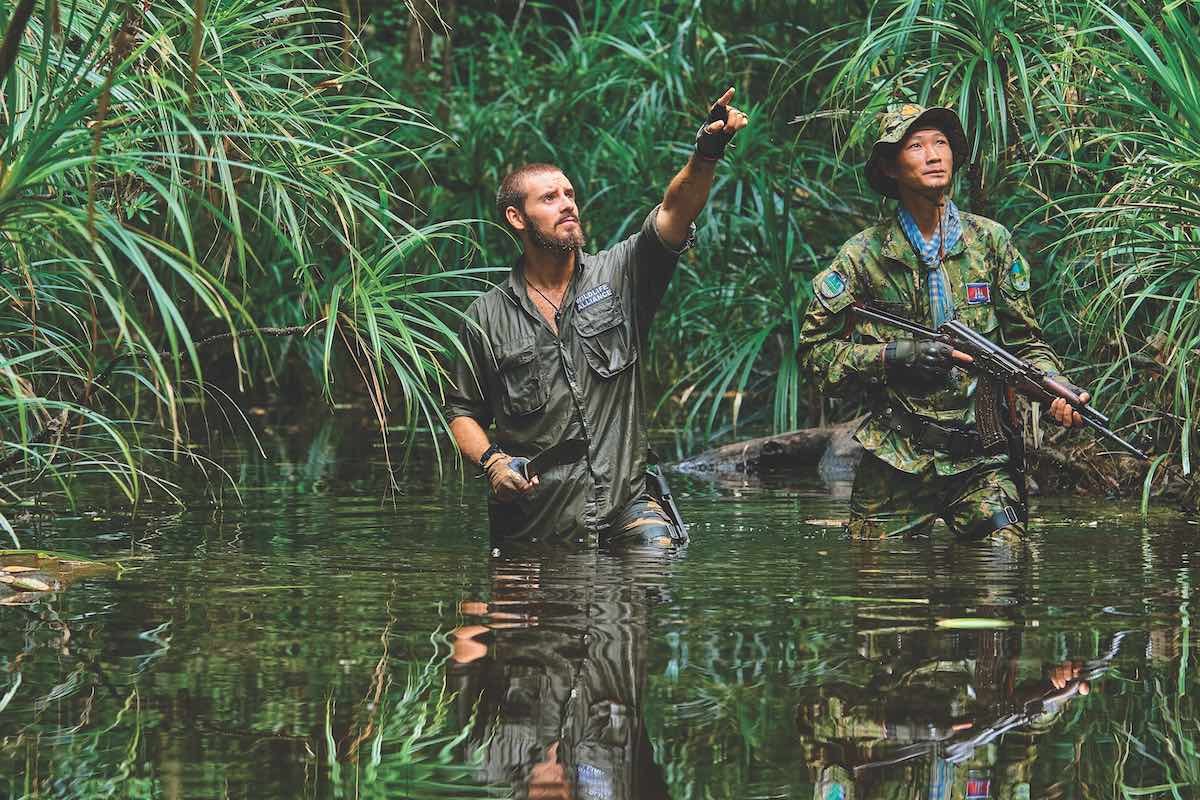
Wildlife Alliance is a US-based organization operating in Cambodia, founded and run by Dr. Suwanna Gauntlett, heiress to the Upjohn pharmaceutical fortune, that has been advocating, funding, and working on the introduction project for some years.
“There are two big challenges—is there sufficient prey, and sufficiently varied prey, that would support a long-term breeding population?” Gray said. “Those two questions remain unclear.” He added that the landscape has strong potential, but the focus needs to be on scaling up prey recovery with the reintroduction and translocation of sambar and wild pig.