Komodo National Park Rangers Clear All Poaching from the West Side of the Park
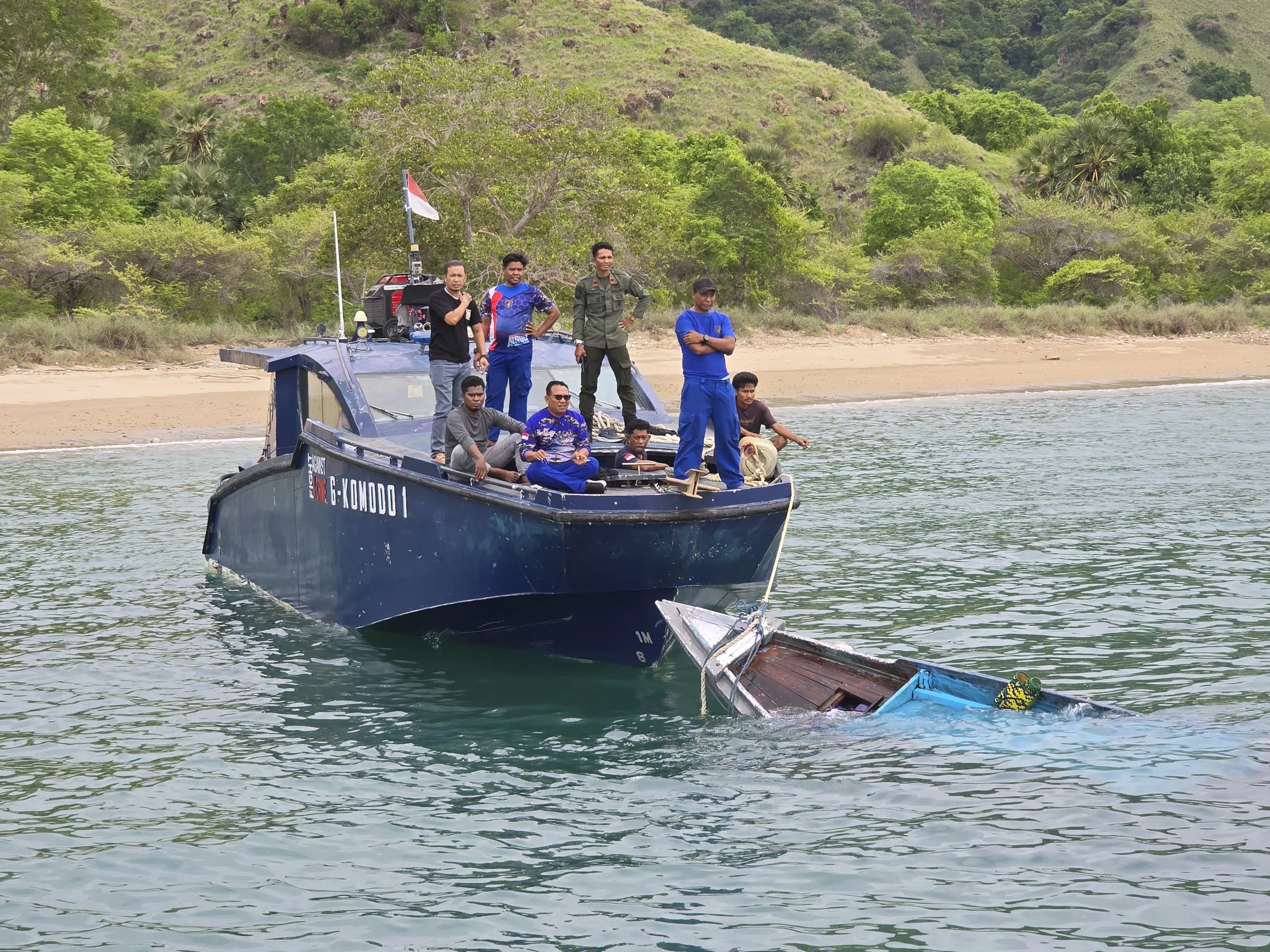
A poacher’s boat filled with illegal materials was secured during a law enforcement operation as evidence.
Technology, Partnerships, and Persistence: How Integrated Conservation Efforts Combated Deer Poaching in Komodo National Park
The Komodo dragon, the world's largest lizard, is endemic to East Nusa Tenggara, Indonesia, and is classified as Endangered on the IUCN Red List. The long-term survival of the species depends on maintaining a healthy ecosystem, particularly the availability of key prey species such as the Timor deer, which constitutes one of its primary food sources.
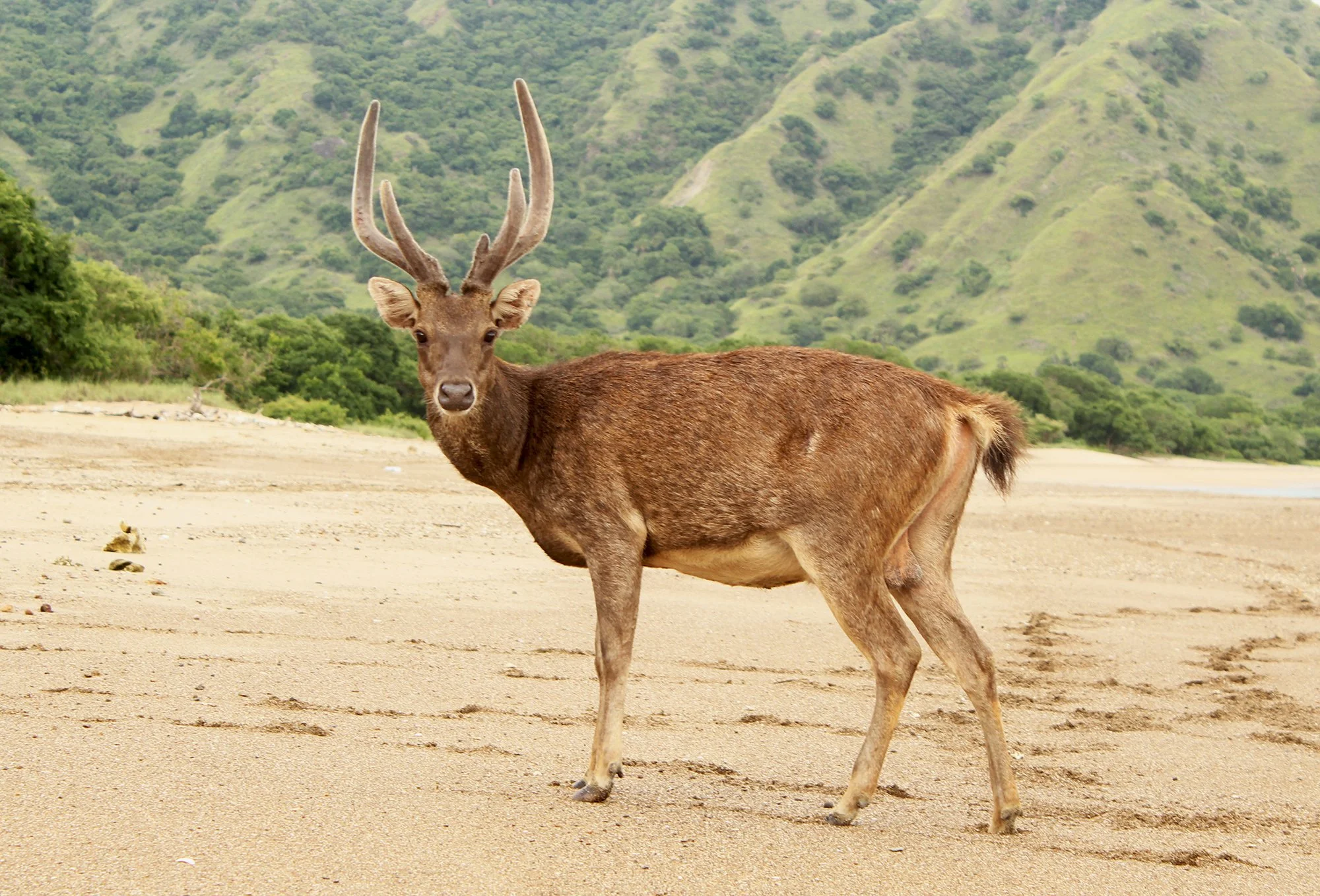
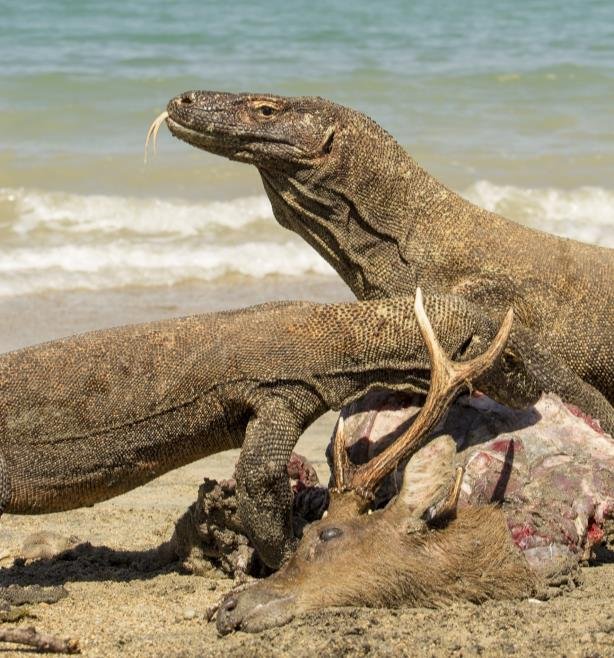
History has demonstrated the consequences of deer depletion in Komodo National Park. During the 1970s and early 1980s, intensive deer poaching on Padar Island caused the deer population to collapse, ultimately leading to the local extinction of Komodo dragons on the island by 1985. Following the establishment of Komodo National Park and the construction of a permanent ranger station on Padar Island, protection efforts enabled deer populations to recover, allowing Komodo dragons to naturally recolonize the island. This experience underscores a fundamental conservation principle: protecting Komodo dragons requires protecting the ecosystems and prey populations that sustain them.
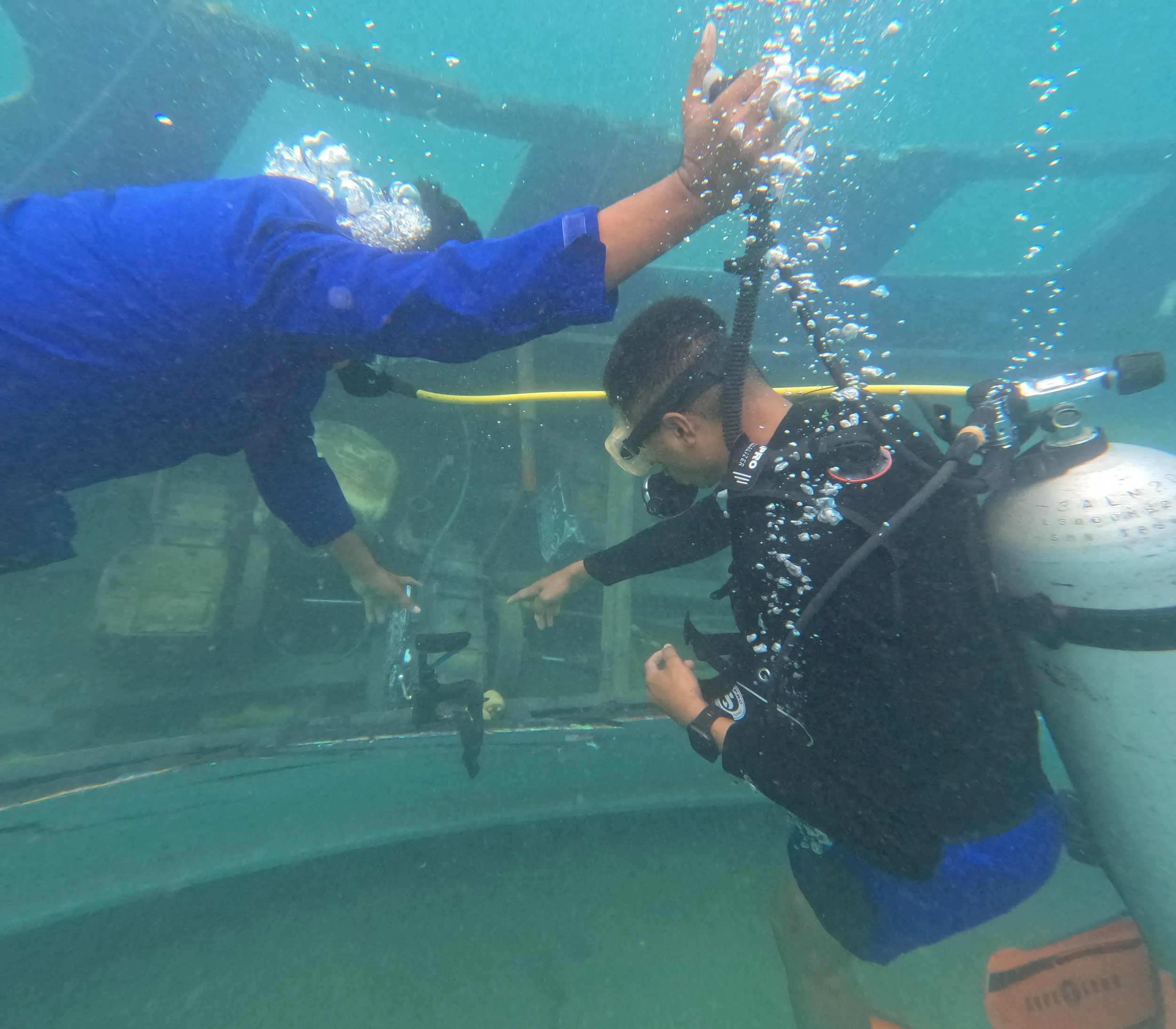
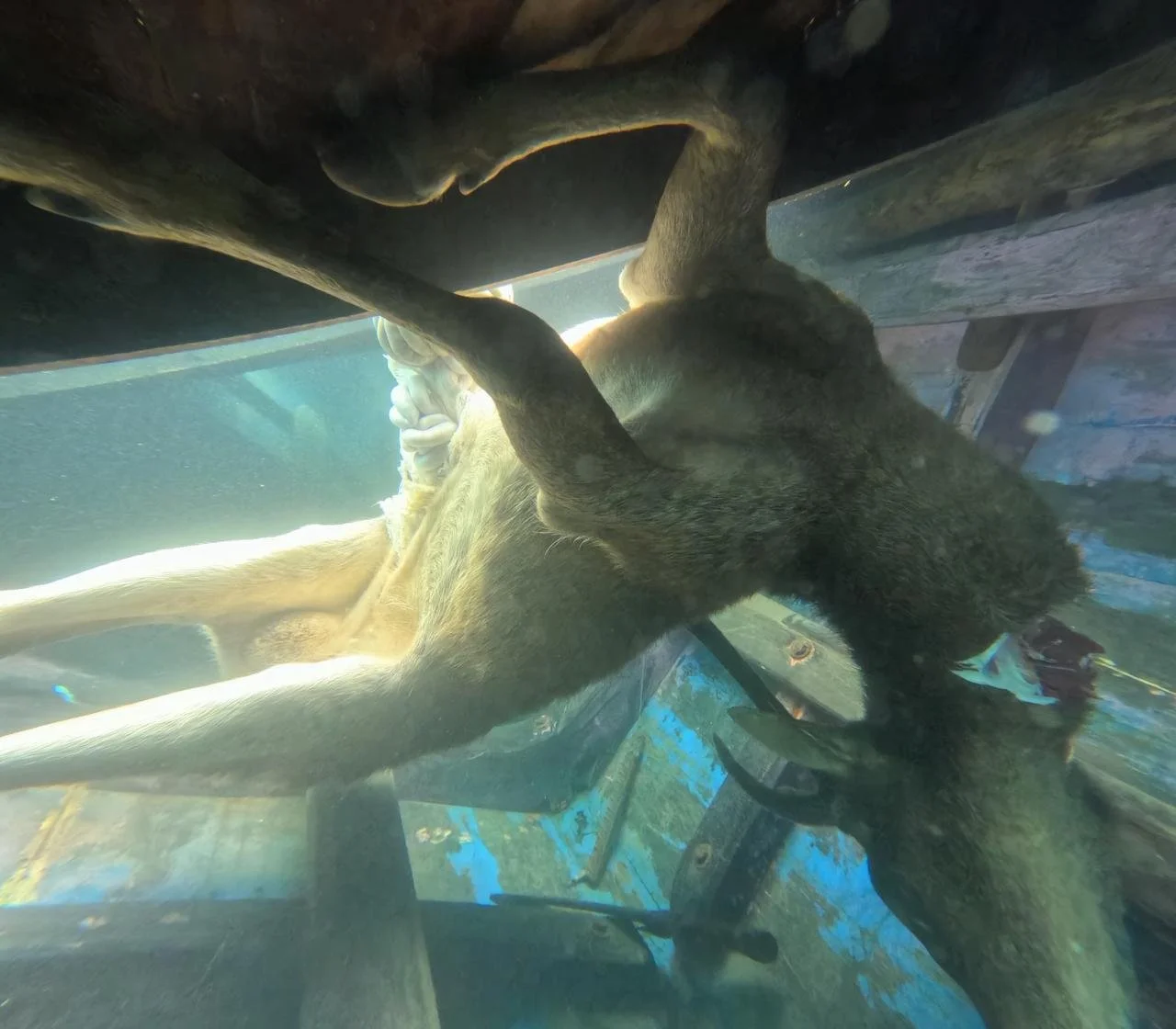
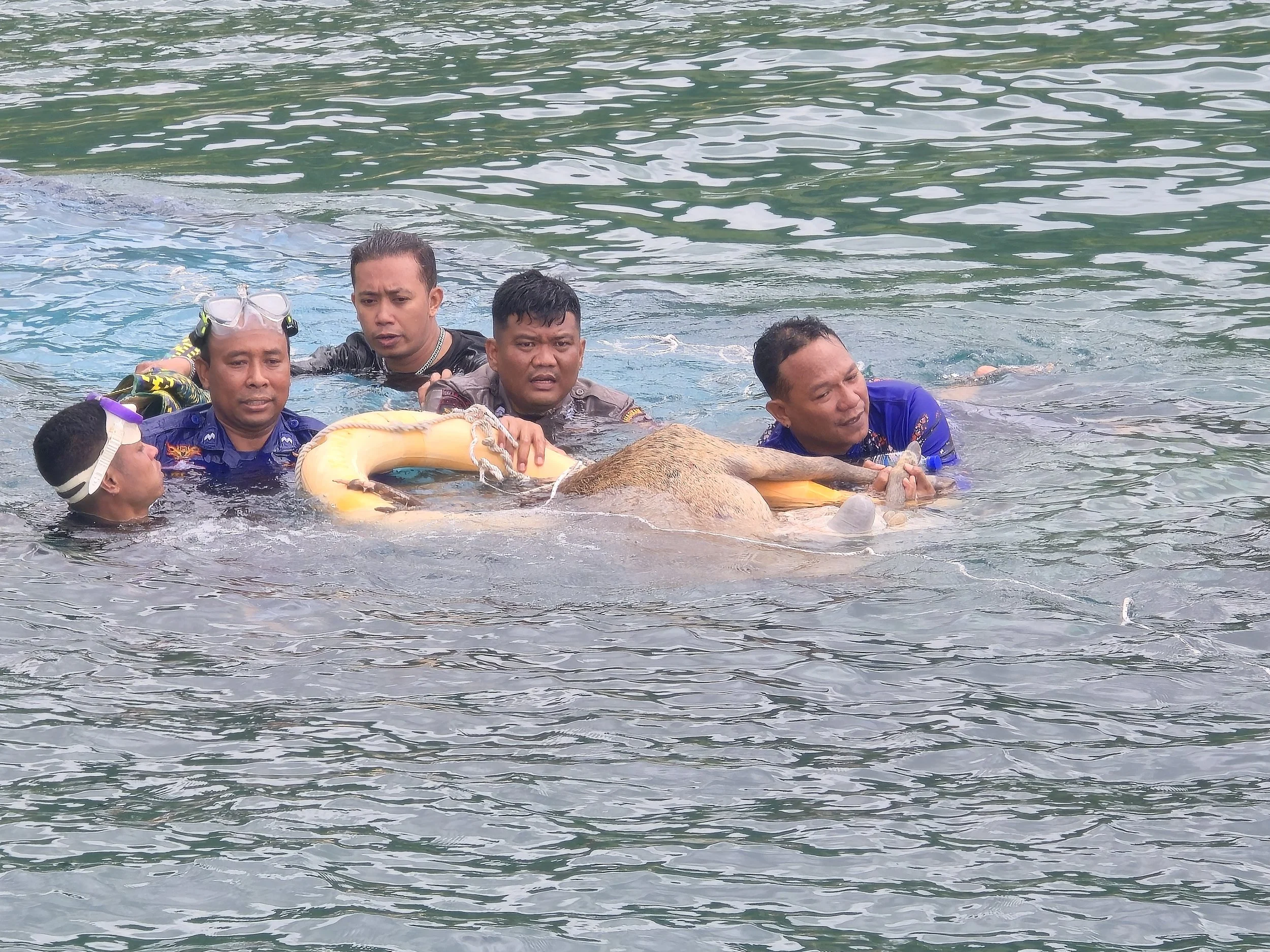
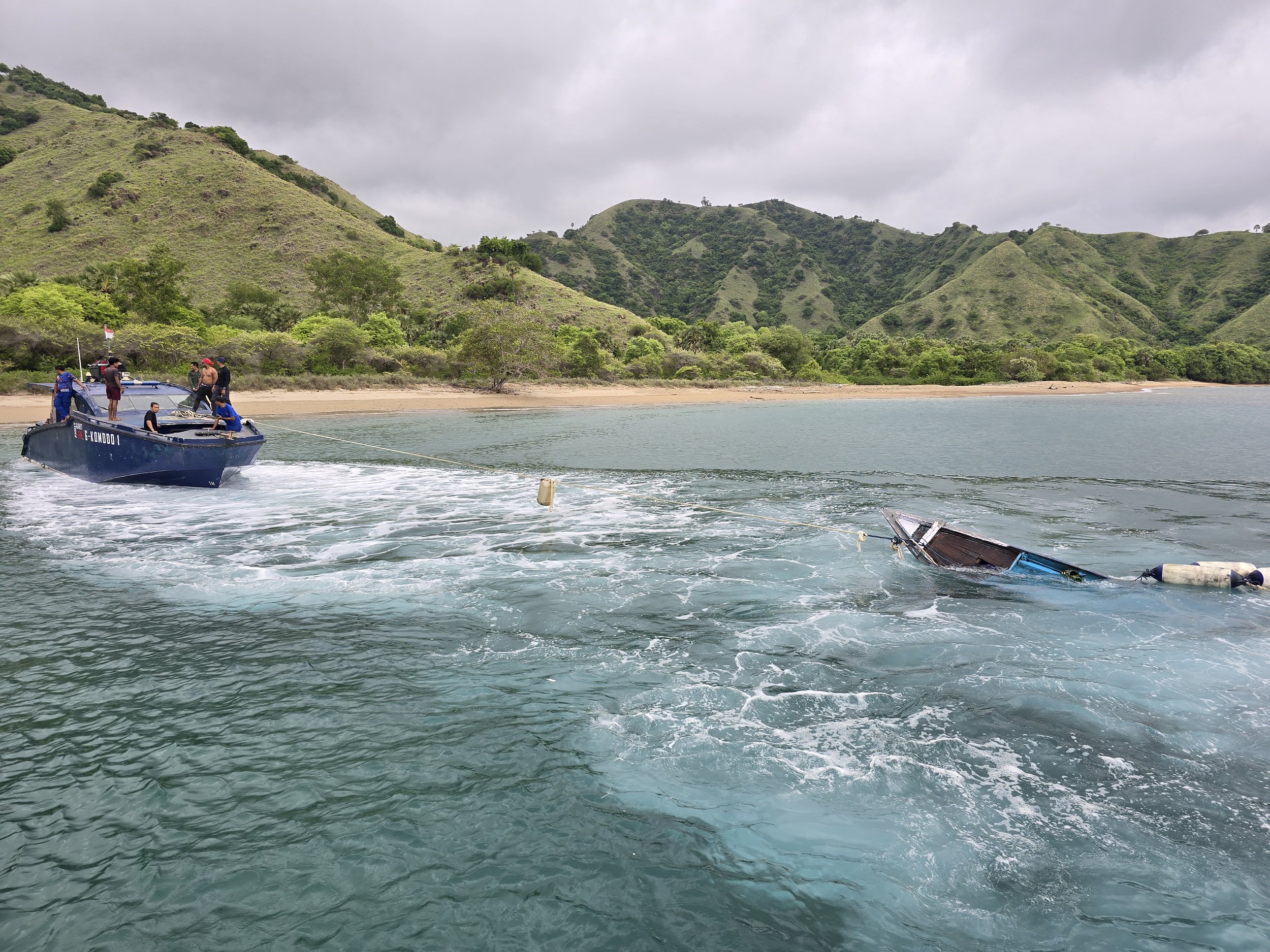
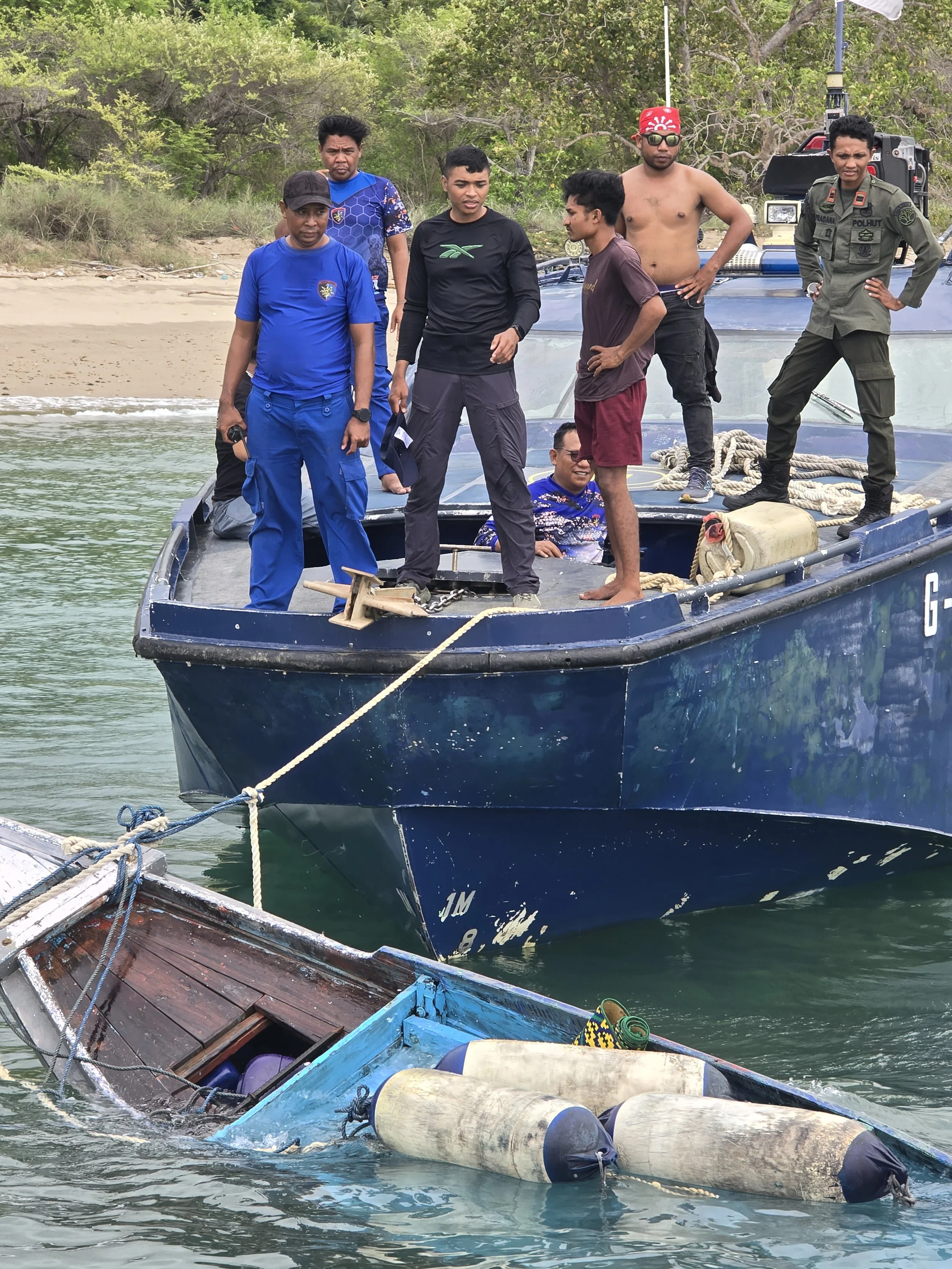
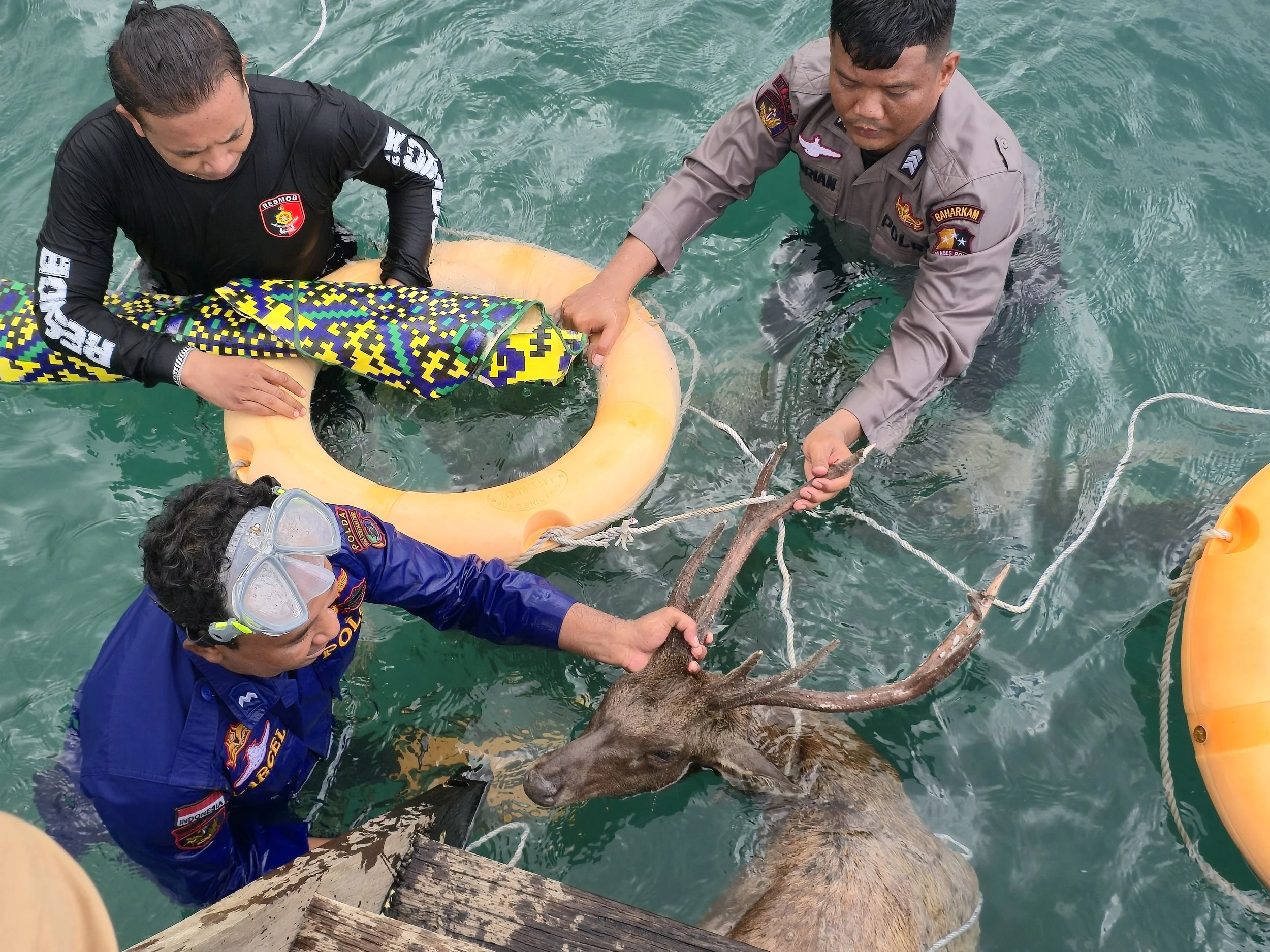
The operation team dived to recover additional evidence, including firearms, bullets, and poached deer, from the sunken poacher’s boat.
In recent years, similar threats have emerged in western Komodo Island, where illegal deer poaching continues to threaten prey populations and, consequently, Komodo dragons. However, protection and law enforcement efforts have been constrained by the area's remoteness, rugged terrain, and limited surveillance capacity.
In 2021, the Komodo National Park Authority launched an integrated initiative to strengthen protection in Komodo National Park, in partnership with the Komodo Survival Program (KSP) and with support from Global Conservation (GC). The program introduced SMART Patrol to improve patrol planning, field data collection, and threat detection, while monitoring data identified western Komodo Island as one of the highest-risk areas for illegal deer poaching. Continued support from GC also strengthened field protection through the construction of a ranger station and dormitory.
Technology became a key component of this approach. Camera traps, VTOL drones, and long-range CCTV systems were deployed to monitor remote landscapes more effectively, providing critical intelligence on where, how, and when poachers operated, enabling more targeted and effective law enforcement.

VTOL surveillance drones cover large areas in short time.
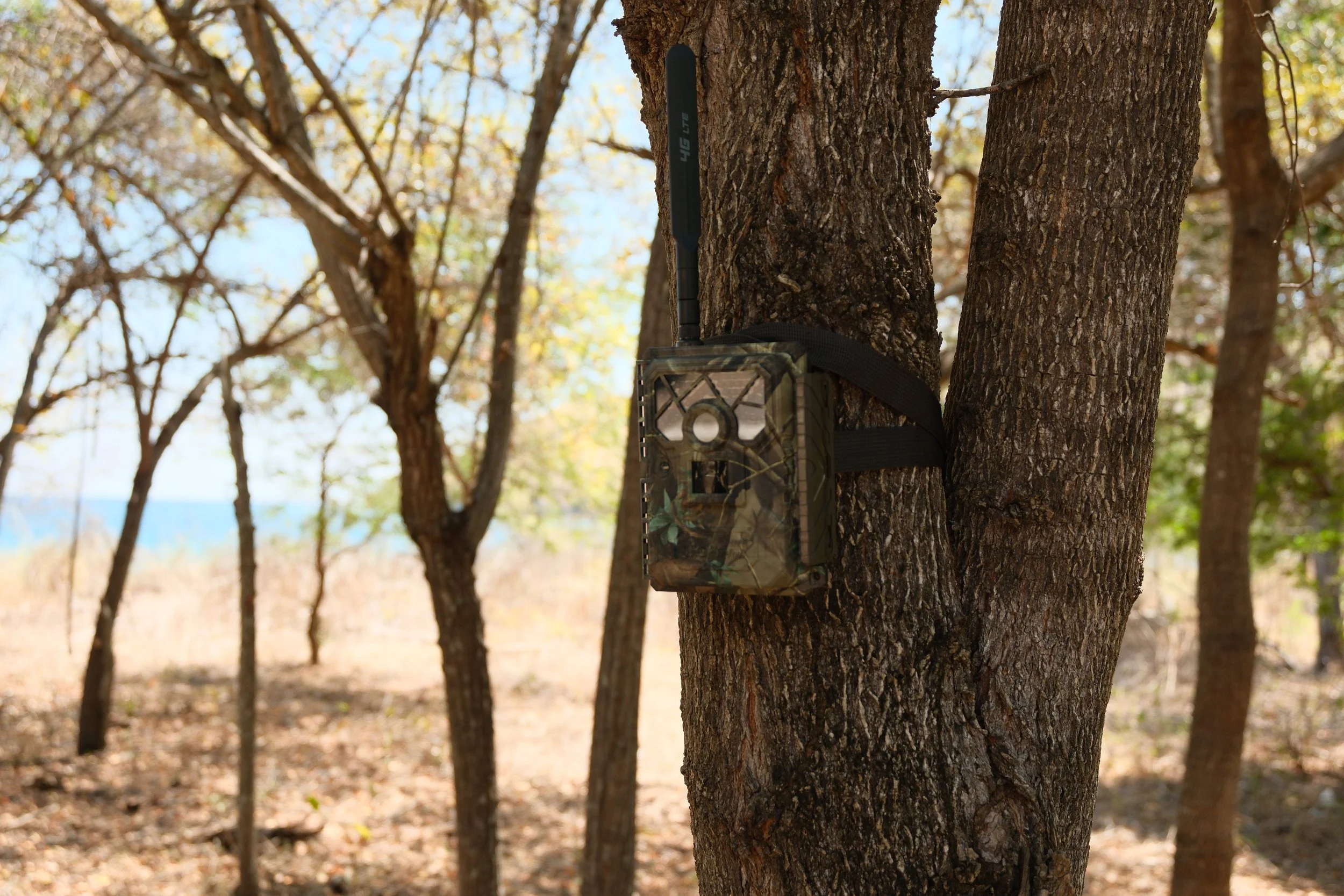
Cellular camera trap.
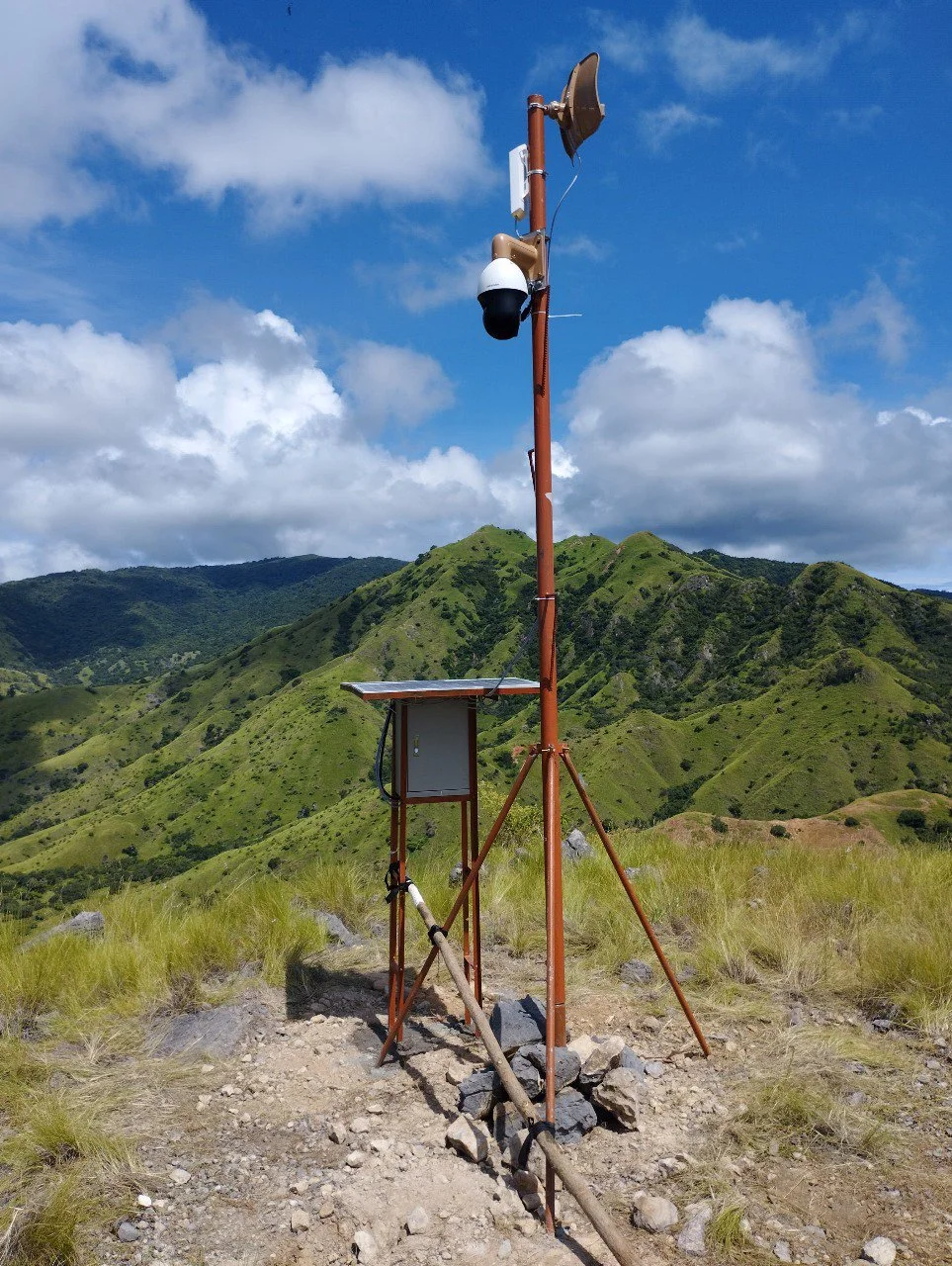
Long range CCTV in a high-risk poaching area.
From 2023 to 2025, efforts focused on strengthening an intelligence-based surveillance system that generated real-time intelligence on poachers' movement patterns, access routes, operating times, and vessels, enabling more effective and targeted law enforcement operations.
In early June 2025, CCTV detected suspicious activity. Based on the information gathered, the joint enforcement team conducted its first interdiction attempt. However, authorities' coordination challenges and the long distance from Labuan Bajo have made the attempt unsuccessful and the perpetrators escaped.
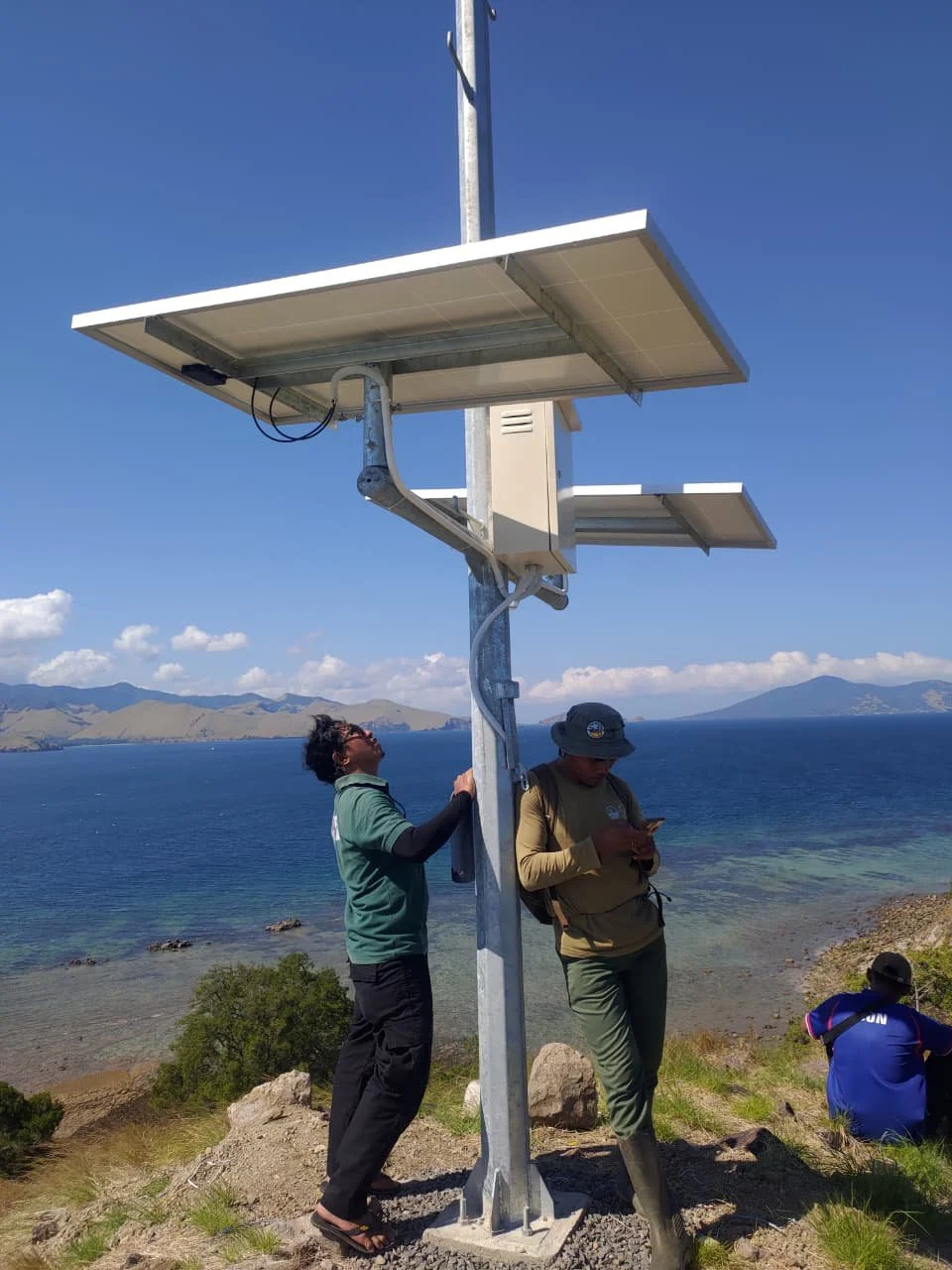
Expanding surveillance tools in vital areas.
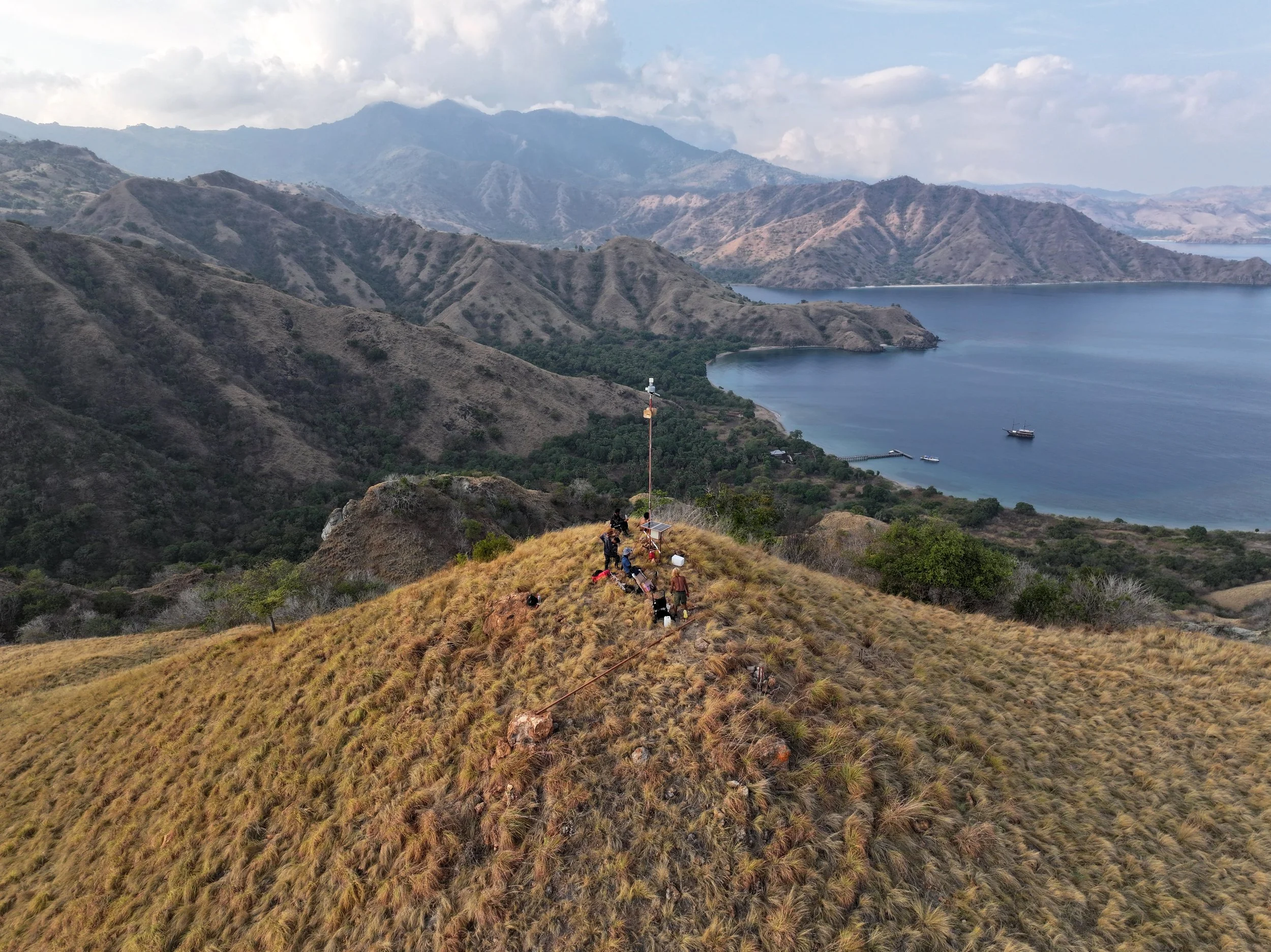
The deployment of surveillance uphill enhances the coverage.
Lessons from the initial operation strengthened coordination across law enforcement agencies. In the subsequent operation, the team exchanged gunfire with armed poachers and disrupted the poaching attempt, recovering a freshly poached deer as evidence. However, poor weather and limited nighttime visibility allowed the suspects to escape, highlighting the need for a more strategic, intelligence- and technology-driven approach.
Over the following months, the joint team from Komodo National Park, GAKKUM (Law Enforcement Agency of the Ministry of Forestry), and the Indonesian National Police expanded the intelligence investigation through field inquiries on Sumbawa Island and social media monitoring. These efforts led to the identification of key suspects, verification of their roles, and tracking of their movements and vessels, enabling a strategic and targeted enforcement operation.
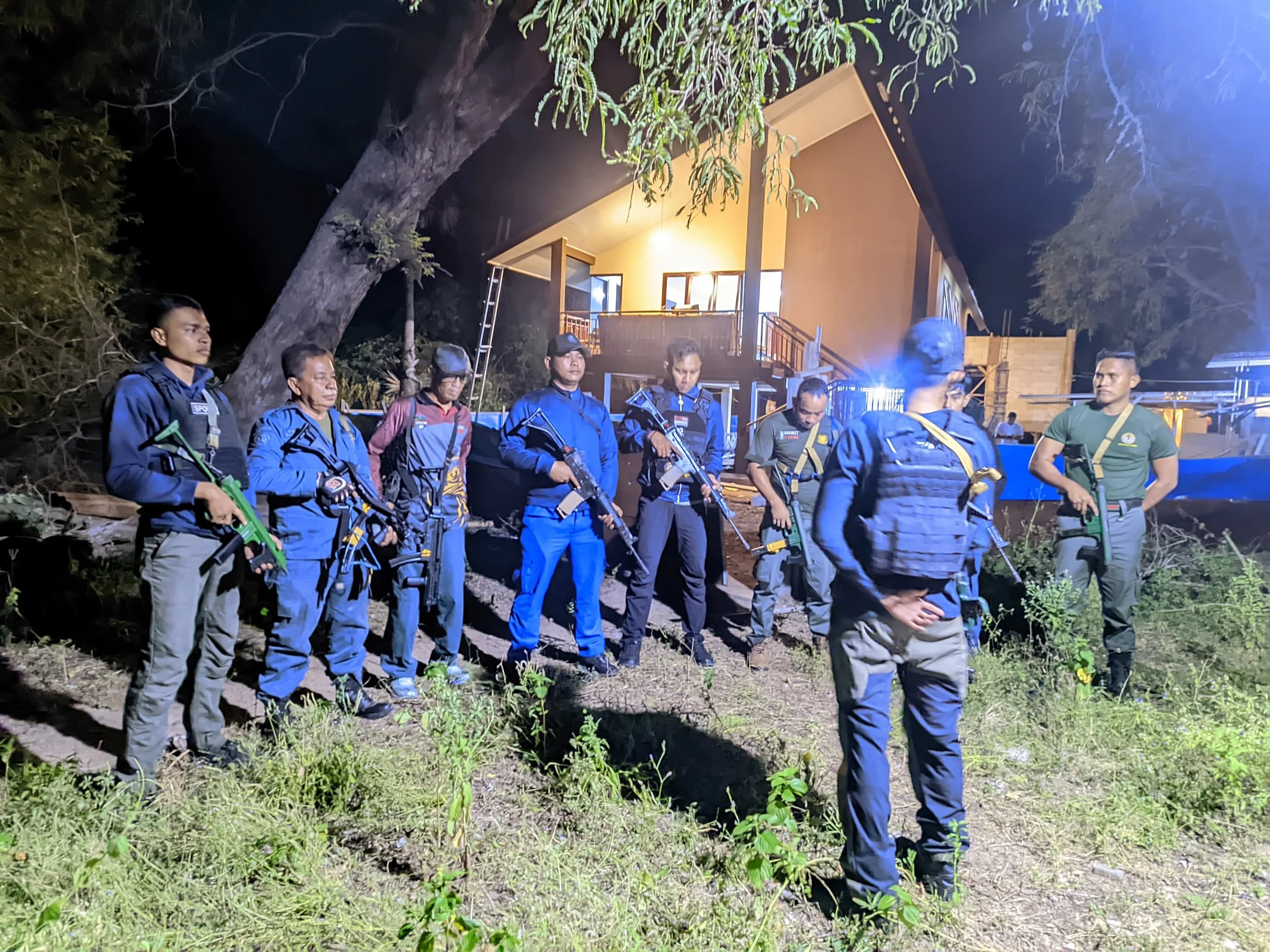
Nighttime operation in West Komodo.
In December 2025, the joint law enforcement team successfully placed a tracking device on the suspect boat, allowing them to monitor the poachers' movements in real-time before they reached KNP areas. This provided sufficient time to carefully plan and coordinate a strategic operation, overcoming the challenges encountered during the previous attempts. During the operation, the team encountered armed resistance, resulting in an exchange of gunfire. Despite the dangerous situation, the joint team has successfully sunk the poachers' boat and arrested three suspects from Bima Regency, West Nusa Tenggara. Several other suspects escaped and remain on the wanted list.
The successful arrests marked a significant milestone, but the operation remains ongoing. GAKKUM, in coordination with the West Nusa Tenggara Regional Police, continues intelligence-led enforcement efforts to locate and apprehend the remaining suspects. This sustained collaboration reflects a long-term commitment to dismantling the poaching network and bringing all perpetrators to justice.
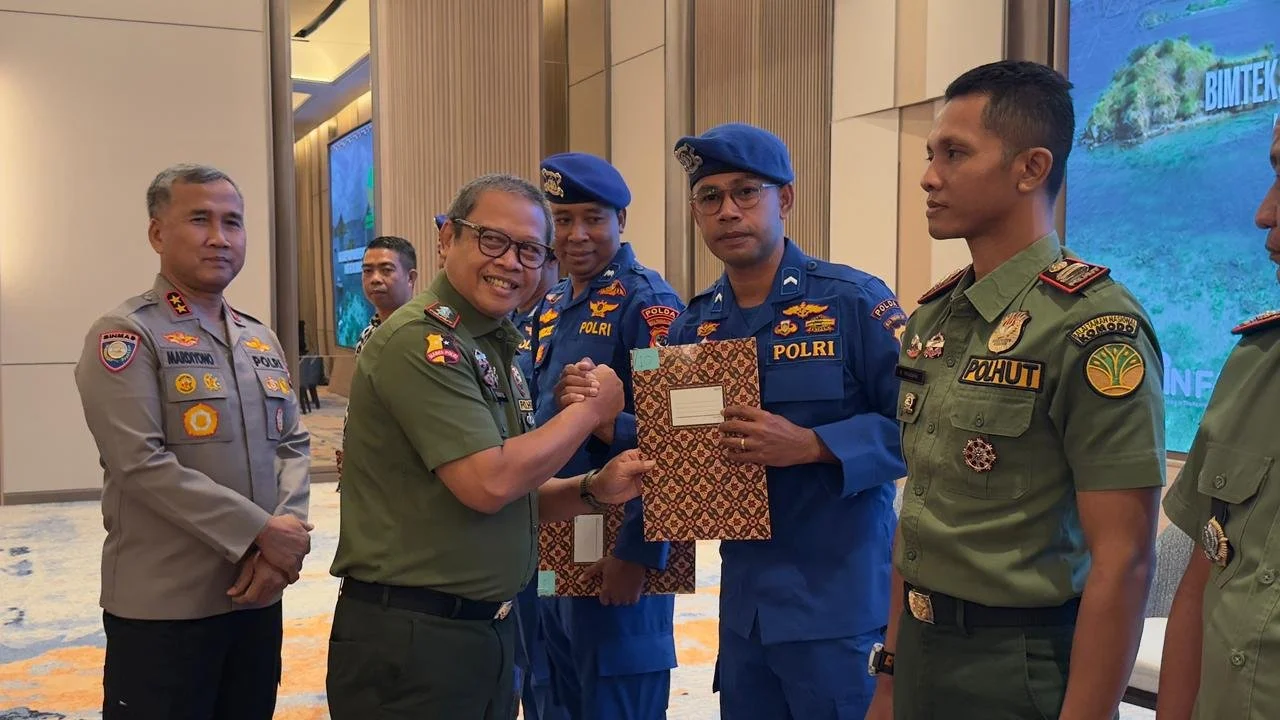
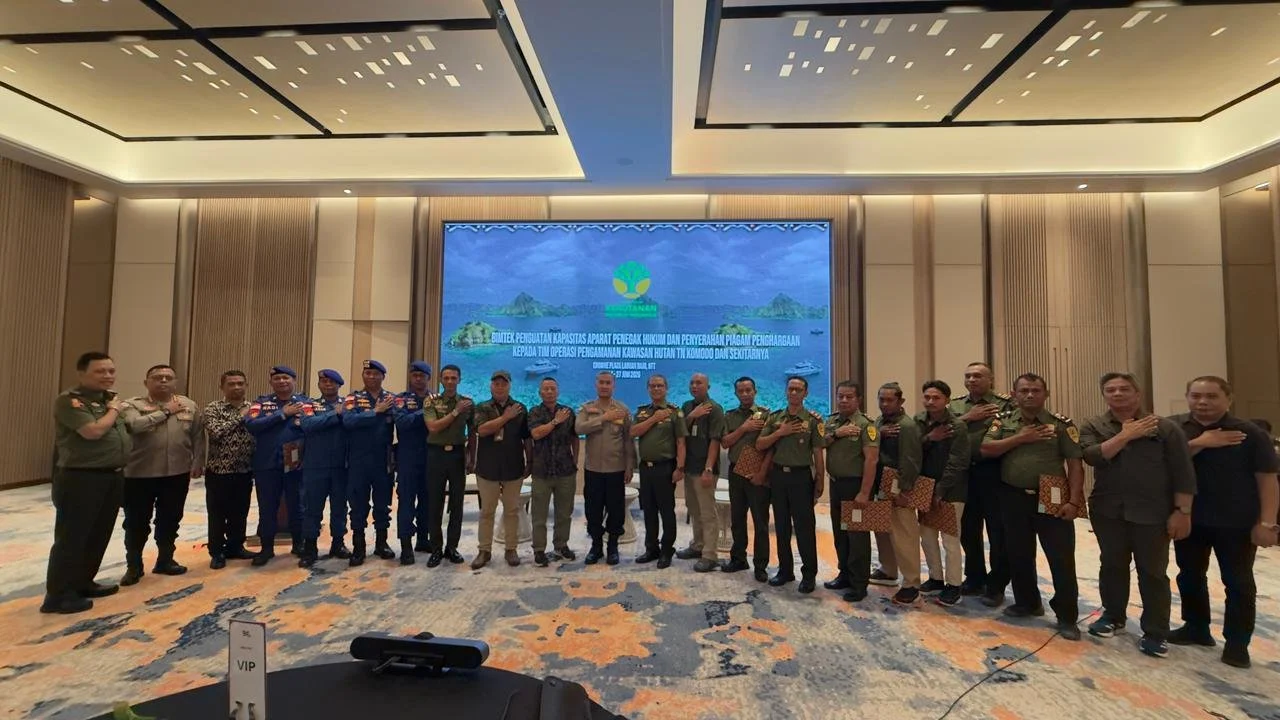
Recognition of the Government of Indonesia for the joint enforcement team operation on deer poaching in KNP.
In 2026, KNP and KSP have continued intensive monitoring of the affected area using CCTV and 12 camera traps deployed at key deer poaching sites and access routes. During the six months following the successful operation, no signs of deer poaching were detected on the west coast of Komodo Island, suggesting a strong deterrent effect. This achievement reflects years of careful planning, sustained conservation efforts, and the effectiveness of the intervention and has also been recognized by the Government of Indonesia.
Monitoring will continue with the installation of additional long-range CCTV cameras and camera traps to ensure that illegal poaching does not resume. Regular monitoring of Komodo dragon and deer populations will also be conducted to evaluate the operation's long-term deterrent effect and ecological benefits.
This achievement would not have been possible without years of continuous support from Global Conservation in strengthening the protection of Komodo National Park.