
Apo Reef, Philippines
Introduction
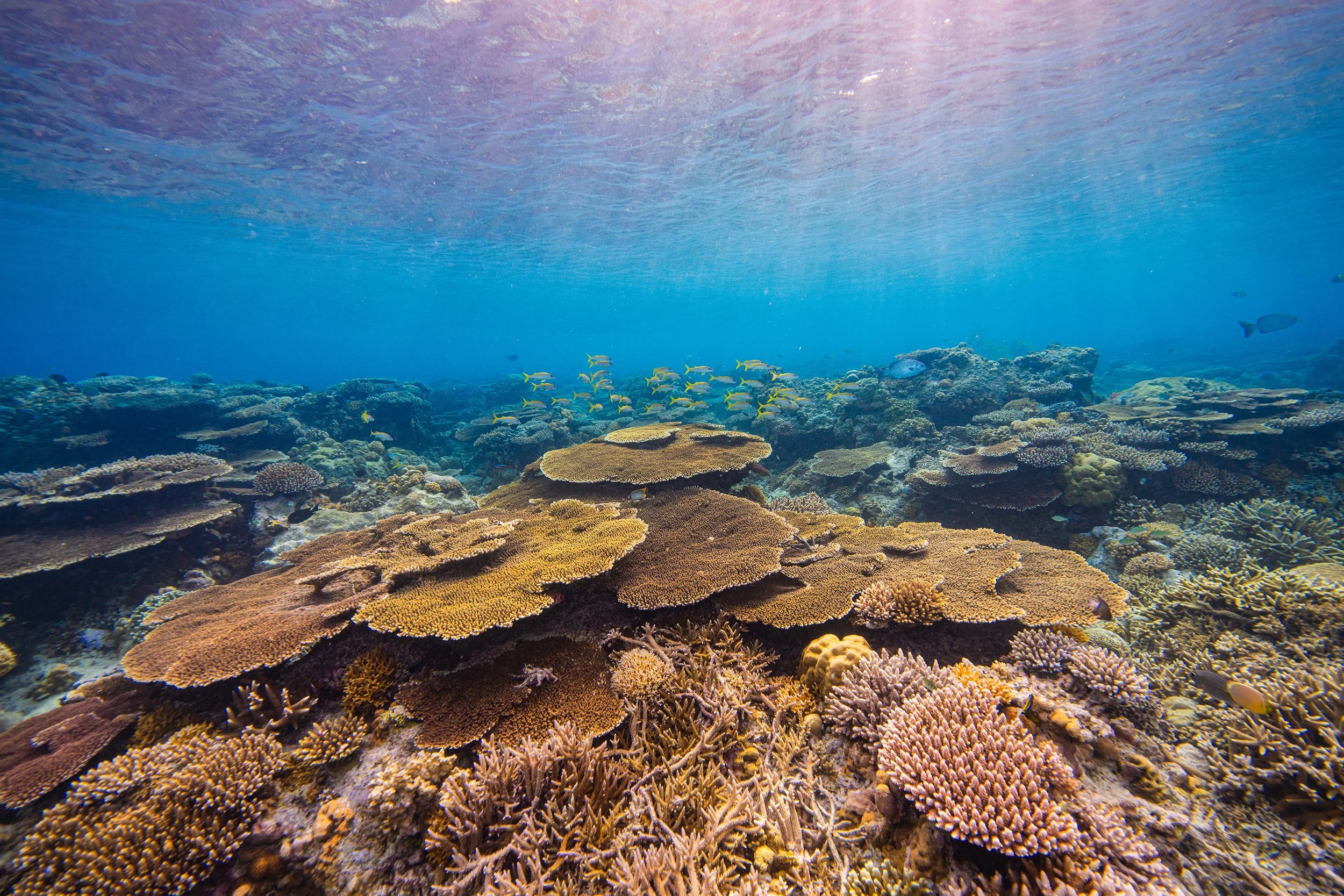
Global Conservation is supporting Marine Protection for Apo Reef National Marine Park in the Philippines, including Marine Monitor (M2) radar, fast boats and motors, Rapid Response Teams, and deployment of Skylight and EarthRanger marine protection systems.
In addition, Global Conservation provides operating support for Marine Warden patrolling, as well as vessel fuel and maintenance needed to deliver 24/7 surveillance and rapid response interdictions against illegal fishing in the national Marine Protected Area.
Background
Apo Reef is the largest coral reef in the Philippines and, after Australia's Great Barrier Reef, the second largest contiguous reef system in the world.
Apo Reef has been a Natural Park since 1996, a no-take zone since 2007, a Blue Park Platinum awardee since 2022, and an ASEAN Heritage Park since 2025. It sits on the UNESCO World Heritage Tentative List, and in June 2026 the municipality of Sablayan, which includes the reef, was designated a UNESCO Biosphere Reserve.
For most of its legal life, Apo Reef has been a park with more designations than it has staff. In November 2025, GC Partner in Conservation - Blue Alliance - signed a renewable delegated management agreement with DENR MIMAROPA to deploy trained and equipped Marine Wardens on the water every day of the year, a management system that can be audited, and a reef that pays its own way over time through enterprises owned by and staffed from the surrounding communities.
The Marine Protected area is comprised of 27,469 hectares: 15,792 ha of Natural Park and 11,677 ha of the Buffer Zone. Roughly 34 km² of contiguous reef in two atoll-like platforms split by a channel up to 30 m deep, with three small islands.
Biodiversity
Over 482 reef fish species and more than 60 hard coral genera, with seagrass, mangrove, and beach forest. Green and hawksbill turtles, dugongs, whale sharks, and hammerheads. It's also an Important Bird Area.
Apo Reef is a breathtaking series of coral reefs located in the waters of Occidental Mindoro, Philippines. Spanning an impressive 34 square kilometers, it is the second-largest contiguous coral reef system in the world and the largest in the Philippines. Situated 15 miles west of Sablayan, the reef is part of the Sulu Sea and encompasses 27,469 hectares, including a protective buffer zone of 11,677 hectares.
The Apo Reef Natural Park (ARNP) features several stunning islands:
Apo Island: The largest and most prominent island
Binangaan Island (Apo Menor): An additional island adding to the park’s charm
Tinangkapaan Island (Cayos del Bajo): The smallest island in the park
The Philippines pioneered a community-based approach to marine protected area management in 1974, which balanced conservation and community livelihood. This became the blueprint of the more than 1,500 marine reserves in the country today.
While the government depends on its MPA system in protecting its seascapes and meeting its international commitments, research suggests only a third of the country’s MPAs are well-managed and only protect around 1% of the country’s coral reefs.
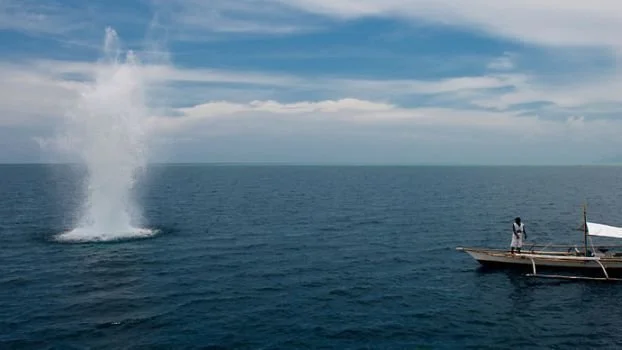
Bomb fishing is an example of extreme illegal fishing practice.
The management and resource issues faced by these MPAs are exacerbated by the threats of illegal fishing, overfishing, and climate change.
To protect its abundant marine resources from the effects of climate change, experts recommend establishing a network of marine protected areas (MPAs), enhancing the country's existing MPA systems, integrating conservation and fisheries management strategies, and utilizing more recent models.
Though the nation has achieved much in protecting its over 1,500 MPAs, there have been obstacles along the way. It is estimated by experts that just one-third of the country's marine protected areas are adequately administered, and the combined effect of no-take zones hardly serves to safeguard the coral reefs found across the nation.
Experts refer to certain marine protected areas (MPAs) as "dummy "parks" because they are protected on paper but not in practice, despite reports of high fish abundance. This is because of overfishing in the areas surrounding these MPAs and the invasion of these reserves by fishing vessels caused by inadequate monitoring and enforcement policies.
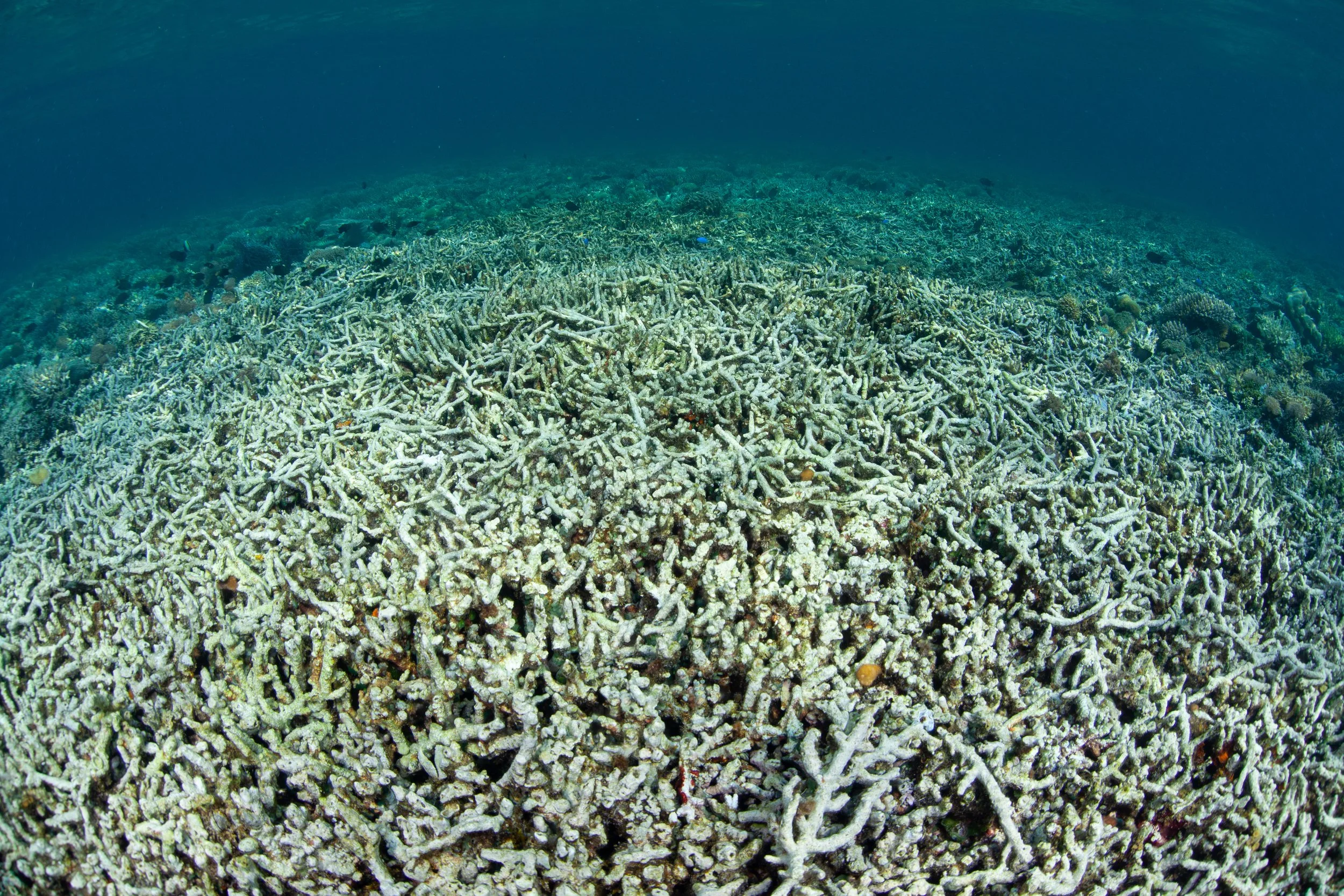
The effects of fish bombing.
Illegal Fishing Threatens Apo Reef
Threats to Apo Reef are a prime target for illegal fishing precisely because protection has worked: thirty years of park status and eighteen years of no-take have left it with fish the surrounding seas no longer hold, and that abundance draws boats.
Part of the Coral Triangle
Apo Reef lies within the northern tip of the Coral Triangle, a region spanning 5.7 million square kilometers that connects six countries: Malaysia, Papua New Guinea, the Philippines, Indonesia, Timor-Leste, and the Solomon Islands. Known as the “center of Earth’s marine diversity,” this area is home to 2,228 species of reef fish and 605 species of reef-building corals. Marine expert Dr. Charlie Veron famously calls the Coral Triangle “the center of Earth’s marine diversity.”
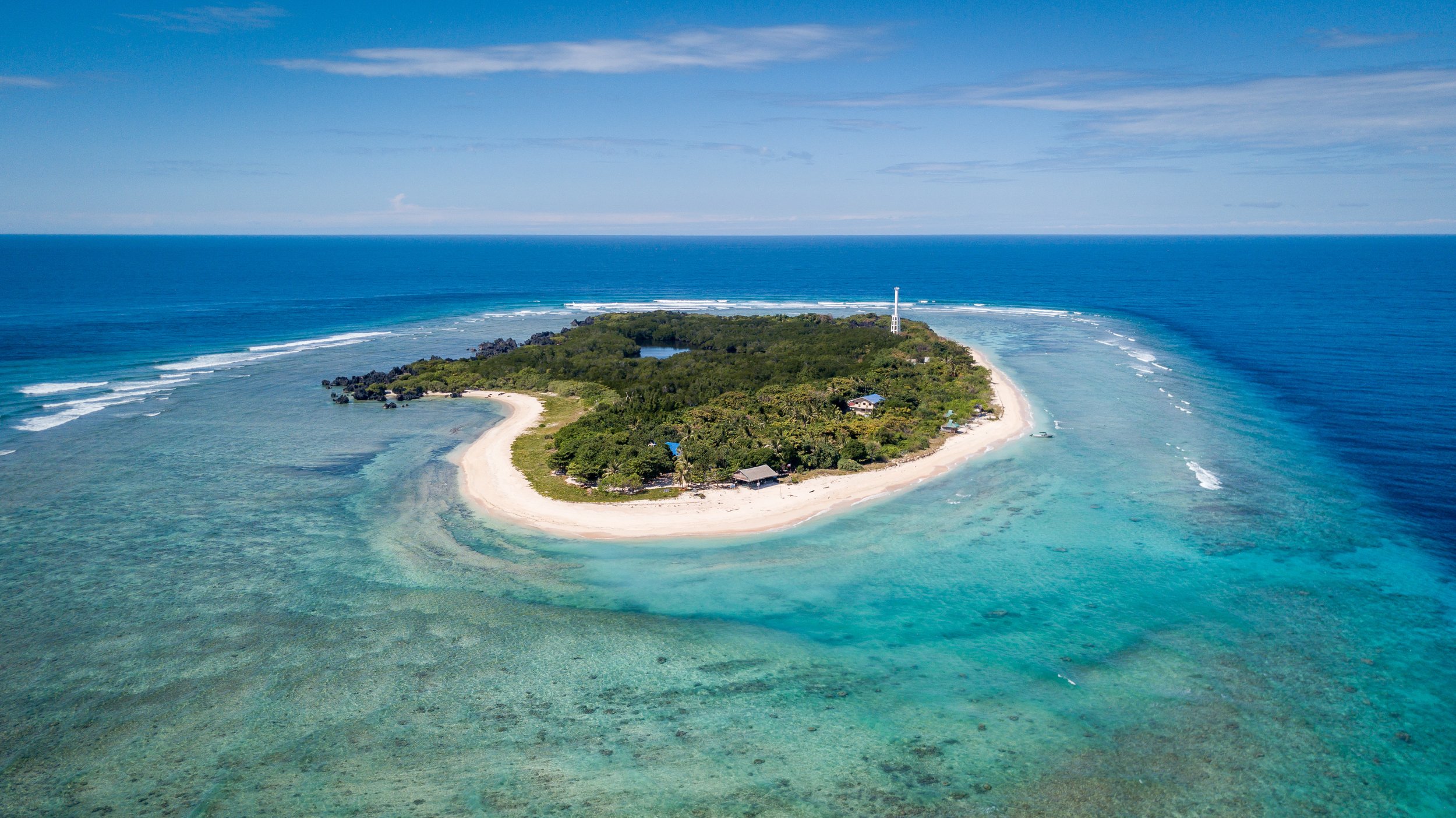
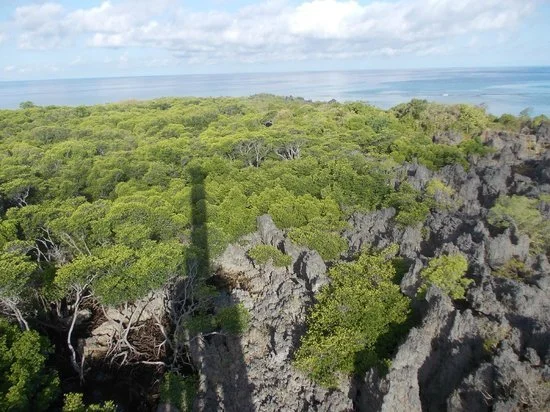
Apo Island, the main island of Apo Reef.
Protecting a Natural Treasure
Over the years, Apo Reef faced threats from overfishing, pollution, coral mining, sedimentation, and climate change, which led to coral bleaching and ocean warming. Recognizing its importance, the Philippine government implemented protective measures:
1980: Declared a Marine Park by President Ferdinand Marcos.
1983: Designated as a Tourism Zone and Marine Reserve by the local Sablayan government.
1996: Upgraded to a Natural Park by President Fidel Ramos.
2006: Nominated for UNESCO World Heritage status by the Department of Environment and Natural Resources.
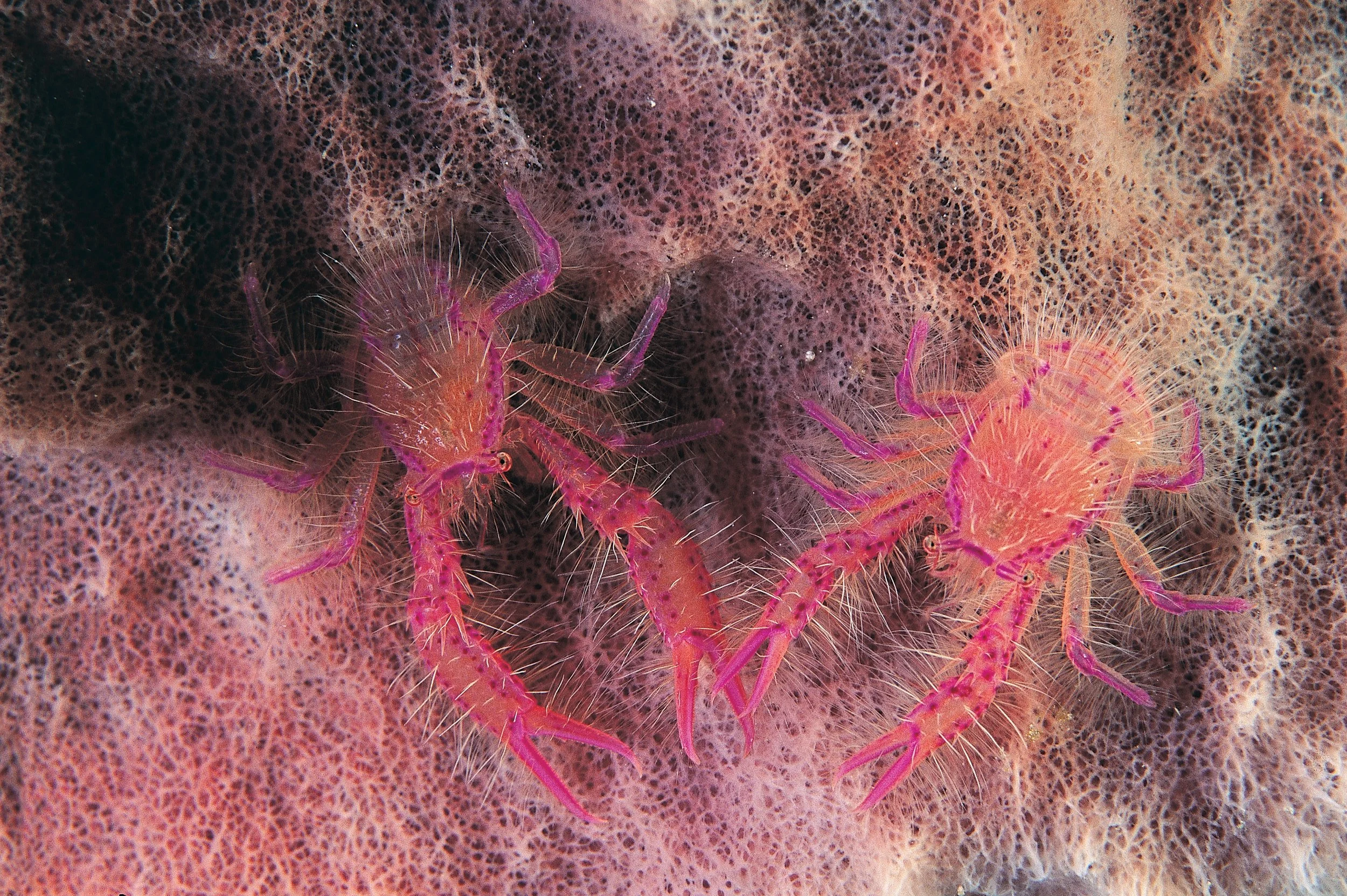
Pink squat lobster living on a barrel sponge.
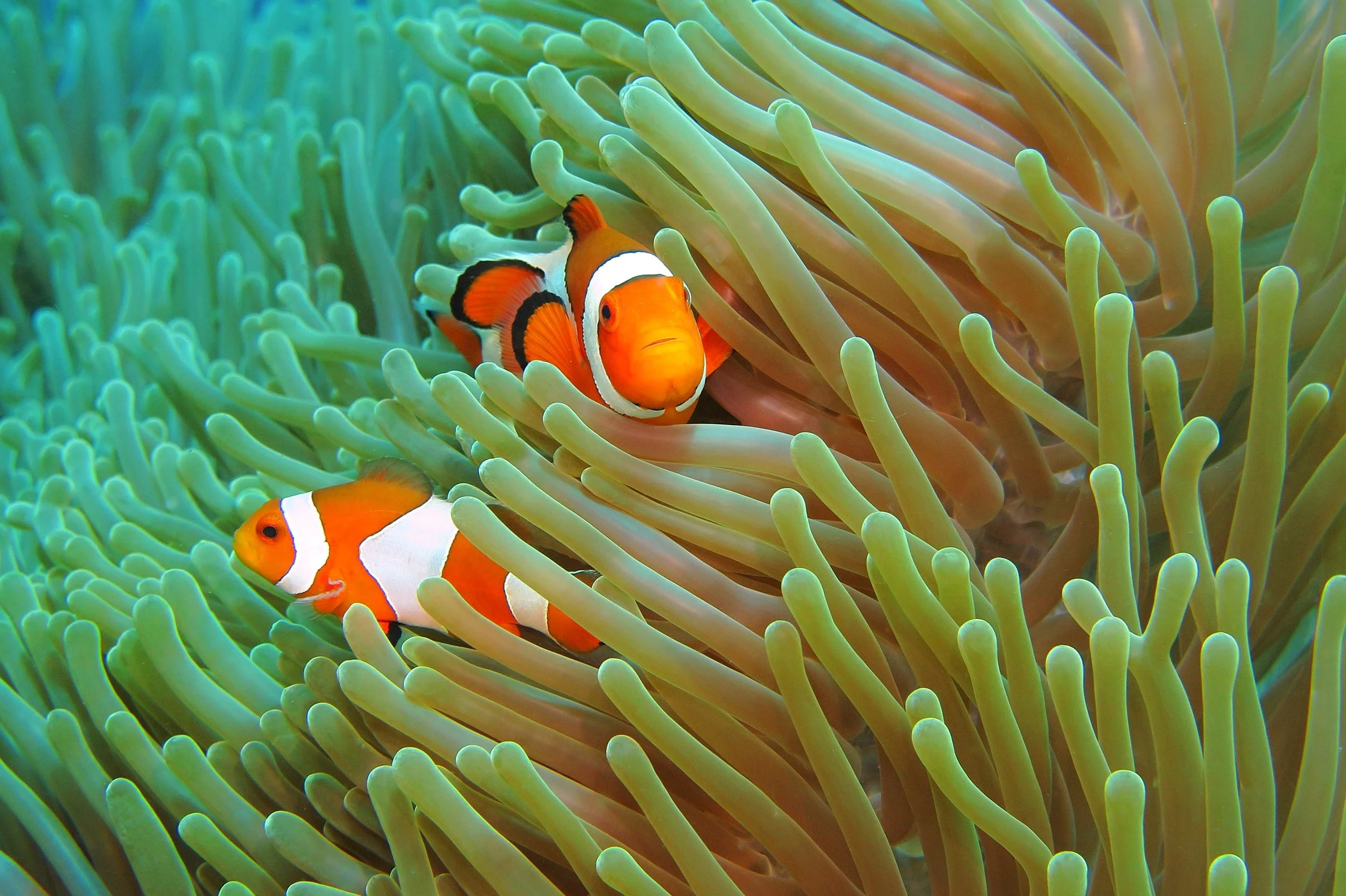
Clown fish take refuge inside an anemone.
A Vision for the Future
Today, Apo Reef Natural Park stands as a symbol of conservation and biodiversity. With its crystal-clear waters and vibrant marine life, it is a testament to the importance of protecting and preserving the world’s natural wonders.
A Haven of Biodiversity
The Apo Reef Natural Park (ARNP), located 15 miles west of Sablayan in Occidental Mindoro, spans 27,469 hectares, including an 11,677-hectare protective buffer zone. This expansive marine sanctuary is home to lush mangroves, vibrant coral reefs, and an extraordinary array of wildlife, including birds, mammals, reptiles, and marine species.
Rich Flora and Fauna
Apo Reef Natural Park boasts 46 species of terrestrial plants, 7 types of seagrasses, and 26 varieties of algae. Among its wildlife are 47 bird species, such as the rare Nicobar Pigeon, as well as iconic marine creatures like Green Turtles, Hawksbill Turtles, and endangered dolphins. The reef’s waters are also frequented by Short-Finned Pilot Whales, whale sharks, and a dazzling variety of fish, from reef sharks to damselfish, wrasses, and parrotfish.
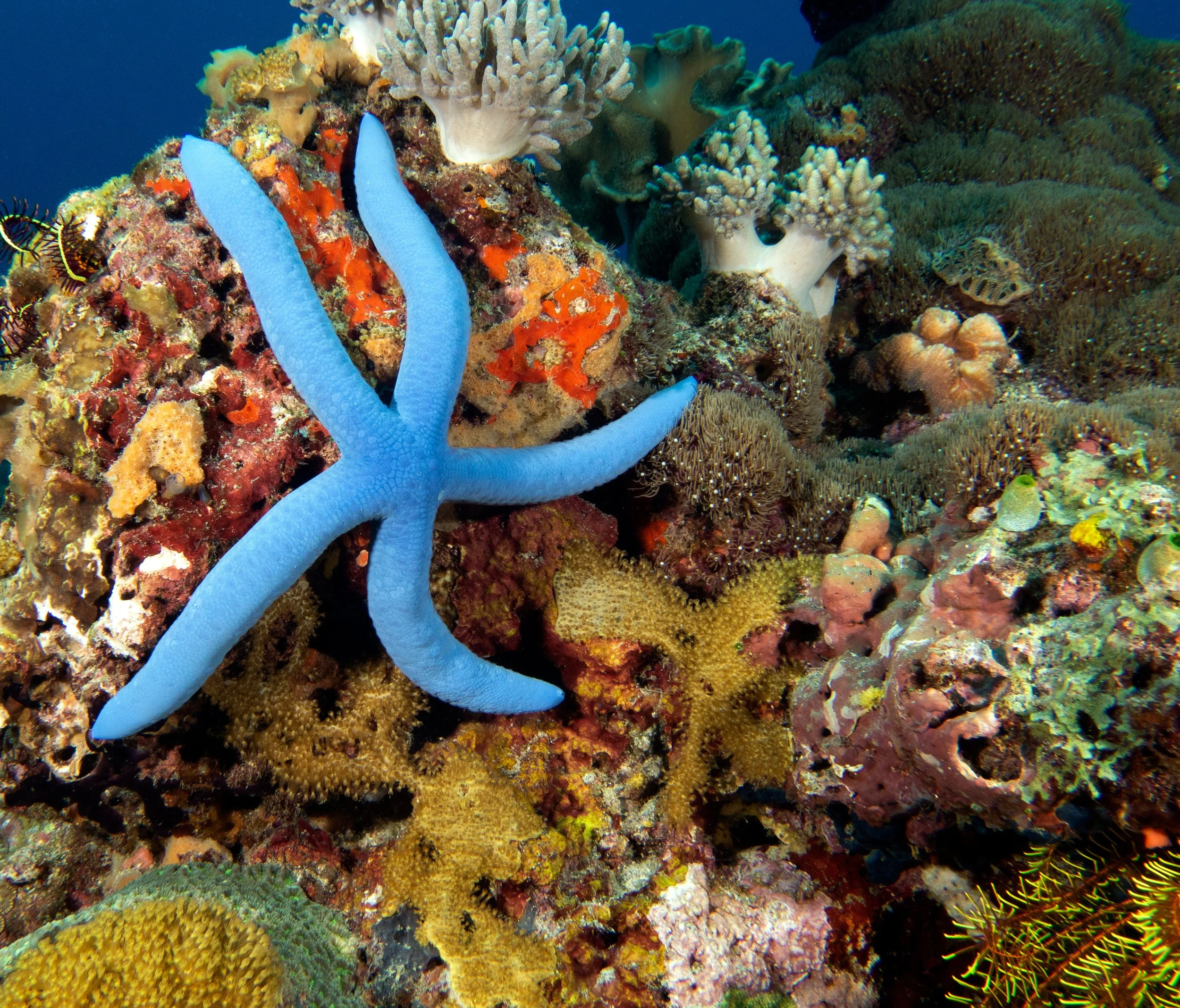
A Vibrant Underwater Ecosystem
The reef supports about 385 fish species in 85 families and countless invertebrates, including starfishes, nudibranchs, clams, and squids. Coral reefs here are a treasure trove of marine diversity, attracting visitors and researchers from around the globe.
Zoning for Conservation
To protect its delicate ecosystems, Apo Reef Natural Park is divided into three zones:
Strictly Protected Zone: Includes the coral sanctuary and Apo Island, where all destructive activities are prohibited.
Managed Reserve Zone: Focused on bird sanctuaries and turtle nesting grounds, allowing limited, controlled human activities.
Multiple-Use Zone: Designed for recreation, including diving, photography, guided tours, and regulated fishing.
Conservation Efforts
Once threatened by overfishing, pollution, and climate change, Apo Reef is now safeguarded by government initiatives, making it a global symbol of marine conservation. These efforts highlight the importance of preserving such natural treasures for future generations.
Threats

Apo Reef is a prime target for illegal fishing precisely because protection has worked: thirty years of park status and eighteen years of no-take have left it with fish the surrounding seas no longer hold, and that abundance draws boats.
In March 2026, Blue Alliance, the DENR Protected Area Management Office, and the Sablayan rangers completed a joint threat assessment mapping every known incursion route, gear type, season, vessel class, and point of origin. Four hotspots account for effectively all recorded illegal entry. Two anchorages inside the park allow boats to wait out weather and patrol schedules, depending on whether the amihan or the habagat is blowing.
The pressure is local and can be identified by specific names. The daily incursions come from a short, known list of Sablayan barangays: Sitio Tabuk, Buenavista, Sta Lucia, Ligaya, Sitio Punta, and Poblacion. The recorded motivation for that group is livelihood. These are not anonymous poachers. They are neighbors, they are on the municipal fisher registry, and they are reachable.
Section 4 targets exactly these barangays, which is why the community component here is not a soft add-on but the other half of the enforcement strategy.
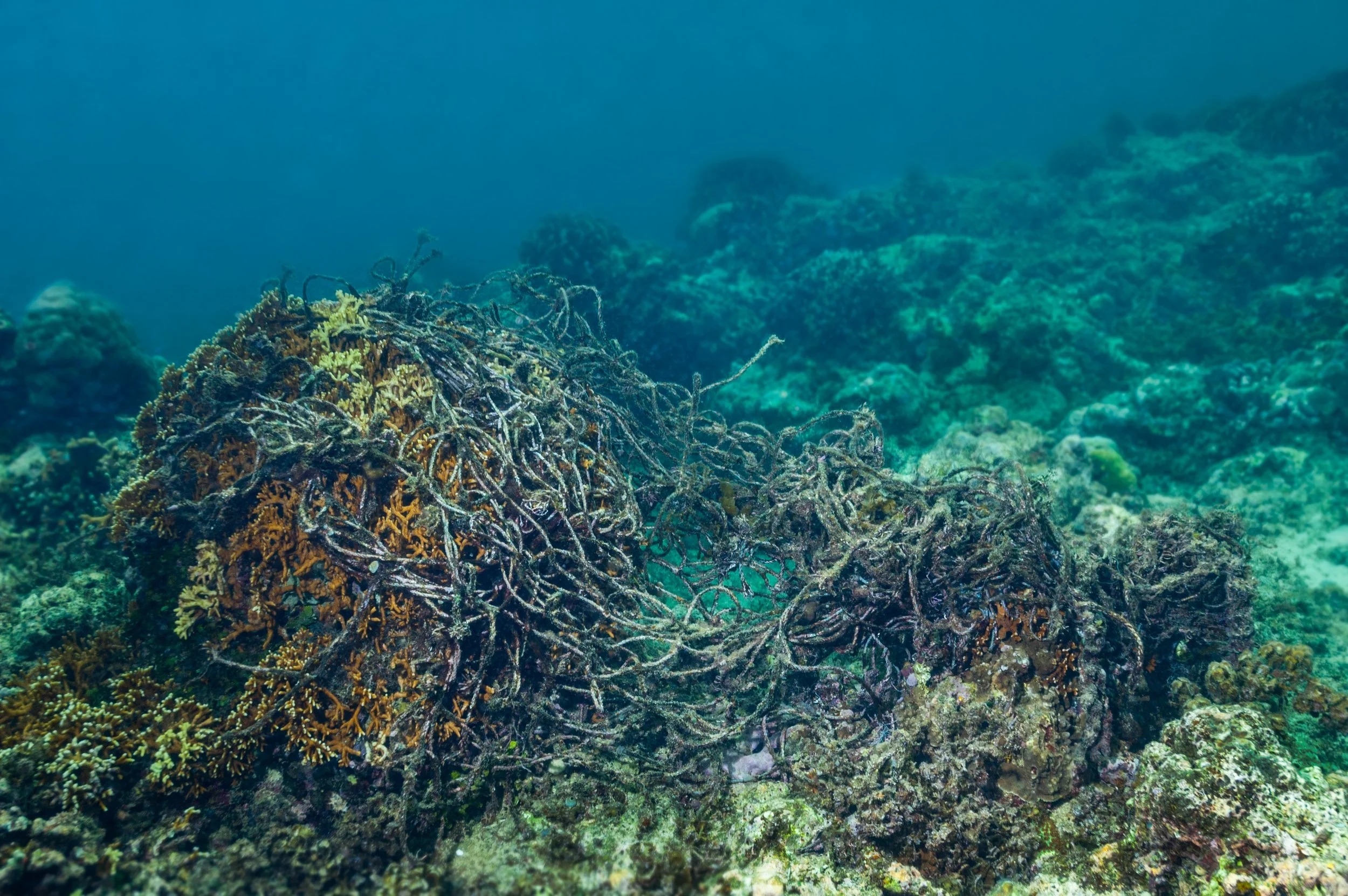
A fishing net caught on coral heads.
Illegal Fishing
Hook and line, including live reef fish (suno) for the live trade
Night spearfishing
Bottom set gill net
Dynamite fishing and compressor spearfishing are taking anything for value
Compressor diving is seasonal and timed to rough weather because apprehension is less likely
Night spearfishing for lobster, cuttlefish, at times Napoleon wrasse and bumphead parrotfish cuttlefish
Strong Enforcement Response
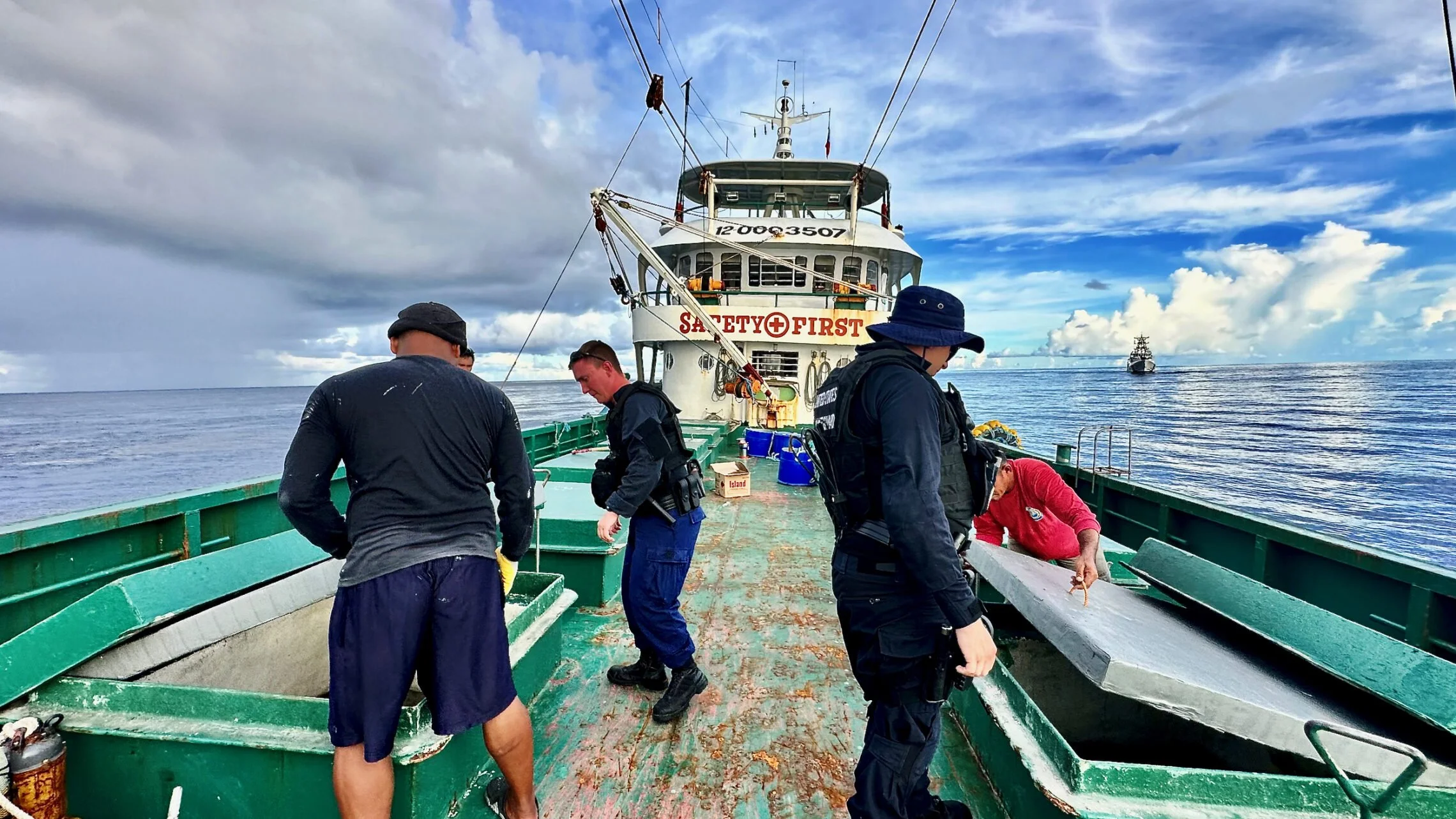
The system was redesigned in March 2026 and is set out in the park's current enforcement plan, prepared jointly by DENR, the Sablayan local government and Blue Alliance. It is built around detection first, because the park is too large to patrol blind.
Detection. A control center on Apo Island with Starlink and computing handles real-time reporting, logs violations, and pushes intelligence to boats at sea. An M2 radar on a 15-meter tower, above the island tree line, detects vessels of 7 meters or more out to 9.5 nautical miles, putting 99 percent of the park inside coverage, and smaller vessels to 5 nautical miles, combined with AIS, VMS, and satellite. The operational consequence is what makes a small team viable: patrolling concentrates on the outer park edges beyond the 5 nautical mile small vessel range, rather than spreading a small crew thinly across 27,469 hectares.
Community Protection
Sablayan is a municipality of 91,406 people across 22 barangays, with an estimated 5,323 registered fishers. When the notake zone came in 2007, fishing inside Apo Reef stopped. The reef gained. The fishers who had worked it lost a fishing ground and, for many, nothing replaced it: alternative livelihood programs came and went with project cycles, and tourism, the intended substitute economy, has gone backwards. That history is the most important social fact about this site.
A community that has already given something up for conservation and seen the promised return arrive thinly does not need another awareness campaign. It needs enforcement that is fair, jobs that are real, and a share of what the reef earns.
Providing Jobs
Every Blue Alliance ranger, boat crew member, community officer, and monitoring technician at this site is recruited from Occidental Mindoro. Fishers who lost access to the reef in 2007 are the priority recruitment pool for ranger and crew roles. Training covers paralegal and arrest procedure, incident assessment, boat captain licensing, safety and first aid, fish survey methods, reef monitoring, and drone and GIS work: transferable, certified skills rather than project-specific ones.
Target: from 8 full-time site roles today to 30 by Year 3, on a trajectory to 48 by 2034.
Building Livelihoods
This is what the 2007 closure still owes the community, and per the threat assessment it is aimed at the right people. Community-based aquaculture of mangrove crab through Aquahub, which Blue Alliance owns: the company runs the hatchery and nursery, which need capital and technical skill, and households, fisher associations, and village cooperatives run the grow-out, which needs labor and local knowledge. Ecotourism through Blue Wild Eco Ventures, also Blue Alliance owned: guide, boat operator, and hospitality training for Sablayan residents, mooring and visitor safety infrastructure, and a fee structure agreed upon through the PAMB so a defined share of every visitor peso stays at the site.
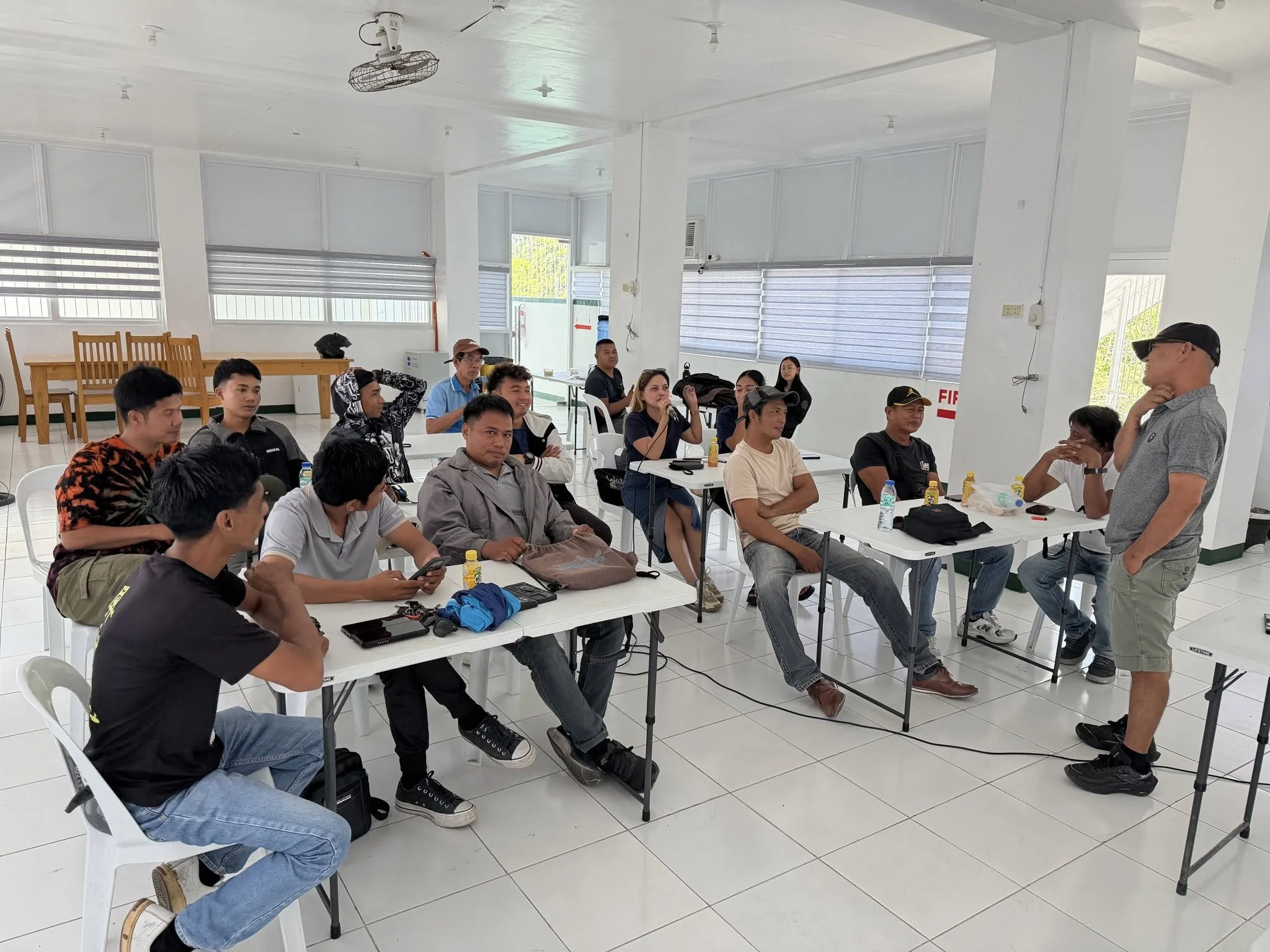
A meeting is held to discuss patrols.
Fisheries improvement in Sablayan's municipal waters: gear swaps, fish aggregating devices that pull effort off reef slopes, temporal closures, and catch monitoring in which fishers are trained and paid to record their own landings. Microenterprise and savings support through long-term mentoring, with profits held by the community association. No activity launches without a signed agreement with the receiving organization, a named person accountable inside it, and a monitoring line in the annual report.
A Gender Equity and Social Inclusion action plan has been in place since June 2025, and have trained more than 1,300 women across our Philippine sites since 2023. We will not overstate the starting position here: offshore enforcement and the fisher registry are both male-dominated, and our Year 1 projection is 600 direct beneficiaries, of whom 120, or 20 percent, are women. The response is to build where women already lead: post-harvest handling, aquaculture grow-out, hospitality and guiding, savings and enterprise management, and community monitoring.
Safeguards
Free, prior, and Informed Consent is applied in line with the Philippine Indigenous Peoples Rights Act and NCIP procedure, run as a process rather than a signature. Blue Alliance applies formal safeguarding, anti-corruption, and financial control policies with incident reporting and annual external audits.
Stricter patrolling means arrests, and arrests mean tension with fishing families, so enforcement is always paired with a livelihood pathway for affected fishers, patrol plans are co-designed with DENR, the Coast Guard, and the community Bantay Dagat rather than imposed, and every incident is logged and reviewed.
Who Supports Apo Reef in the Philippines?
Government
DENR, through the MIMAROPA regional office that signed the November 2025 agreement and through the Protected Area Management Office on site. Strategic memoranda of understanding with DENR and the Bureau of Fisheries and Aquatic Resources at central level. Department of Tourism on our stakeholder committee. Apo Reef is the first Philippine national park for which DENR has signed this kind of agreement with us.
Local government
The Municipality of Sablayan, holding a ten-year renewable co-management agreement and supplying rangers to the joint patrol system, and the Province of Occidental Mindoro on the stakeholder committee. Sablayan's June 2026 UNESCO Biosphere Reserve designation gives the municipality its own international stake in Apo Reef performing.
Enforcement
PNP Maritime Group and the Philippine Coast Guard under joint patrol arrangements, with the community Bantay Dagat sea guard groups. Blue Alliance also seconds permanent staff from government agencies.
Communities
Bantay Dagat groups and fisherpeople's organizations, including Samahan ng Matyagang Mangingisda at Apo Reef, engaged in biodiversity-friendly enterprise development.
Science
Mindoro State University for reef and mangrove monitoring, LAMAVE for shark and turtle work, and the University of the Philippines for AI-assisted fish surveys. Internationally, CNRS verifies and certifies our impact indicators annually.
Funders
The Global Fund for Coral Reefs anchors the Philippine program, with the Swiss Re Foundation and Trafigura Foundation co-financing the Apo Reef site line, BNP Paribas as anchor investor in the impact loan facility, and UBS Optimus Foundation in the junior tranche.