Global Conservation Leading International Funding of Operation Mercury II: Removal of Illegal Gold Mining and Cartels Tambopata National Park, Peruvian Amazon
Multi-Agency Operation This Week in Partnership with the Government
Over 500 Enforcement Officers To Be Deployed in Madres de Dios
Public Ministry - SERNANP National Parks - Military – National Police
Photography by ©Paul Hilton
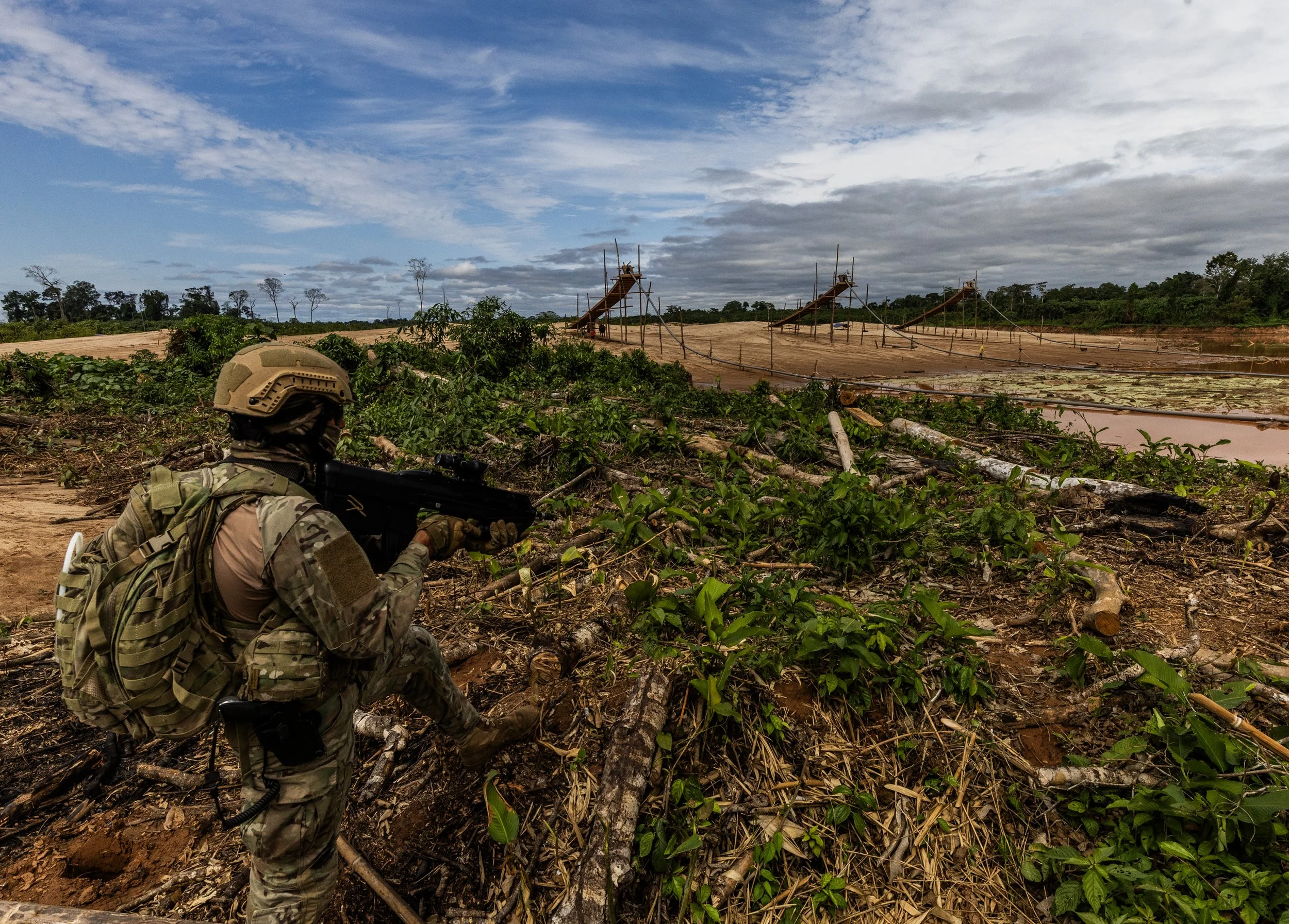
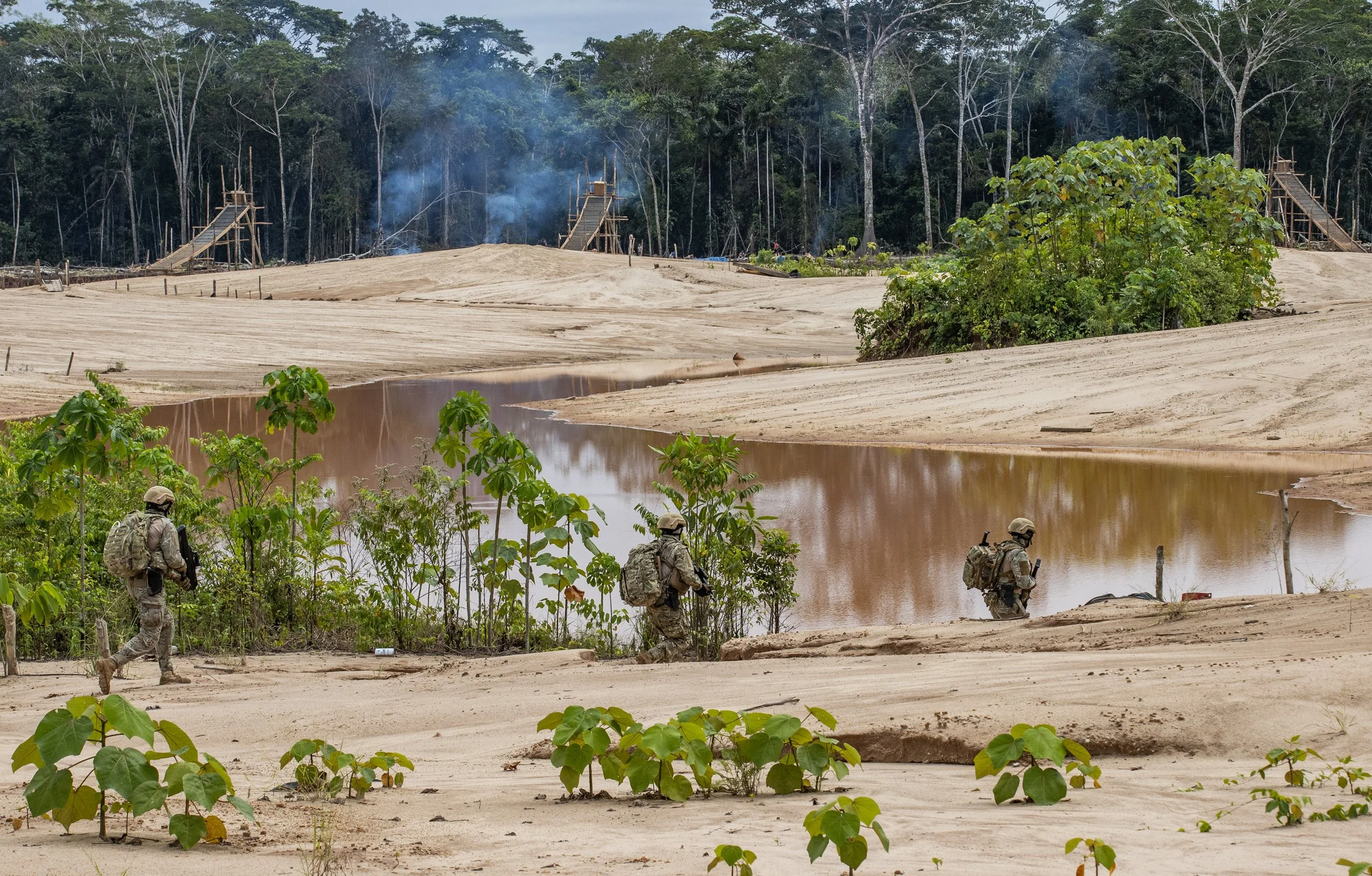
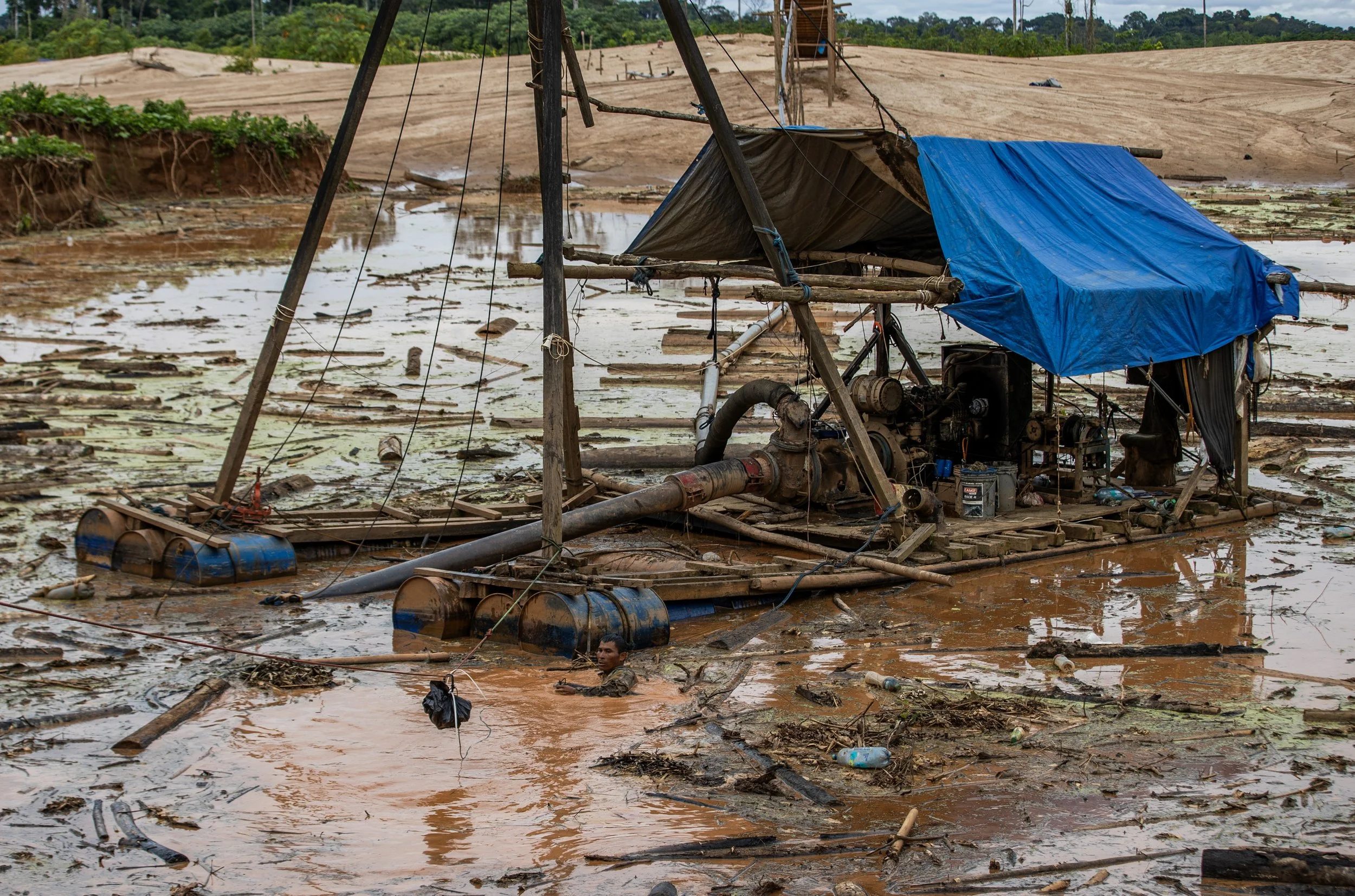
A Peruvian soldier with the joint patrol force surveys three gold mining engines.
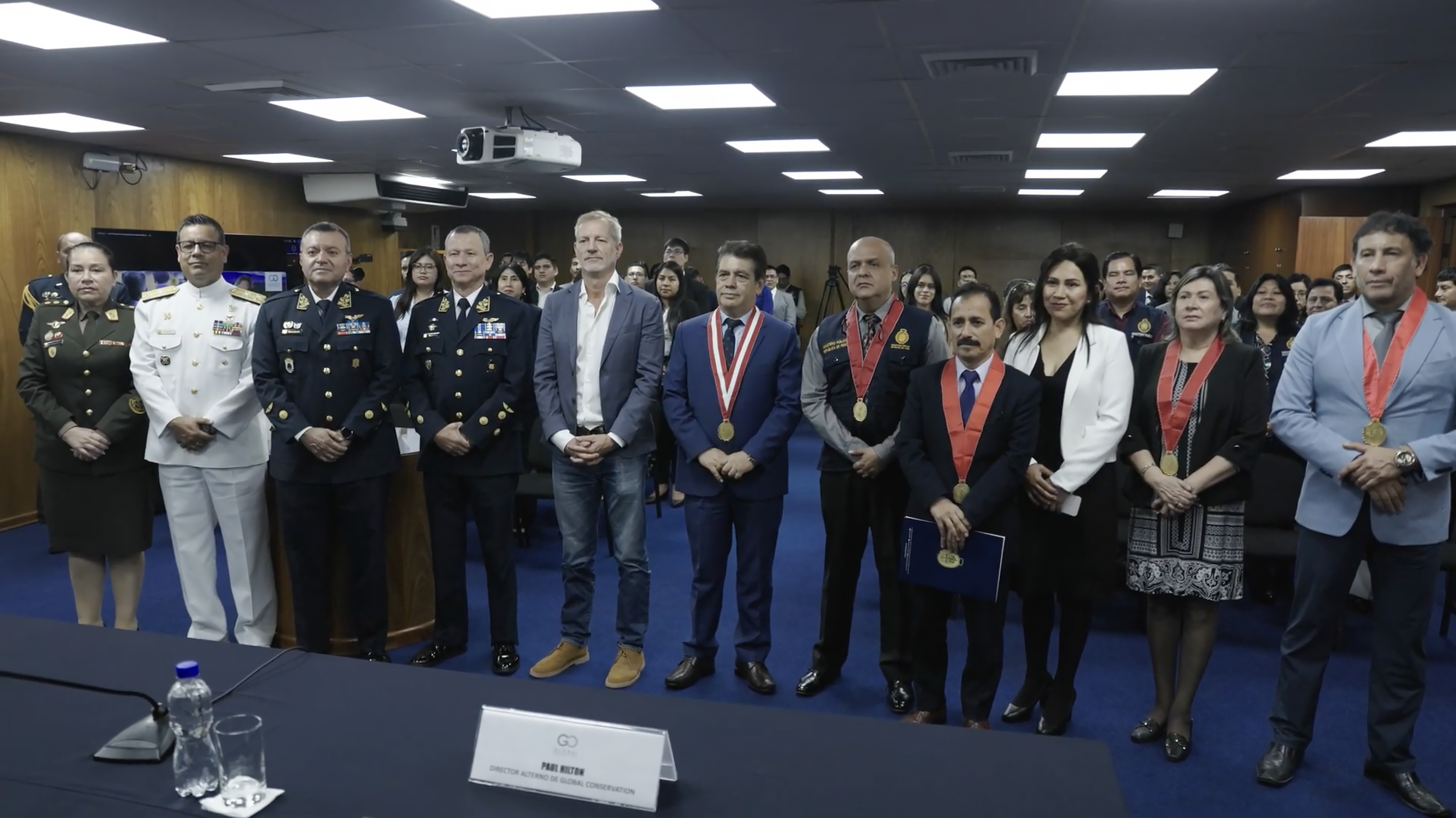
Lima, Peru, August 12, 2026, 18:00PM — Global Conservation is working under a newly signed cooperation agreement with Peru’s Public Ministry’s Specialized Environmental Prosecutors Office to undertake a dangerous, multi-phase national park enforcement mission to remove illegal miners and organized crime syndicates destroying one of Peru’s most important and largest national parks (1,061 square miles)—Tambopata National Park in the Amazon.
Operation Mercury 2 combines detailed satellite surveillance by Global Conservation, aerial reconnaissance conducted with the Peruvian Air Force, and major law enforcement operations over the next year focused on removal of illegal gold mining camps and equipment from Tambopata National Park, near Puerto Maldonado in Madre de Dios province.
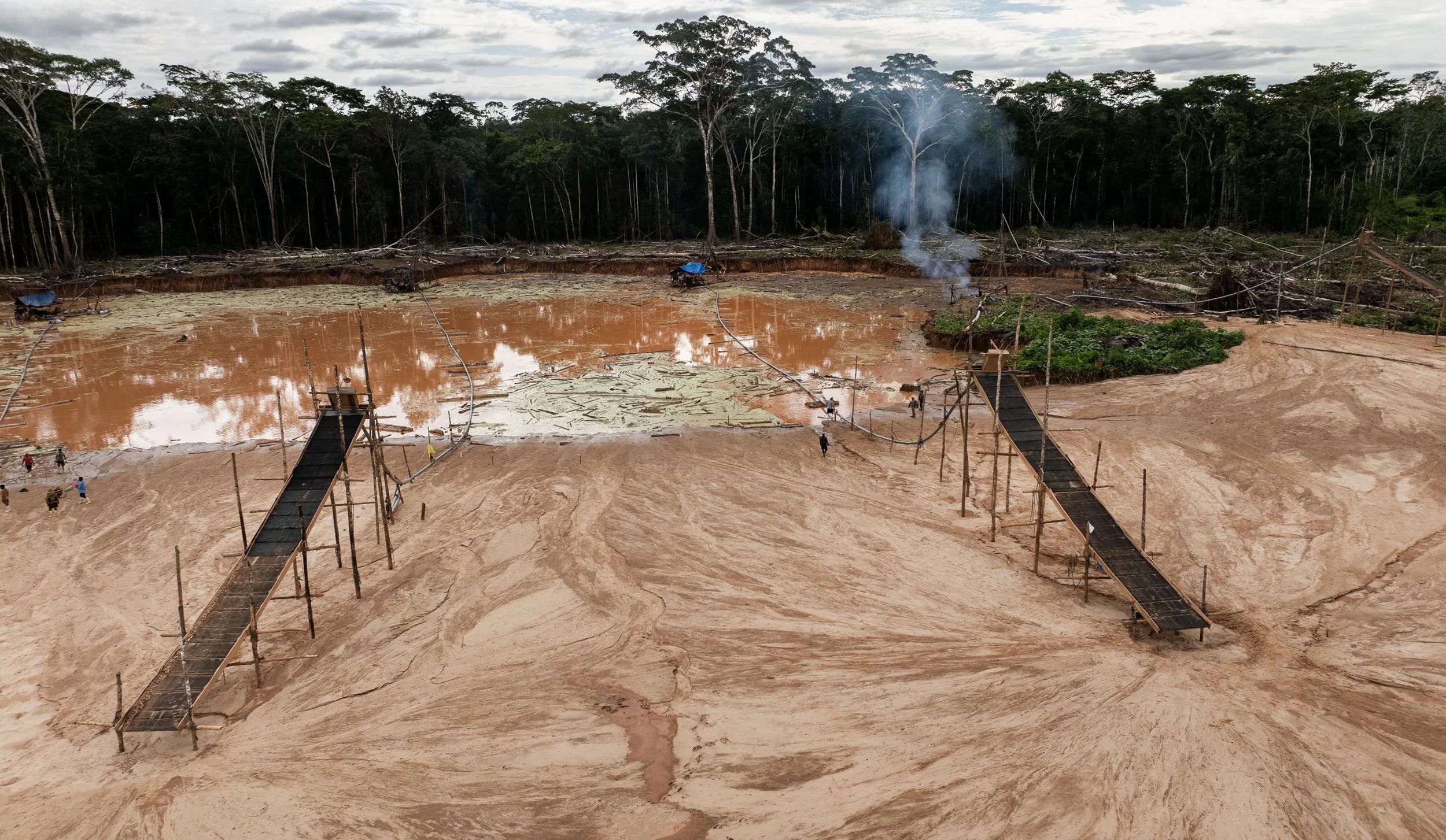
Skyrocketing gold prices are driving tens of thousands of illegal miners to destroy thousands of square miles of the Amazon every year. Illegal gold mining has surpassed cocaine trafficking as Peru's most profitable illicit industry controlled by a network of transnational drug cartels, domestic gangs, and heavily armed syndicates.
Tambopata National Park is just one of six endangered national parks in Peru where illegal mining is destroying hundreds of square miles of federally protected areas, many are UNESCO World Heritage sites.

Soldiers load into the carrier helicopter.

Peru’s forces await touchdown.
Global Conservation is providing critical operational support, advanced satellite monitoring, aerial reconnaissance, technical expertise in Global Park Defense and Community Protection, equipment and training critical to the success of Operation Mercury 2—a model for future protection of national parks organizing multi-agency forces of Peru’s government to remove thousands of illegal miners from the national parks. By strengthening protection on the ground to stop illegal mining, we will safeguard Tambopata National Park and Peru’s other endangered national parks and UNESCO World Heritage sites for future generations.
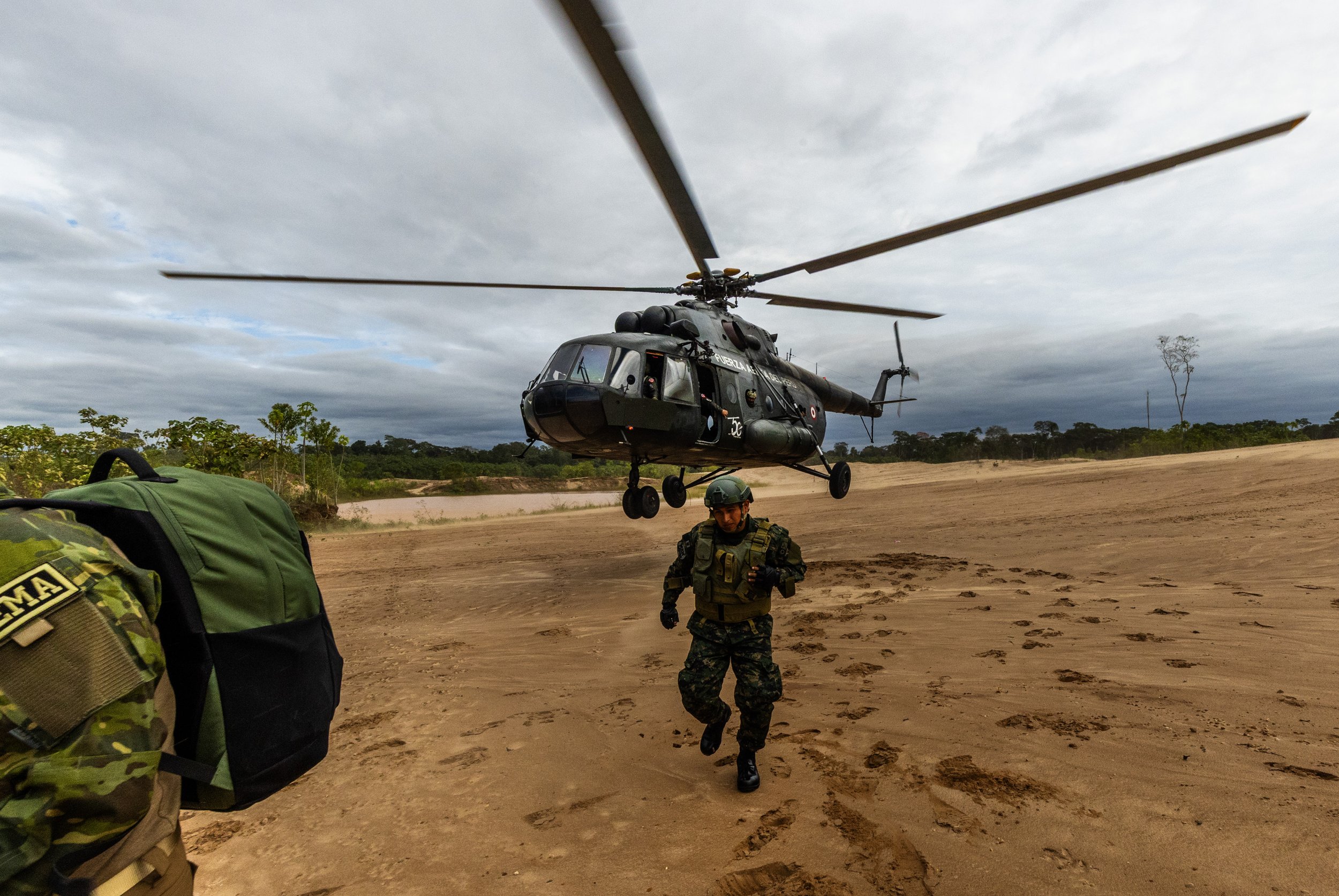
Peruvian forces touch down in gold mining territory to halt the destruction to natural ecosystems.
Ronal Ramón Flores Ñañez, Provisional Deputy Supreme Prosecutor, Office of the Prosecutor of the Nation, who is leading Operation Mercury 2 at the Office for Coordination and Assistance in Intercultural Justice of the Public Ministry (OCAJIMP), stated, “We continue working to protect the Amazon and strengthen the investigative capabilities of specialized environmental and organized crime prosecutors. This week is just the beginning of Operation Mercury 2 to remove all illegal gold miners from within Tambopata National Park and build a robust, long-term muti-agency presence to prevent their return.”
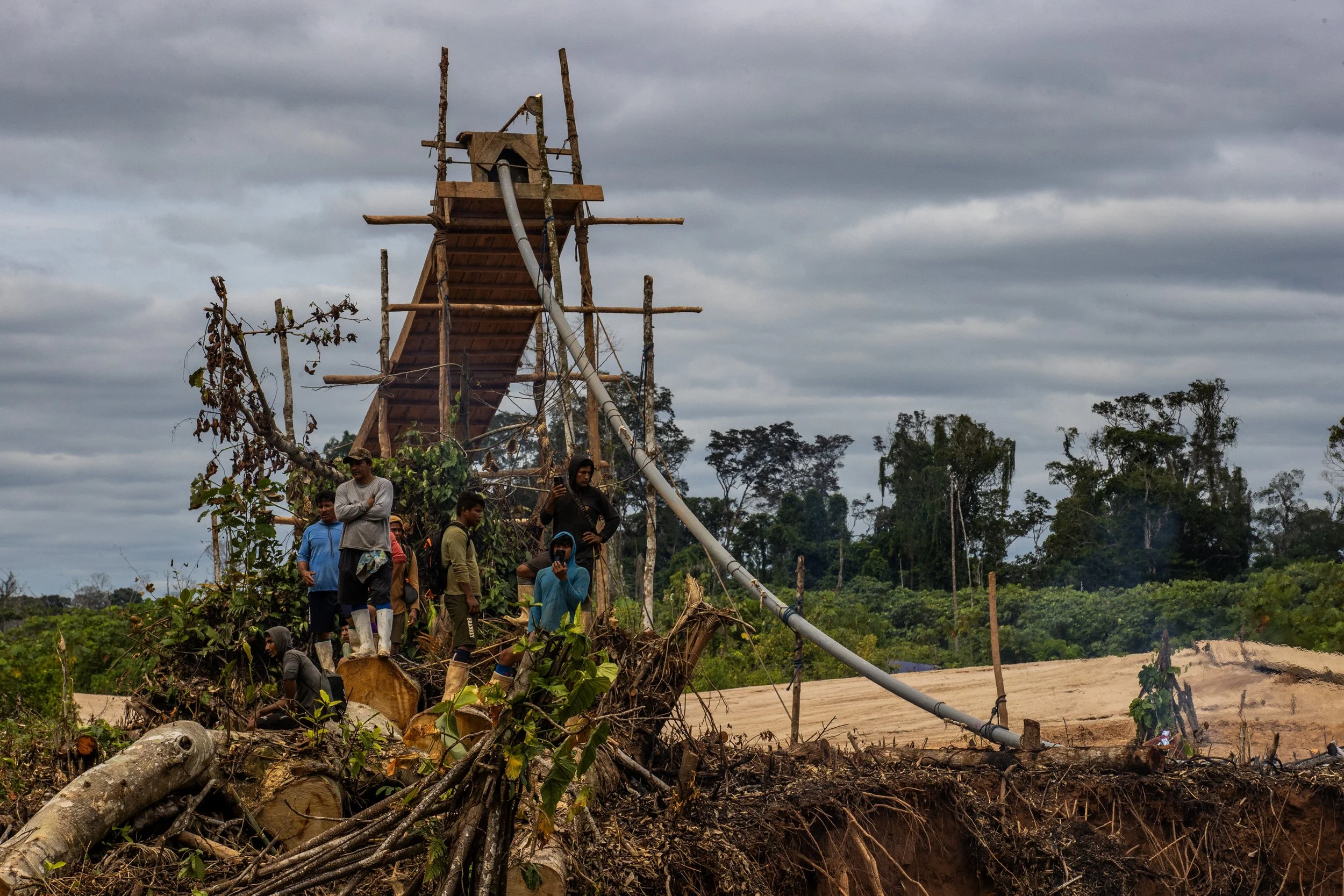
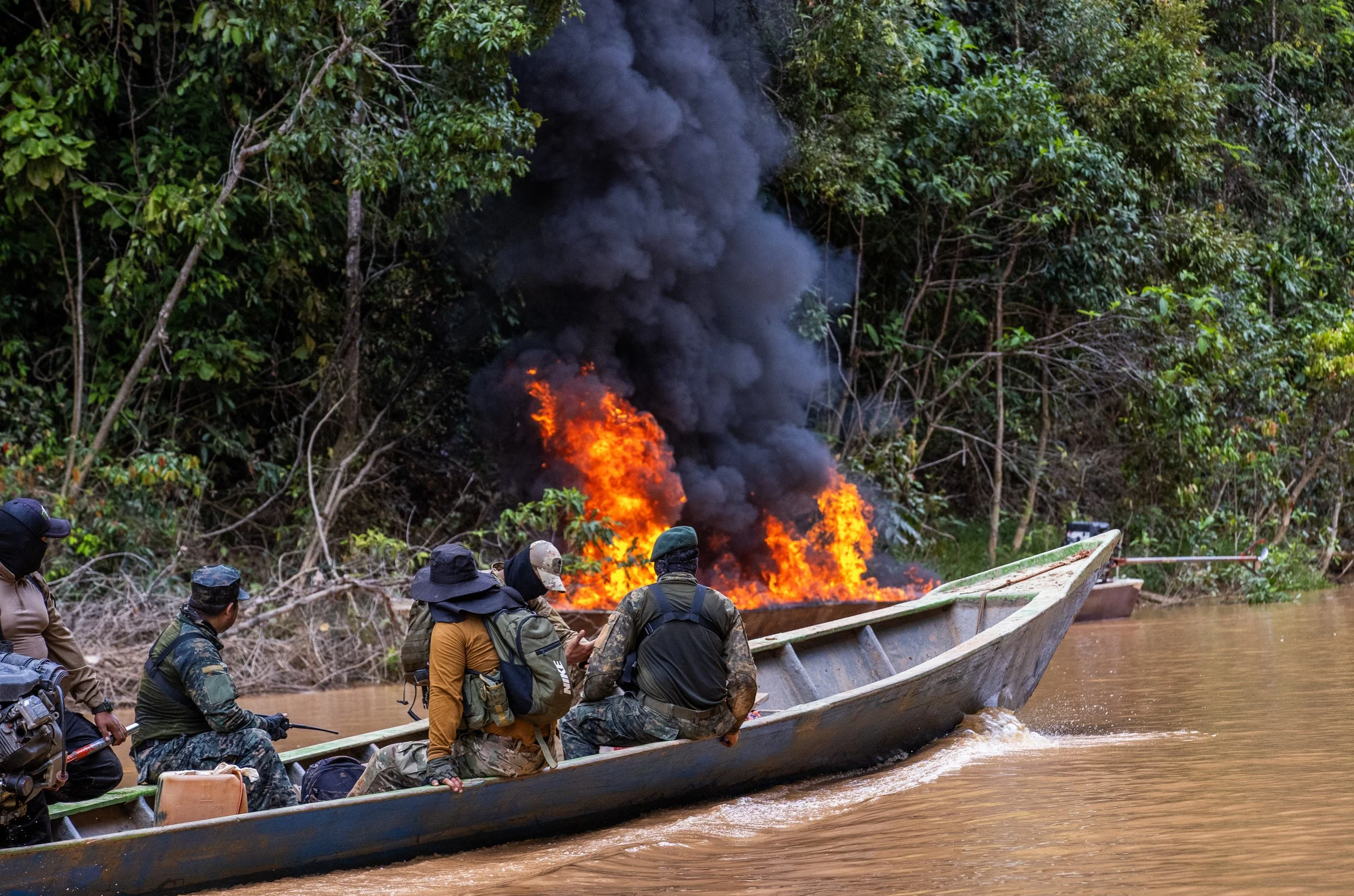
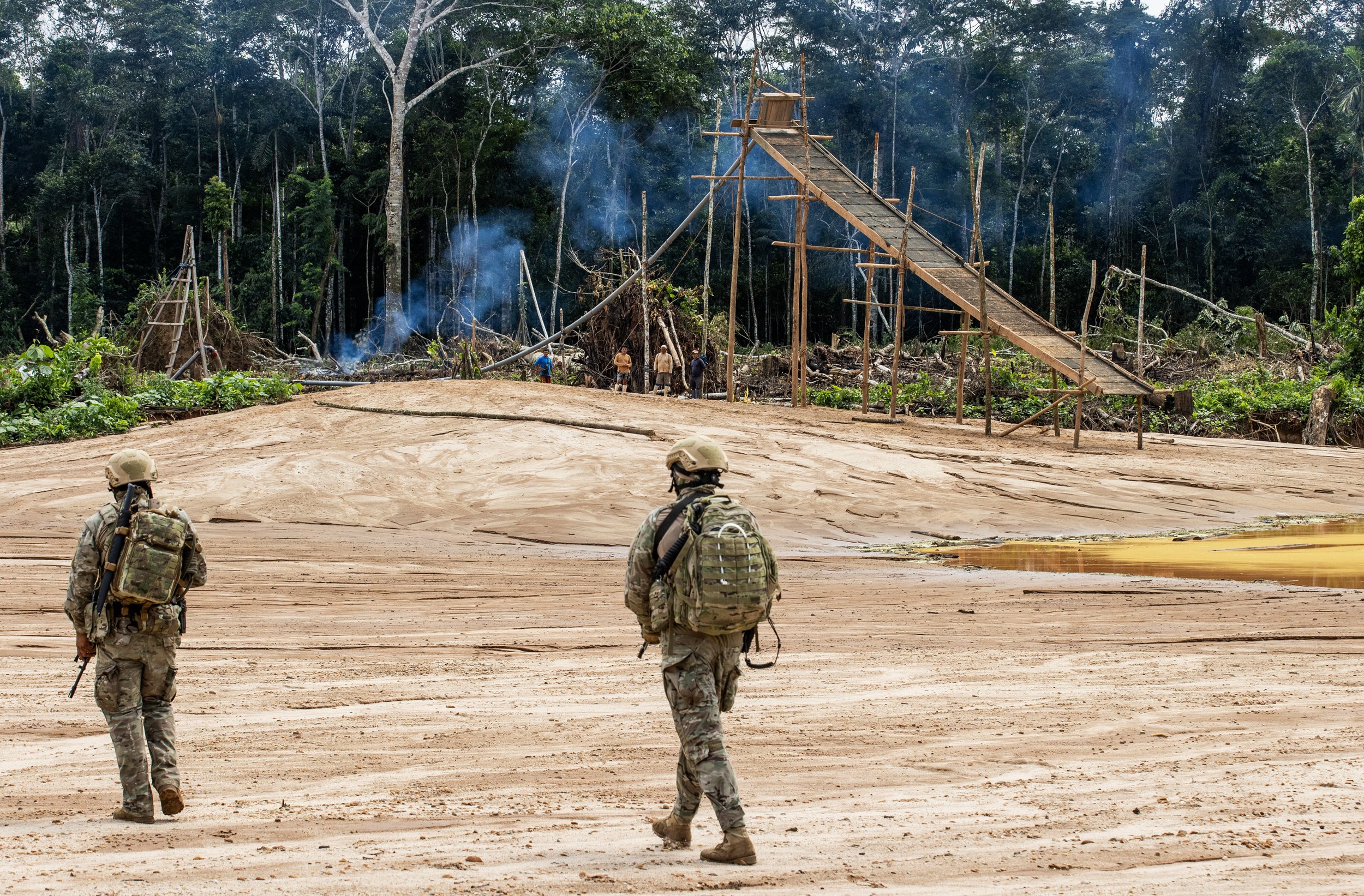
Miners gather in an area, watching as Peru’s joint patrols arrive, before they are forced to help destroy their own machinery.
In Lima on August 10th, The Attorney General of Peru, Tomás Gálvez Villegas, signed an agreement with Global Conservation and stated, “As we are facing combined threats from organized cartels dealing in illegal drugs, gold mining, and criminal activities against our environment and communities, we are taking the opportunity to sign cooperation agreements with Global Conservation to reinforce our protection and enforcement capabilities in Tambopata National Park and its buffer zone—a national and world treasure facing rapid destruction for the profits and greed of a few.”
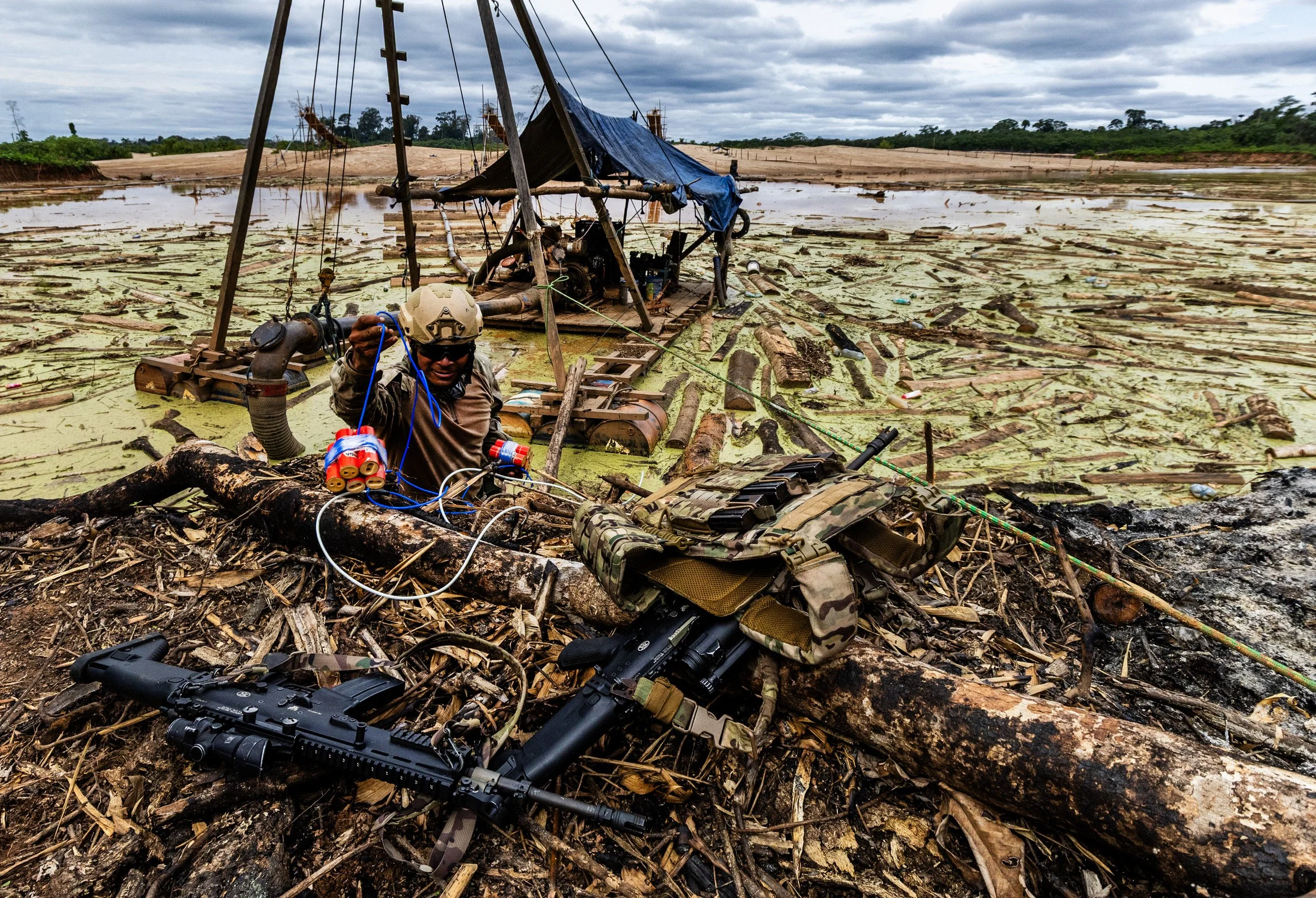
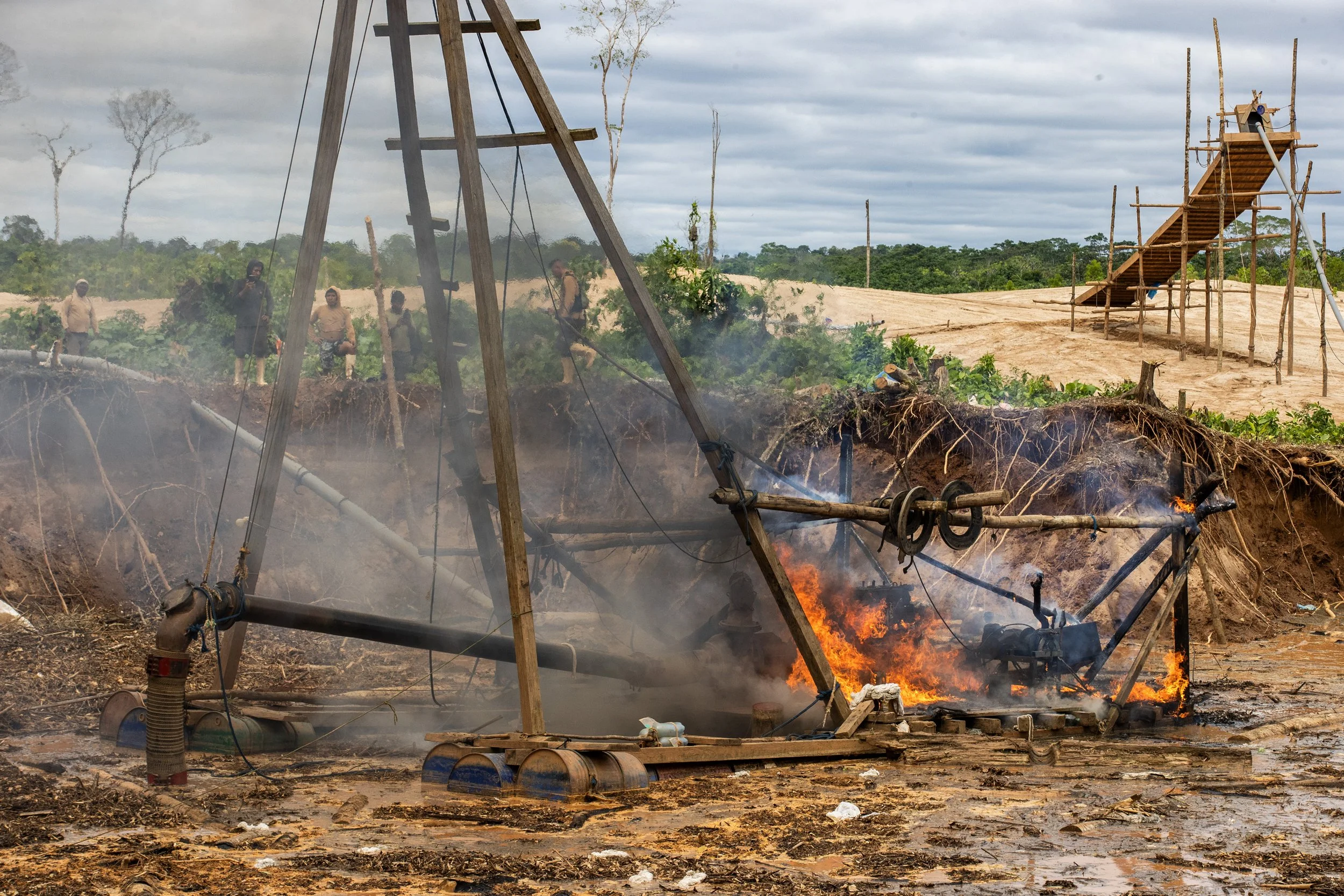
Specialist soldiers prepare explosives to blow up the mining rigs.
Jeff Morgan, Executive Director of Global Conservation, said, “Illegal gold mining in national parks is crossing the Red Line for Peru’s government. We are launching Operation Mercury 2 together to show the world Peru will no longer allow illegal mining in their national parks, polluting the rivers and water supplies for hundreds of thousands of people and wildlife; causing death and sickness for the next hundred years.”
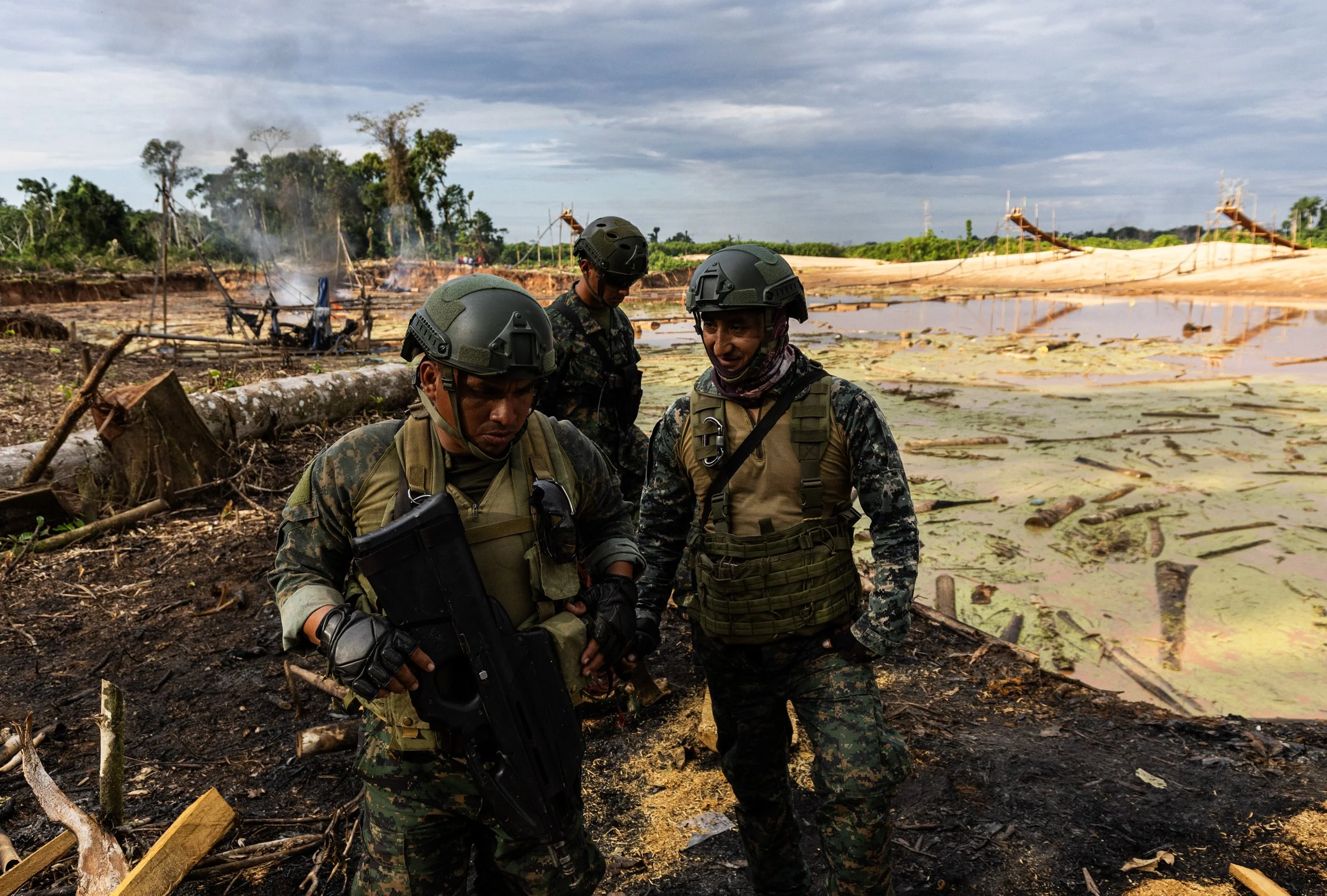
With a mine site already burning in the background, soldiers move from the blast zone into safety for the next ignition.
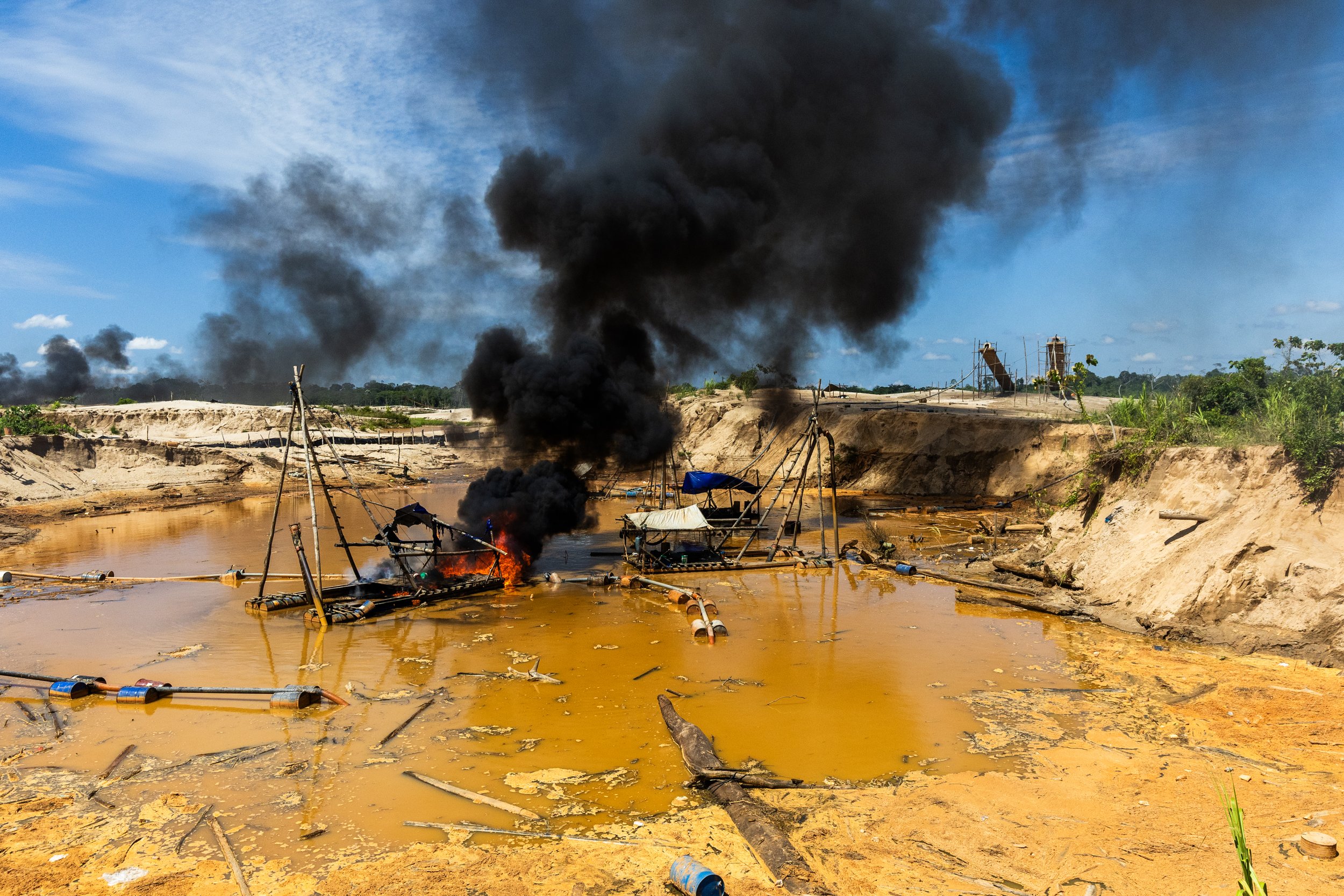
Margoth Quispe, Director of South America for Global Conservation, announced on the first day of Operation Mercury 2 that “We are very pleased with how Operation Mercury II has begun. The Public Prosecutor's Office, the Armed Forces, and SERNANP have already succeeded in destroying more than 90 engines, rafts, and dredges, as well as fuel supplies and electric generators. We are at a critical juncture for the conservation of the Amazon.”
“Here in Peru, we must protect our natural parks from illicit economies that have already crossed the government’s Red Line. It has been proven that multi-stakeholder coordination implemented through Global Conservation’s Global Park Defense program is the most effective strategy for combating illegal mining in our national parks and indigenous territories over the long term. No one community, park authority, or government agency alone can succeed.”
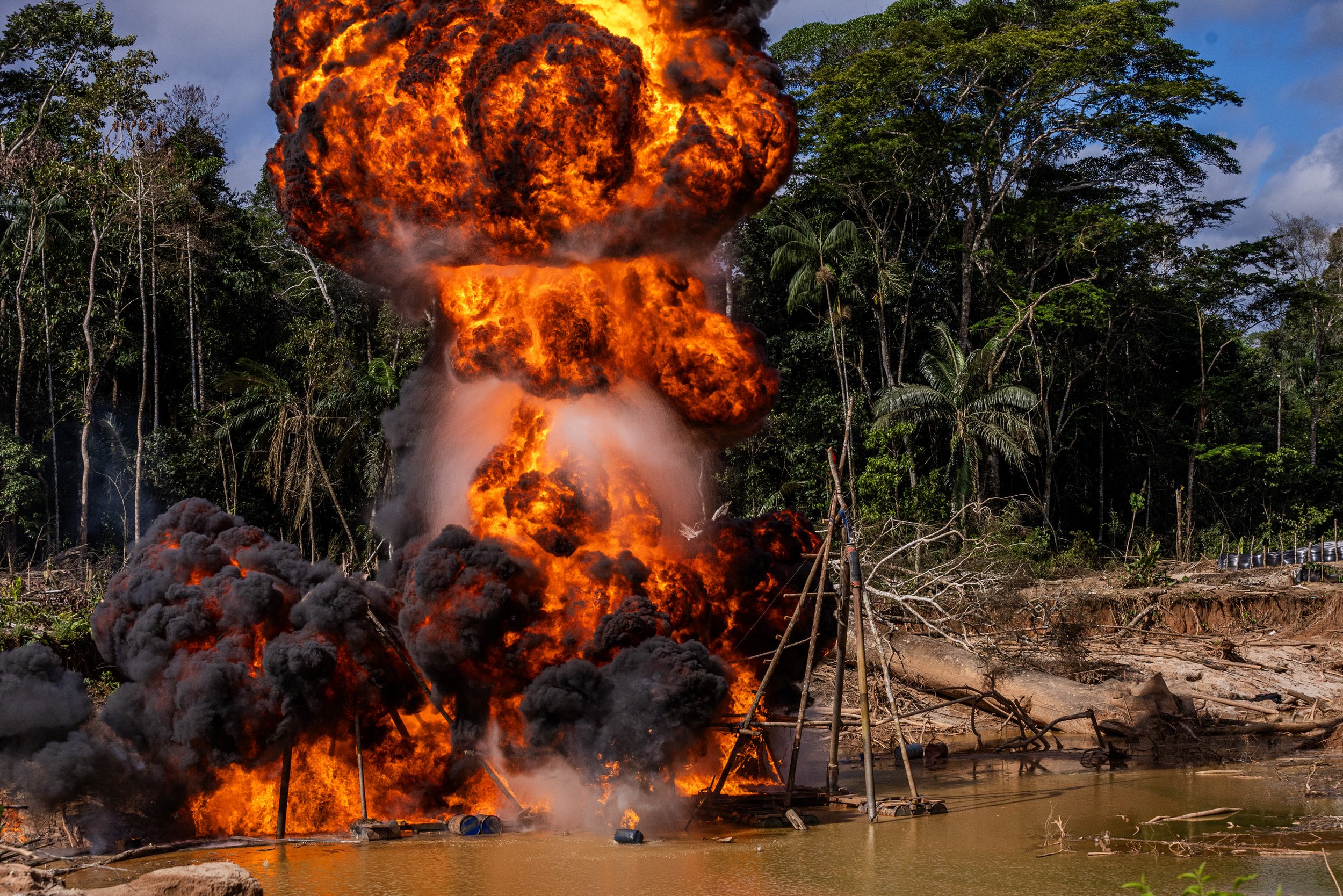
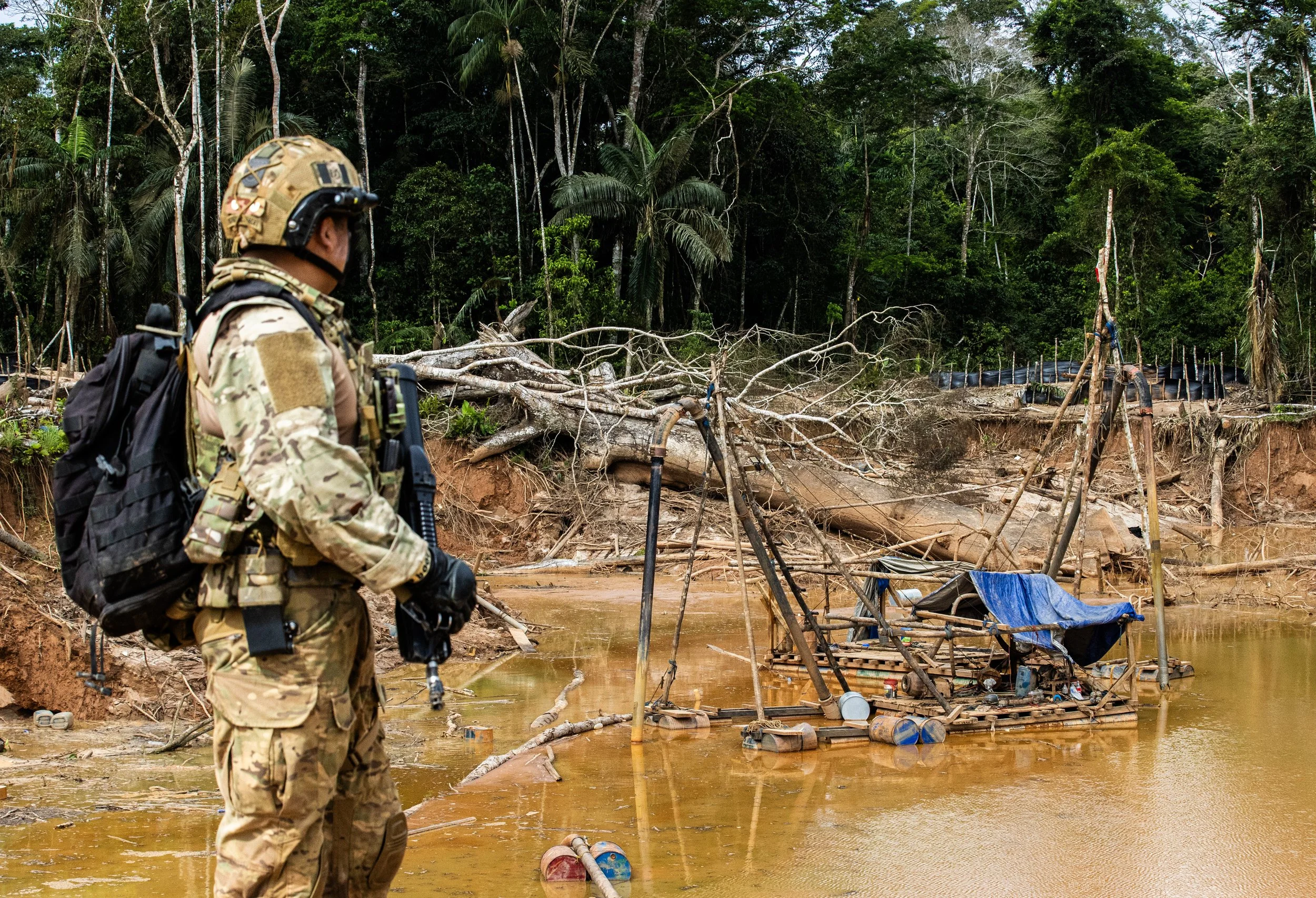
One by one, mining sites and encampments are destroyed.
Background – Global Conservation Mission in Peru
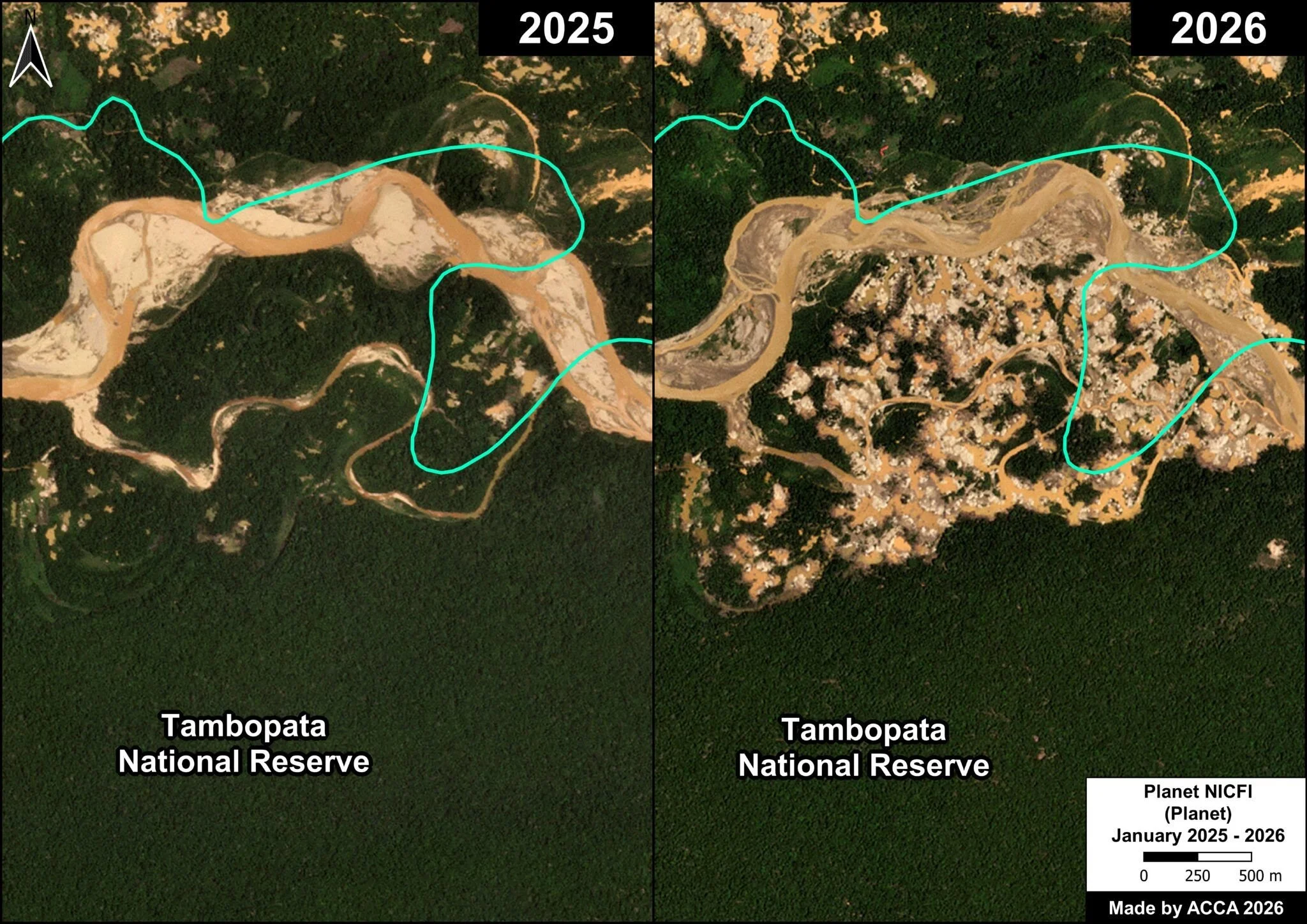
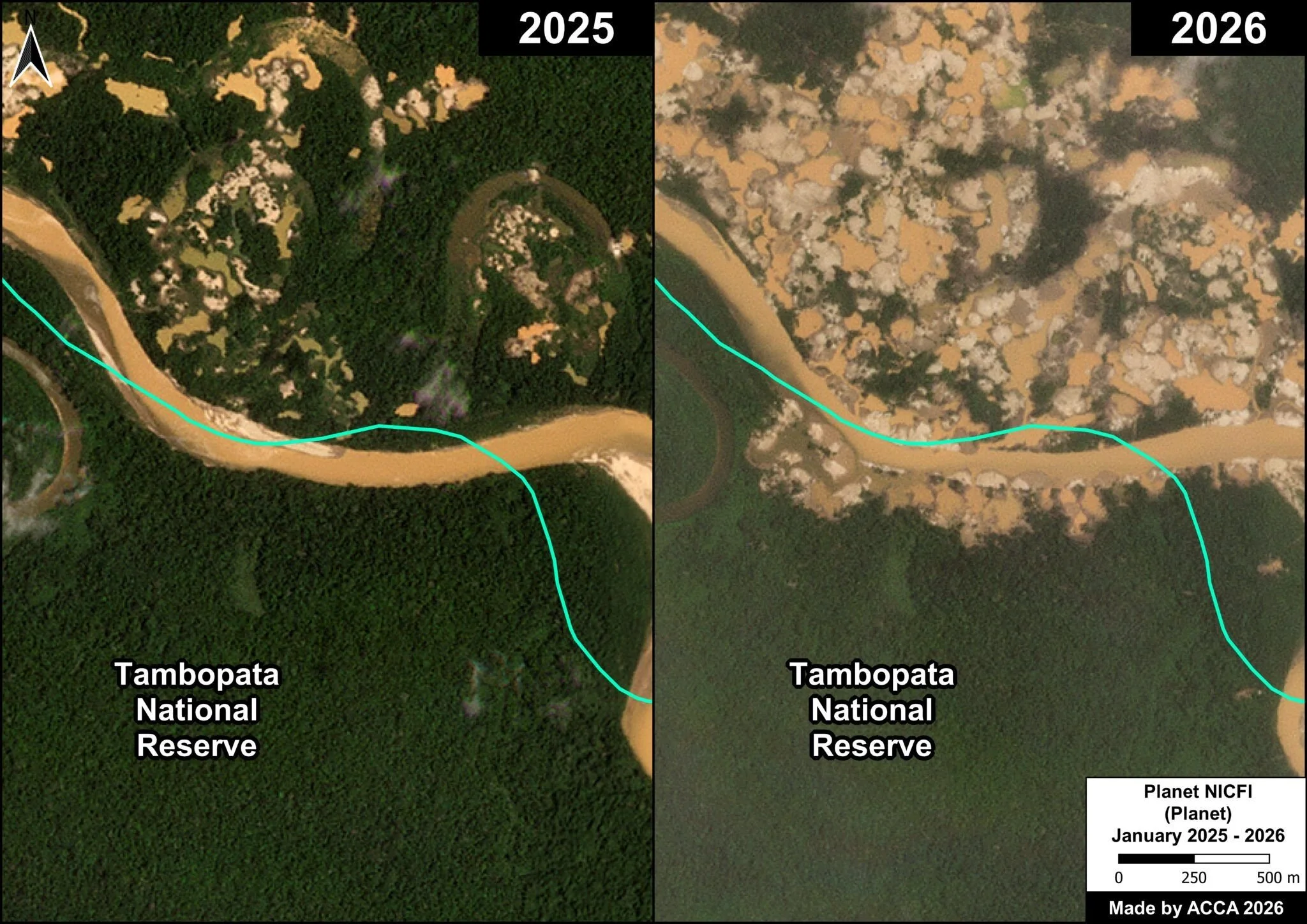
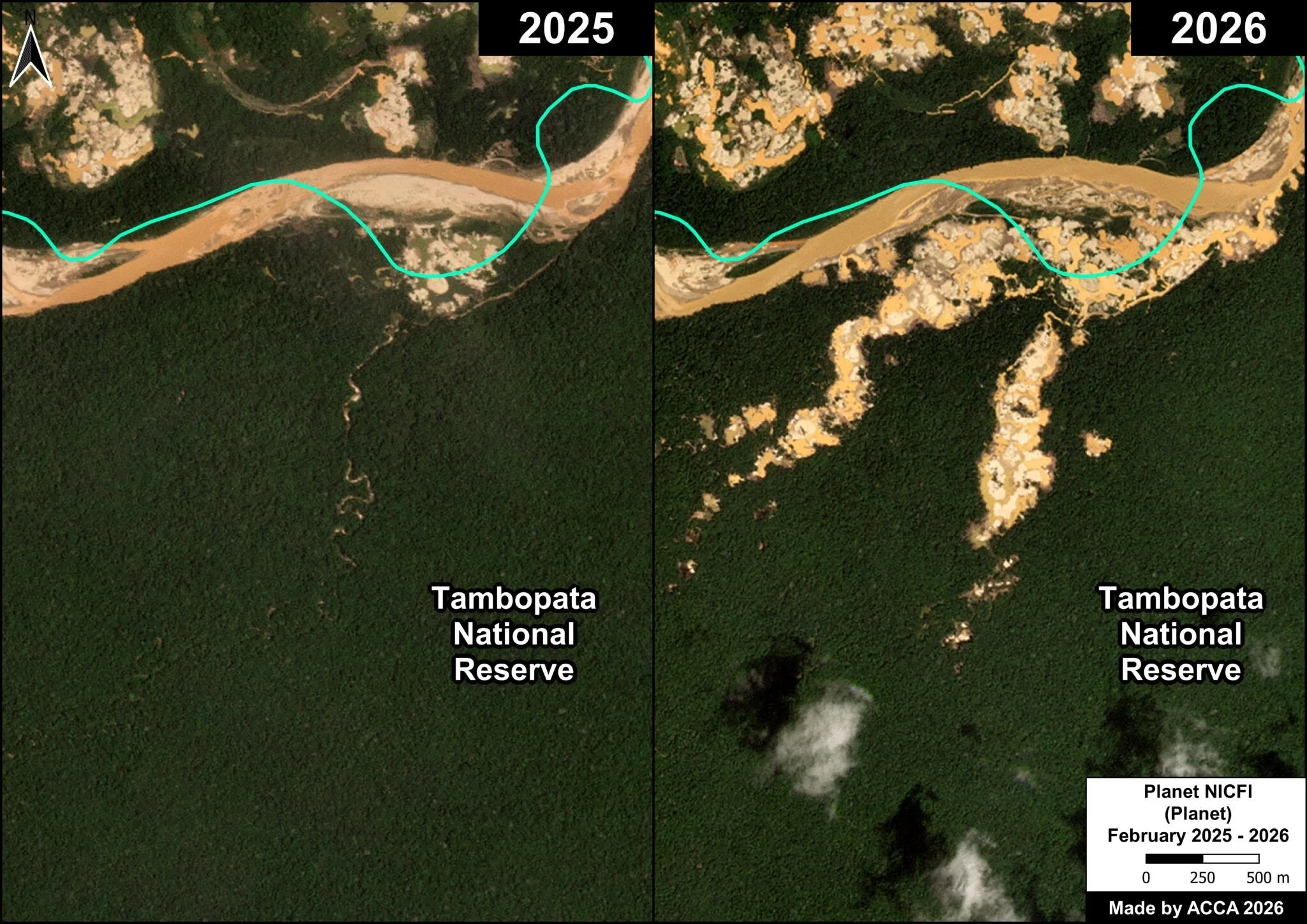
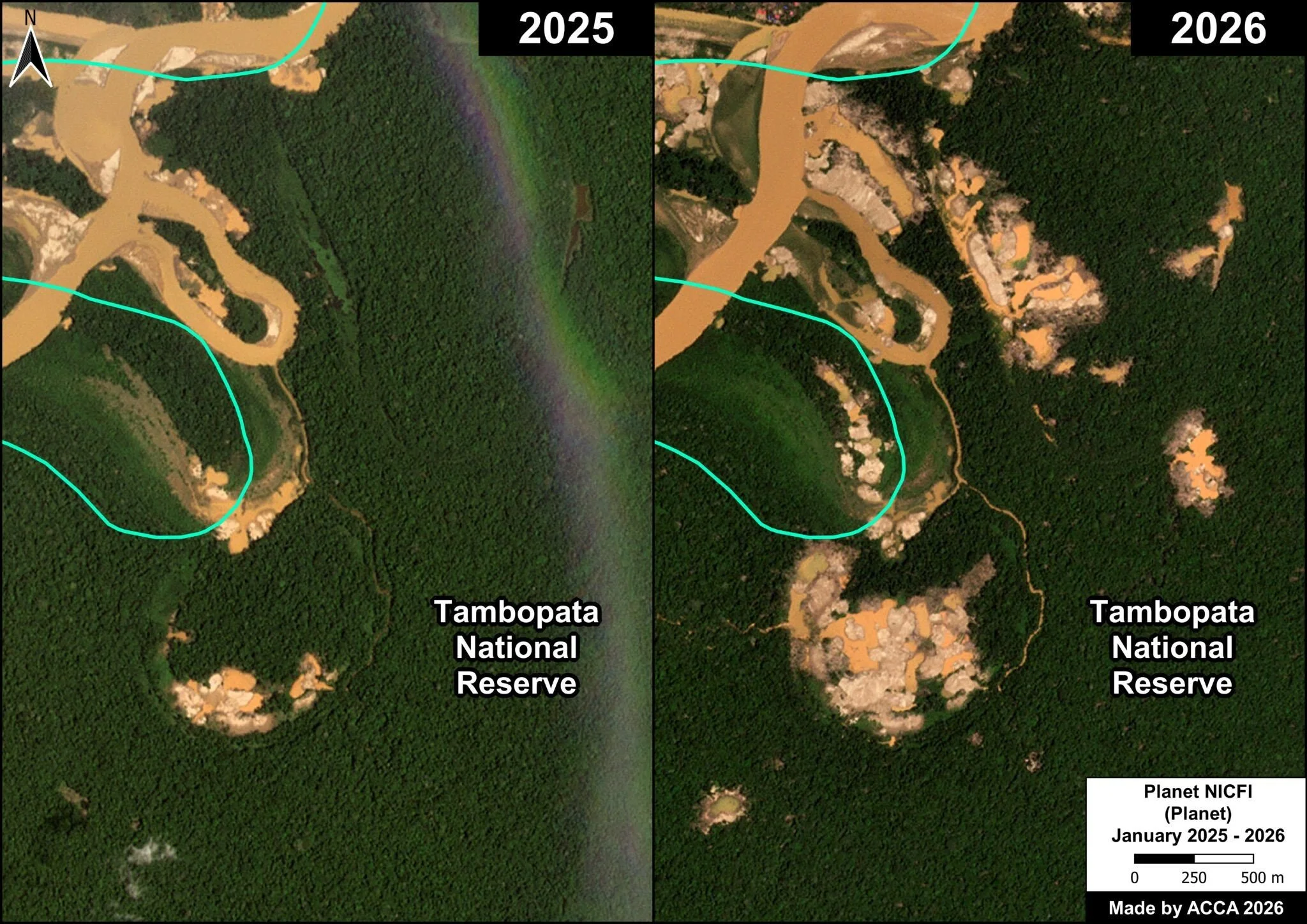
Illegal gold mining is causing massive and permanent destruction of the Amazon rainforest, poisoning its rivers for hundreds of thousands of people and causing long-term cancer and birth defects for those who drink the water and eat fish from the polluted rivers. According to a recent report by the Monitoring of the Andean Amazon Project (MAAP), over 2 million hectares (nearly 5 million acres) have been destroyed in the past 20 years.
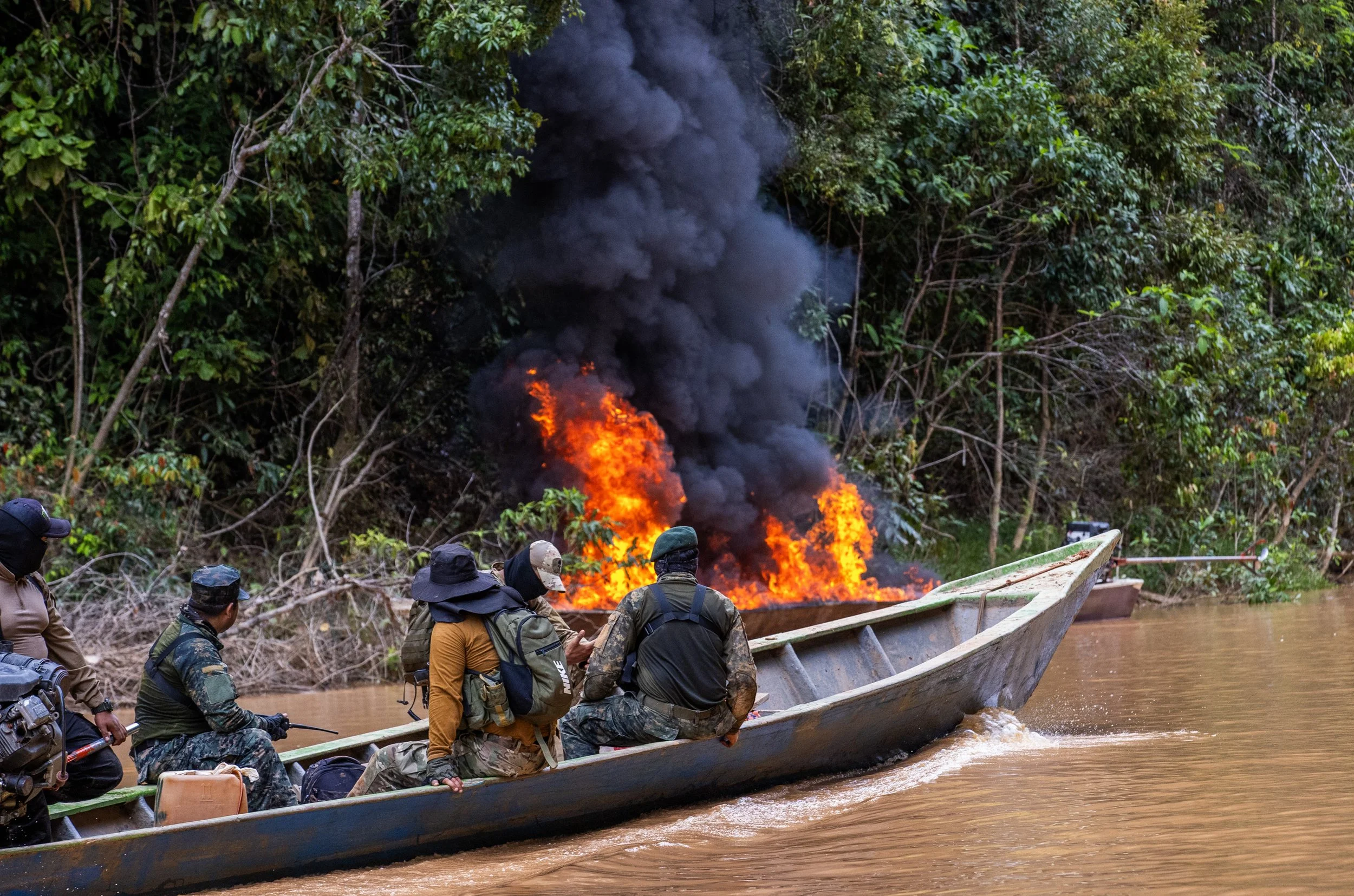
Peru’s forces move onto the next one.
Global Conservation has been working with Peruvian authorities and Indigenous communities to strengthen protection of the country’s endangered national parks facing illegal mining, land clearing for coca cultivation, wildlife poaching, and illegal logging. GC has formal partnerships with Peru's National Parks Authority (SERNANP), the Justice Ministry’s Specialized Environmental Prosecutors Office and the Peruvian Air Force for aerial surveillance.
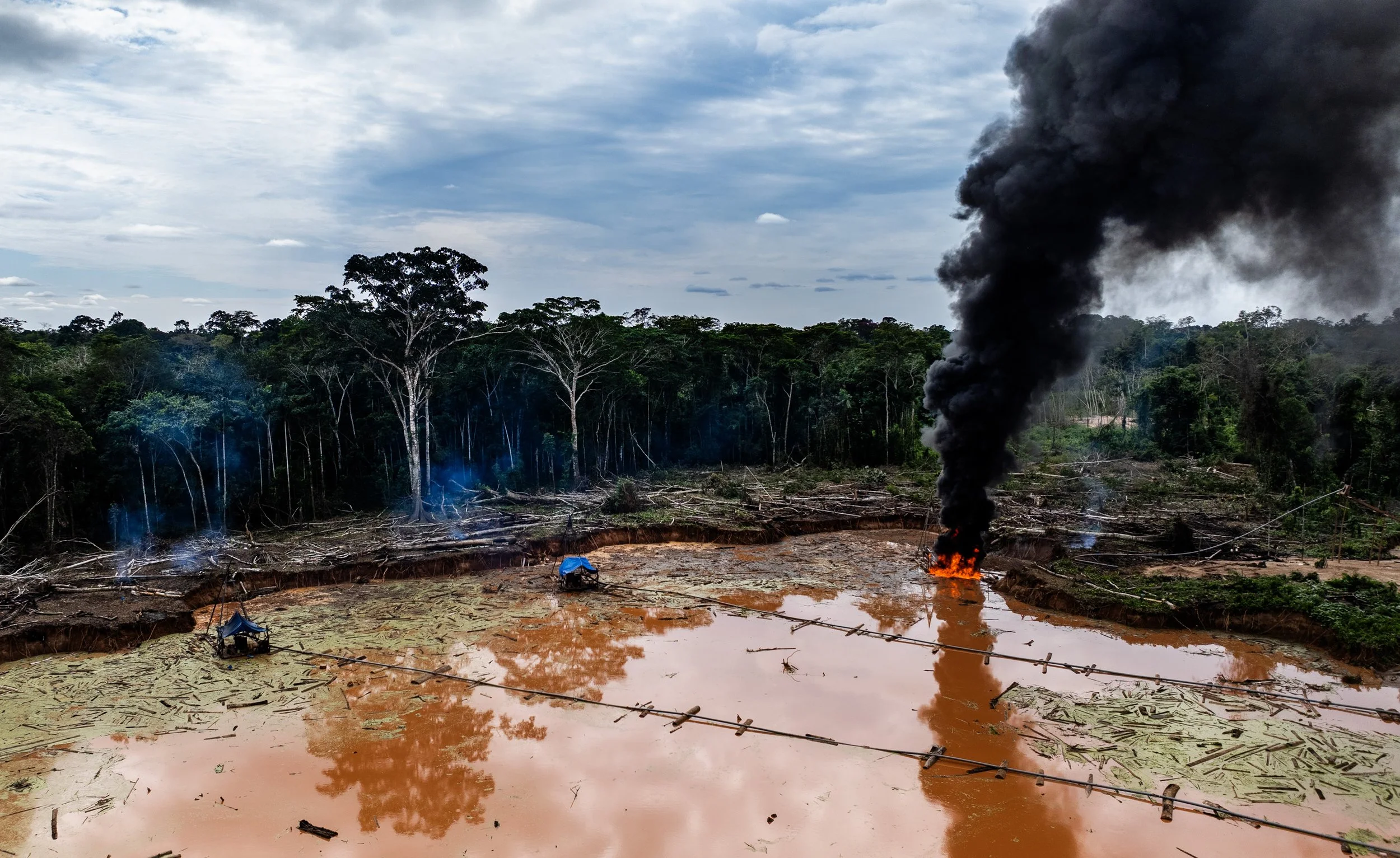
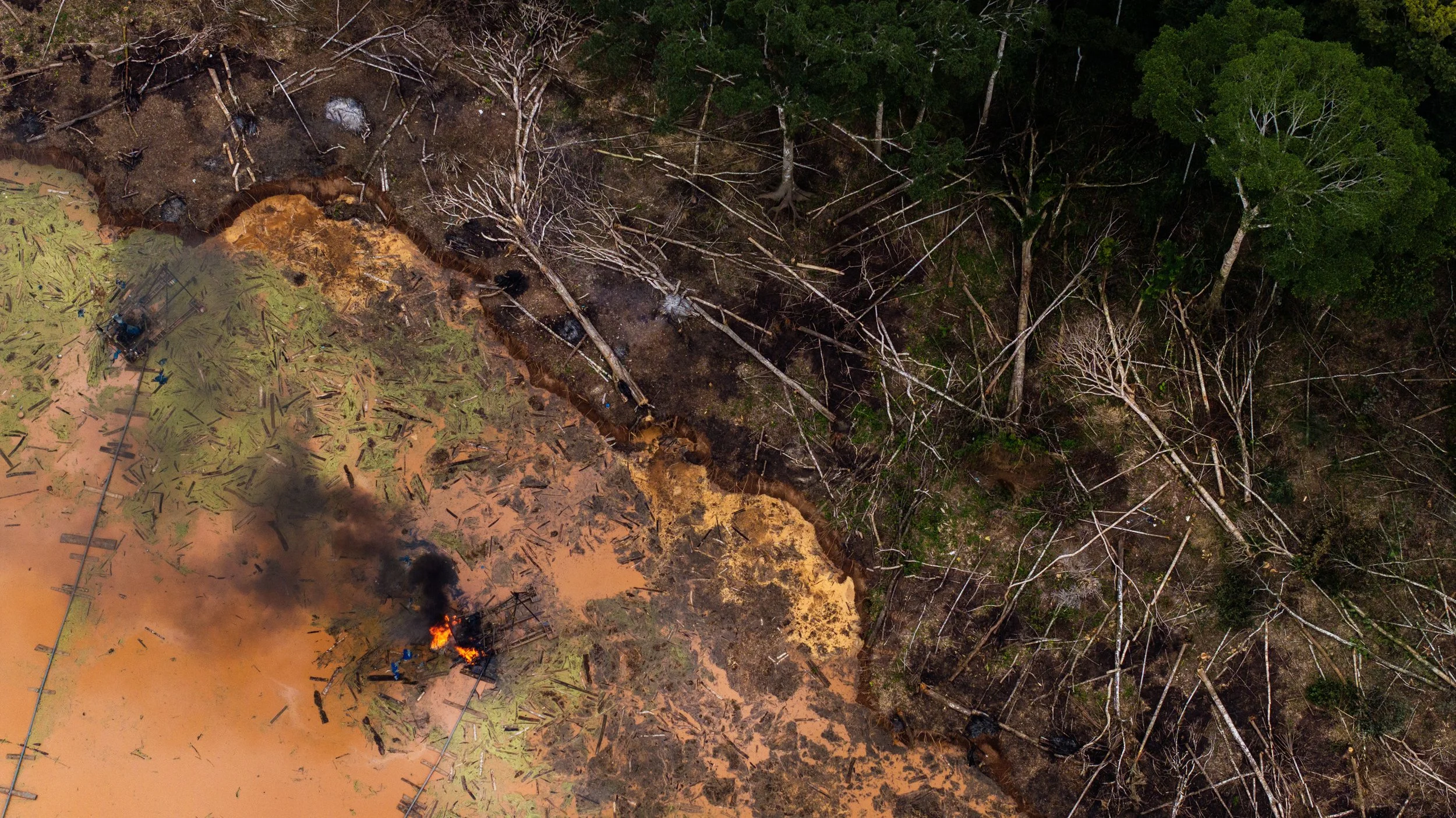
The first of three is raised to the ground, or in this case, to the surface of the poisoned water.
Global Conservation’s mission in the Amazon is to convert real-time satellite monitoring into actionable enforcement efforts to protect national parks before large-scale destruction and strengthen long-term enforcement capacities to protect Peru’s globally significant tropical forests, rivers, and wildlife from organized environmental crime.
GC is working to bring the same level of multi-agency enforcement to nature protection in endangered national parks and indigenous territories of Peru, Ecuador, Bolivia, and Colombia.
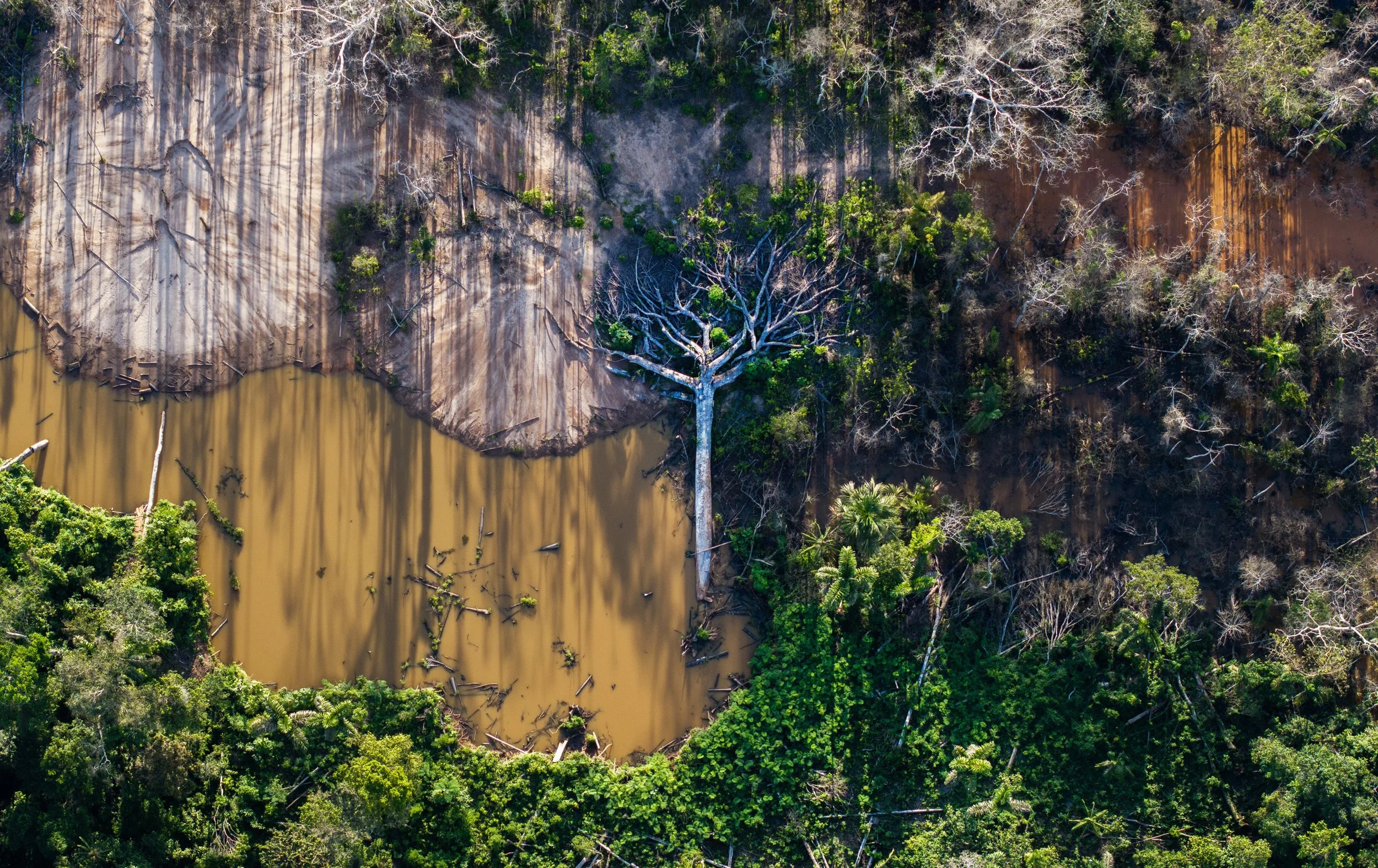
One of the largest trees felled in the area transforms into a haunting symbol of the effect gold mining has on Peru’s natural ecosystems. Countless thousands of animals that called this one tree home, let alone the entire destruction of the local habitat, are now dead or have fled the area.
A Better Future
Tambopata National Park has over 40,000 visitors a year, bringing in $20-30 million in tourism revenues for local communities, many of which are indigenous. Tourism to Peru’s national parks today generates over $5 billion a year, including more than $1.2 billion in nature tourism to these spectacular parks. While gold mining is 2% of GDP, tourism is 8% of Peru’s economy and employs 1.2 million Peruvians.
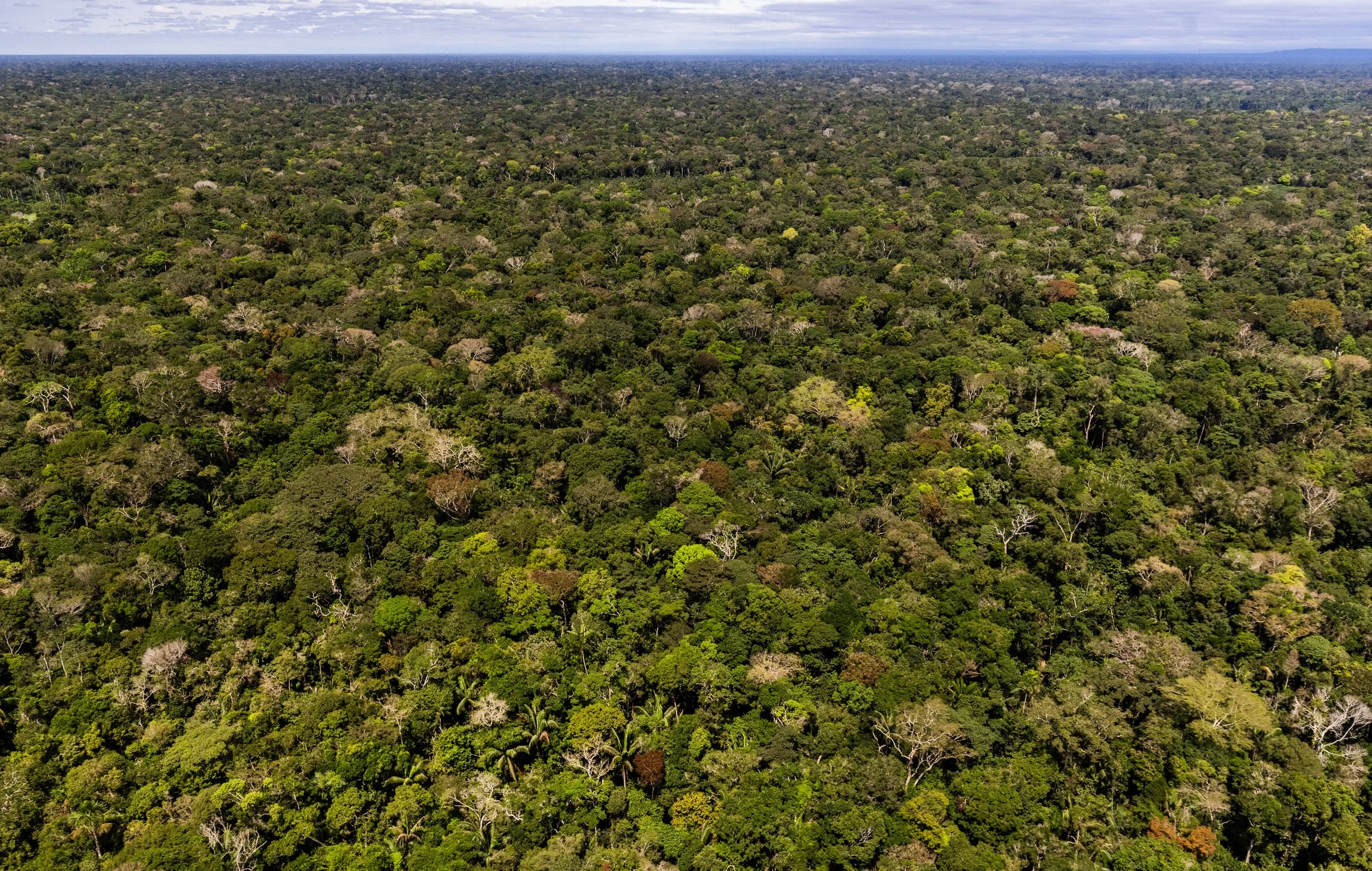
Global Conservation is proposing a long-term solution for balanced economic development in Madre de Dios province of Peru. Instead of destroying Tambopata National Park and its surrounding forests for one-time gold mining, Global Conservation and the Government of Peru must protect the last remaining intact tropical forests and wildlife habitats of Tambopata for future generations and long-term tourism revenues.
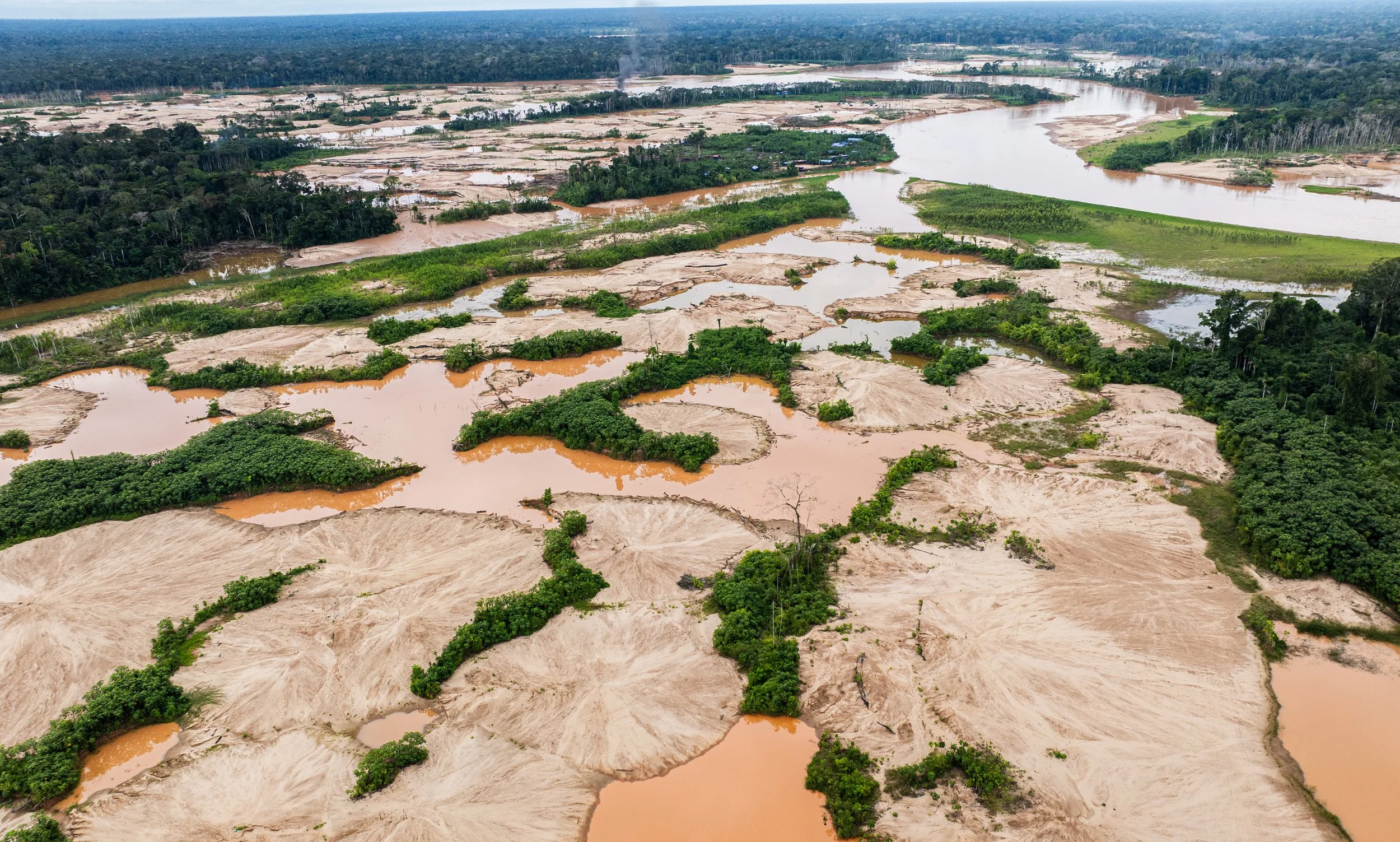
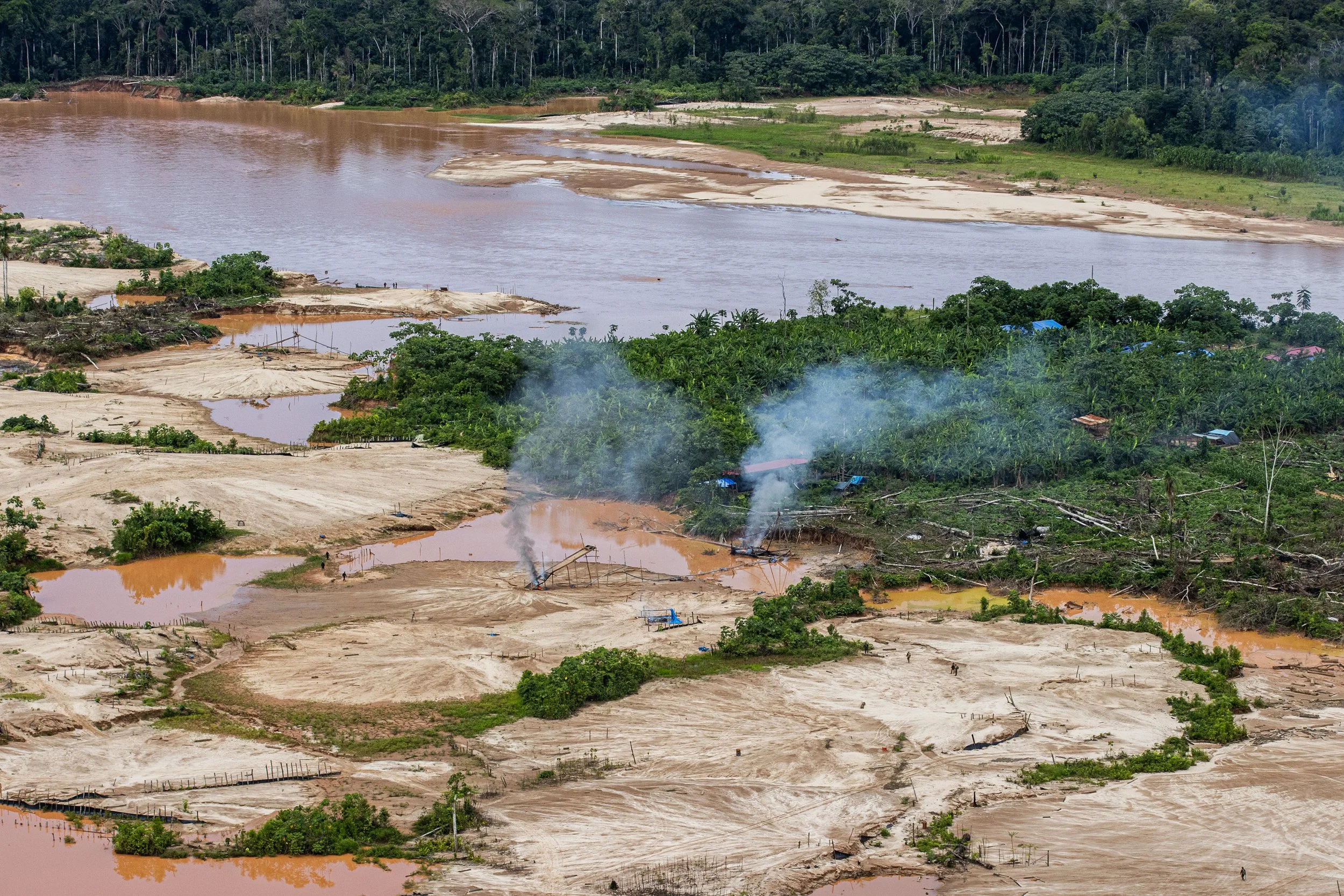
The destruction caused by mining operations is even more evident from the air. This area is just one of hundreds that plague Peru.
Featured in Other News Outlets
More Related Peru News from Global Conservation
Photos and Video
Images by Paul Hilton/Global Conservation. Note to media: no archives, no resales, one-time use only.
Photo and Video Downloads of Operation Mercury II This Week:
Media Access
Members of the press are invited to request rights-free footage and photography will be made available. Interview opportunities are available with:
Jeff Morgan, Executive Director, Global Conservation
Margoth Quispe, Director of South America, Global Conservation
Press Contacts
Julia Pacetti, Verdant — julia@jmpverdant.com
Cordelia Sklansky, Verdant — cordelias@jmpverdant.com