Breaking GC News: BBC and Reuters Covers GC Rhino Reintroduction in Kidepo Valley NP Uganda
Updated 03/18/26
Photos by Paul Hilton
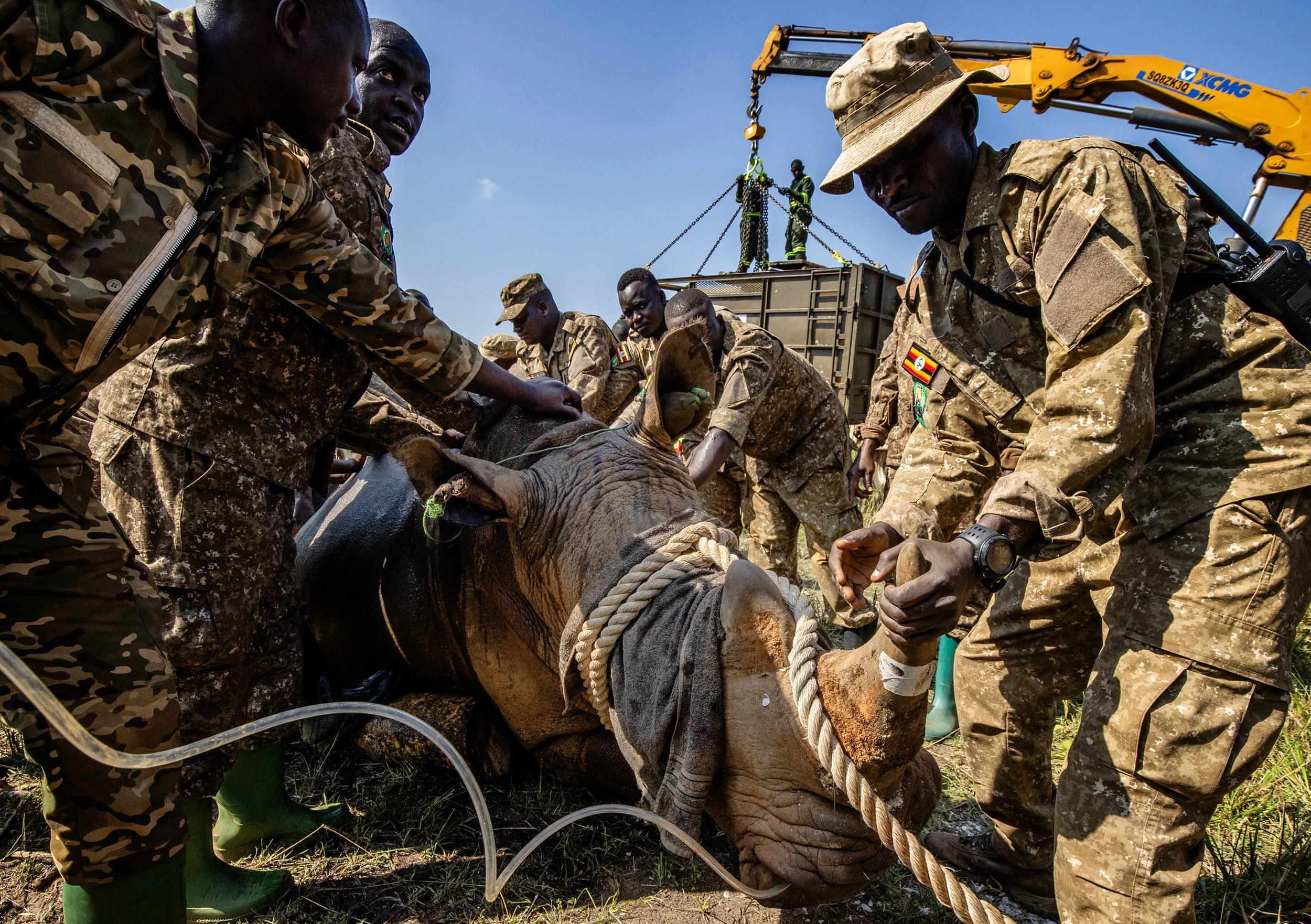
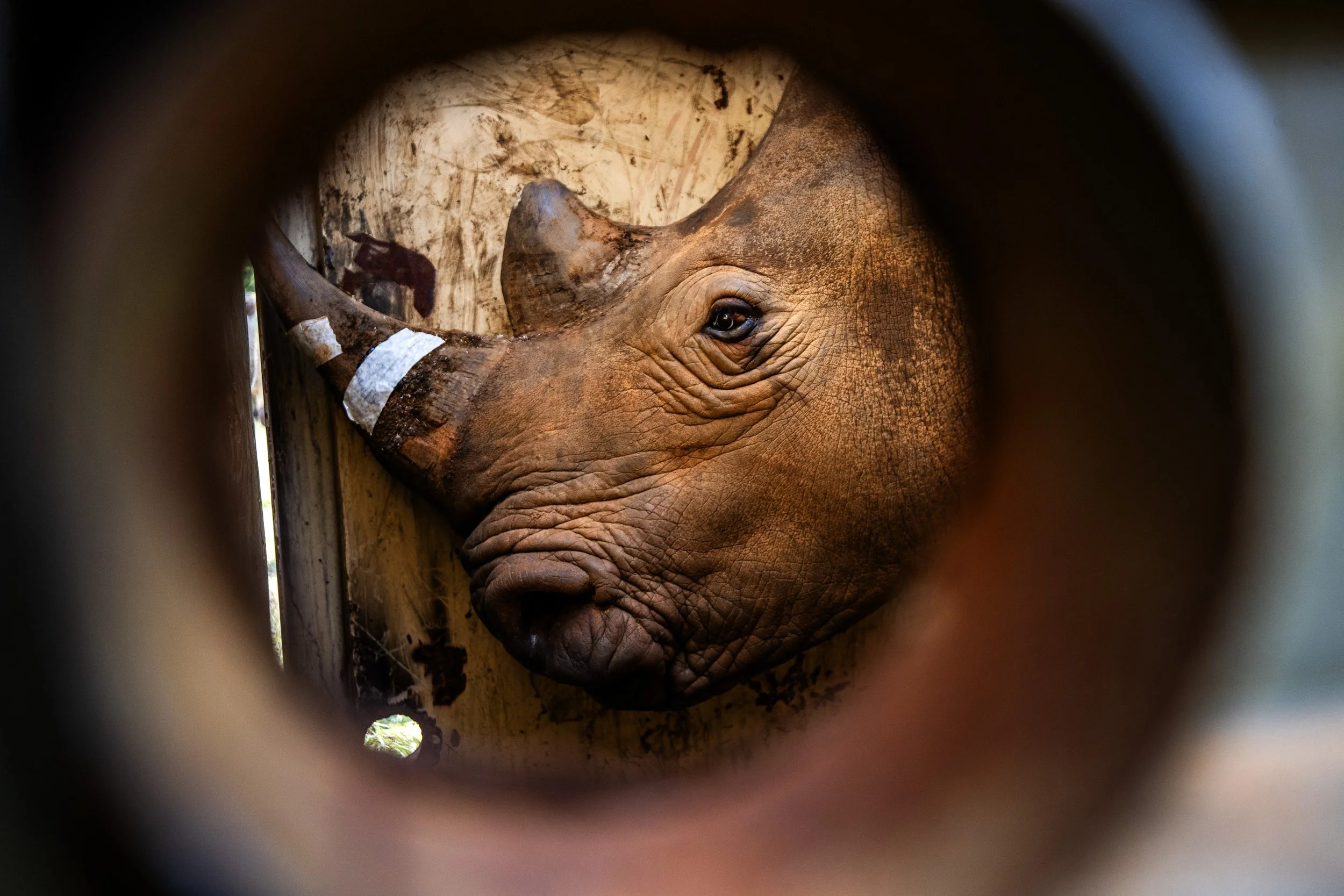
In a historic moment, four rhinos were released back into the wild at Kidepo Valley National park in Uganda. Global Conservation is on-site on behalf of the Uganda Conservation Foundation, which supports the Uganda Wildlife Authority to protect Uganda’s wildlife and stunning landscape. Global Conservation has been funding parks across Uganda for over seven years; this event is a massive day for rhinos and everyone involved.
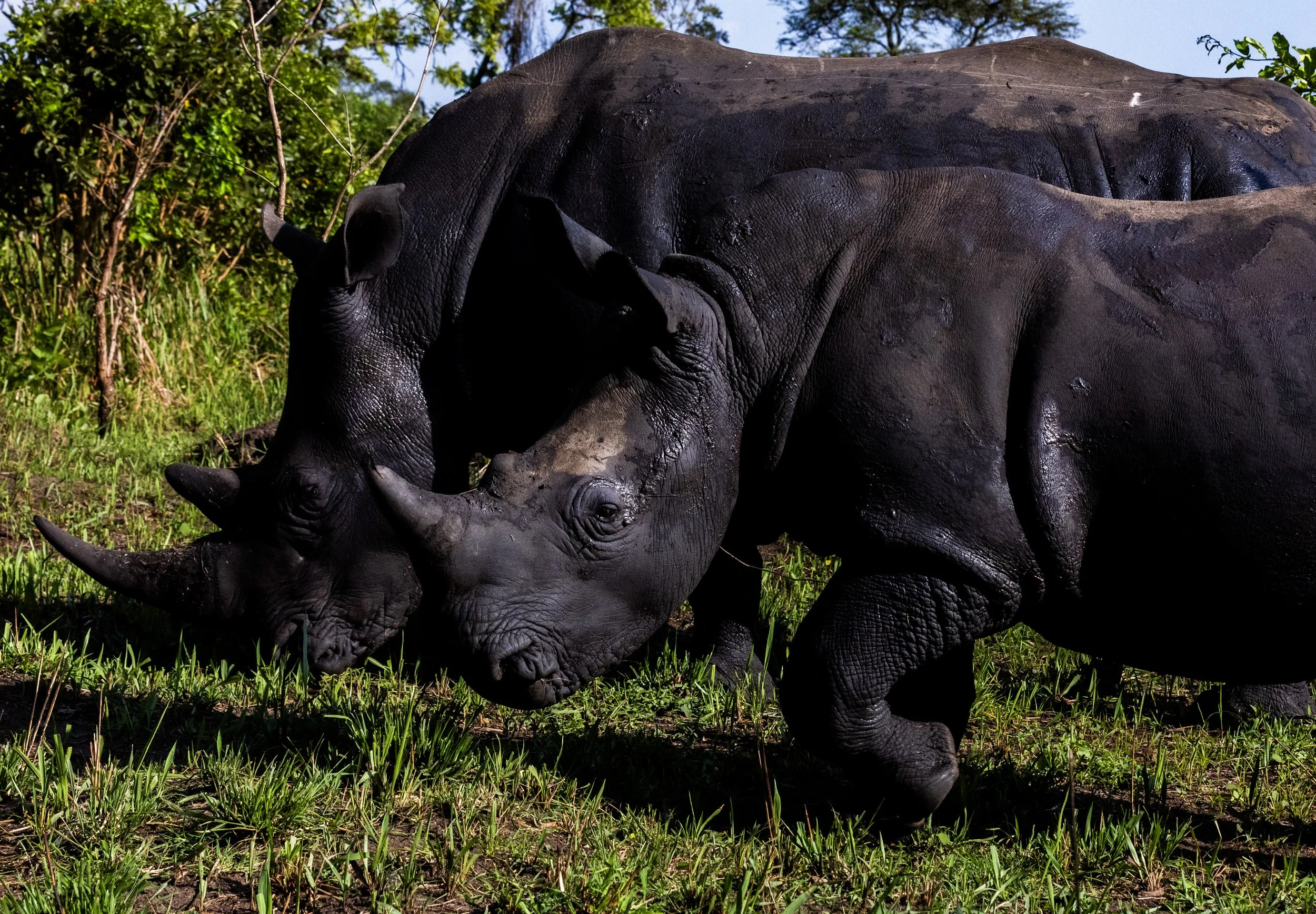
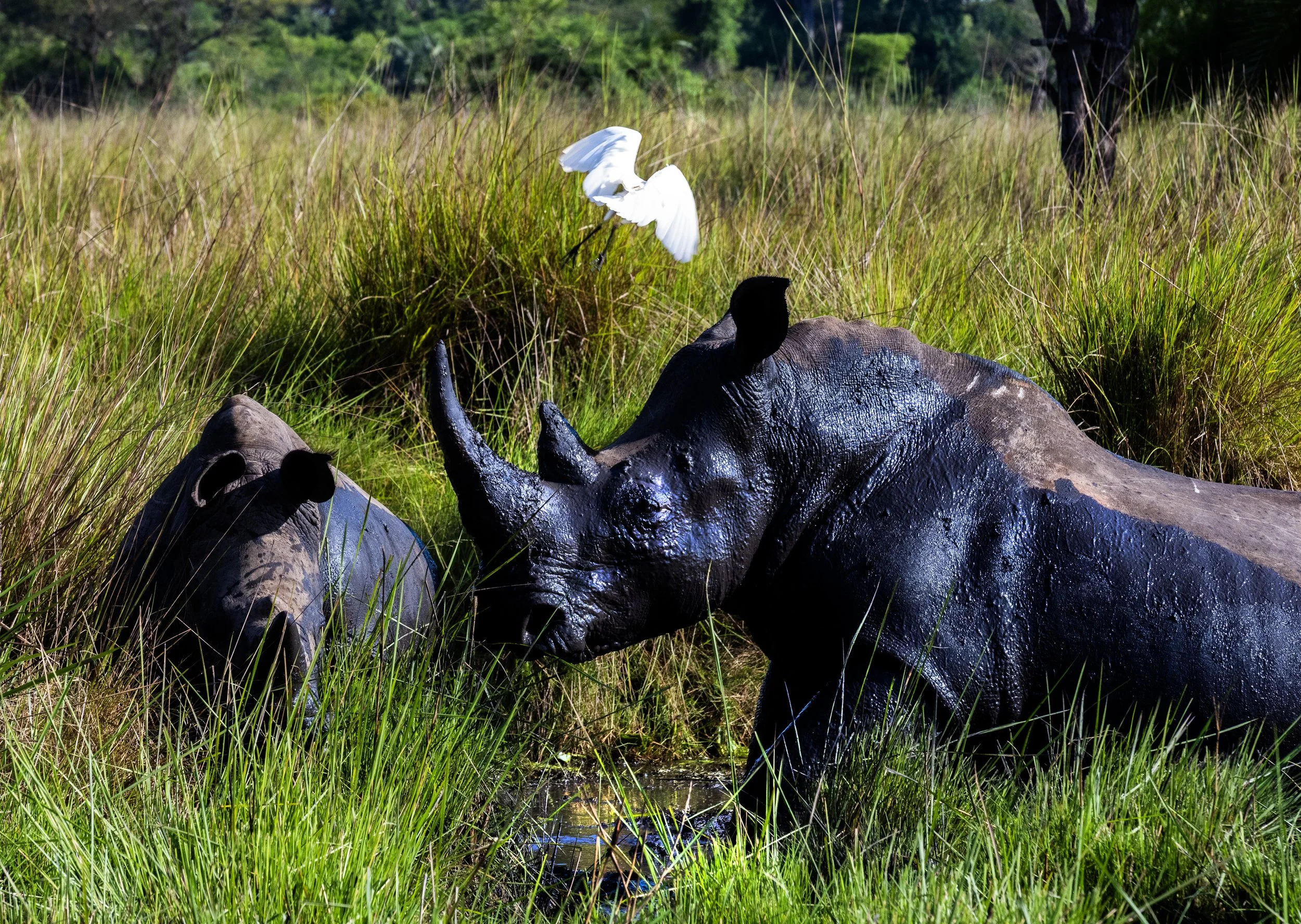
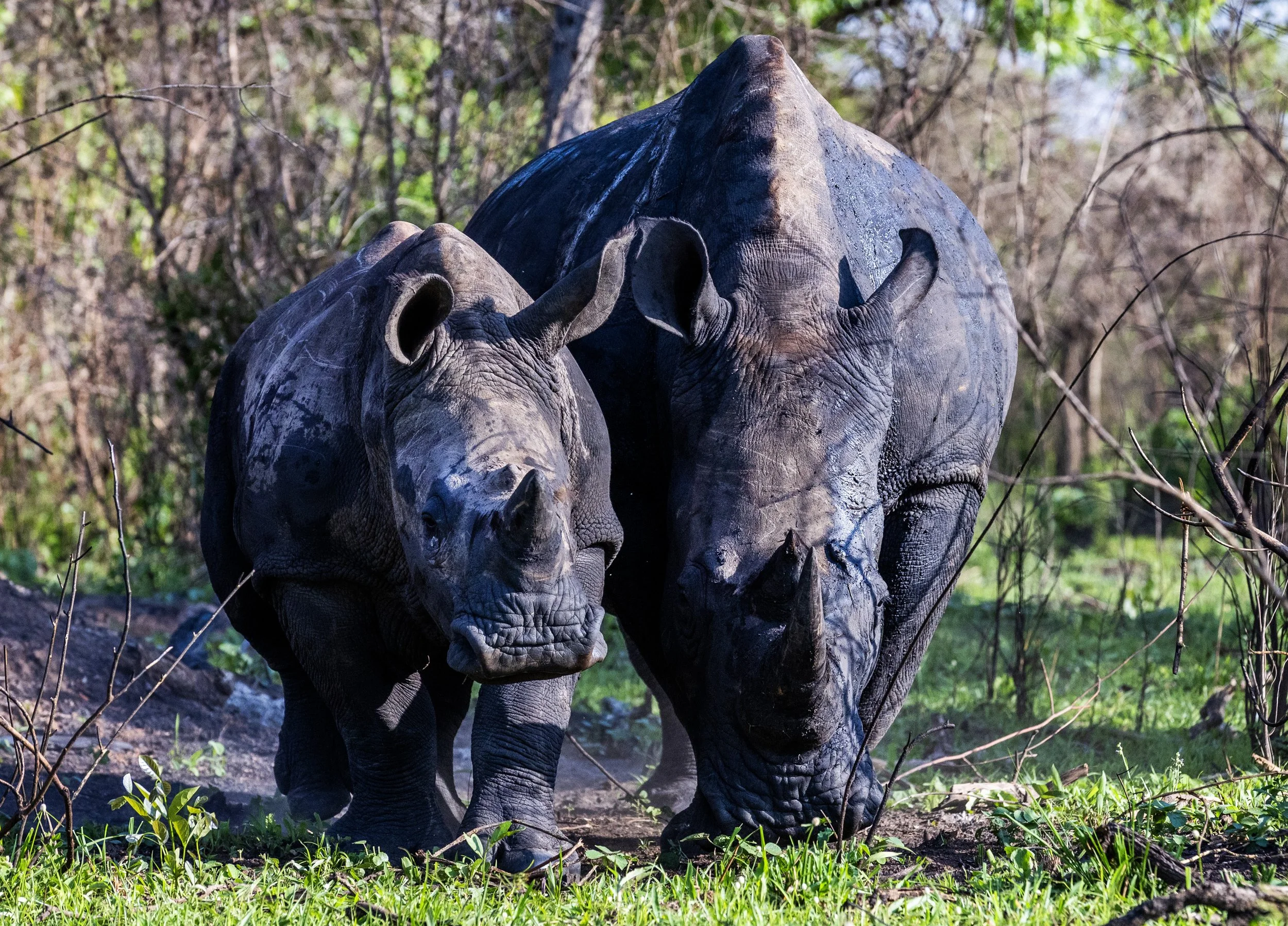
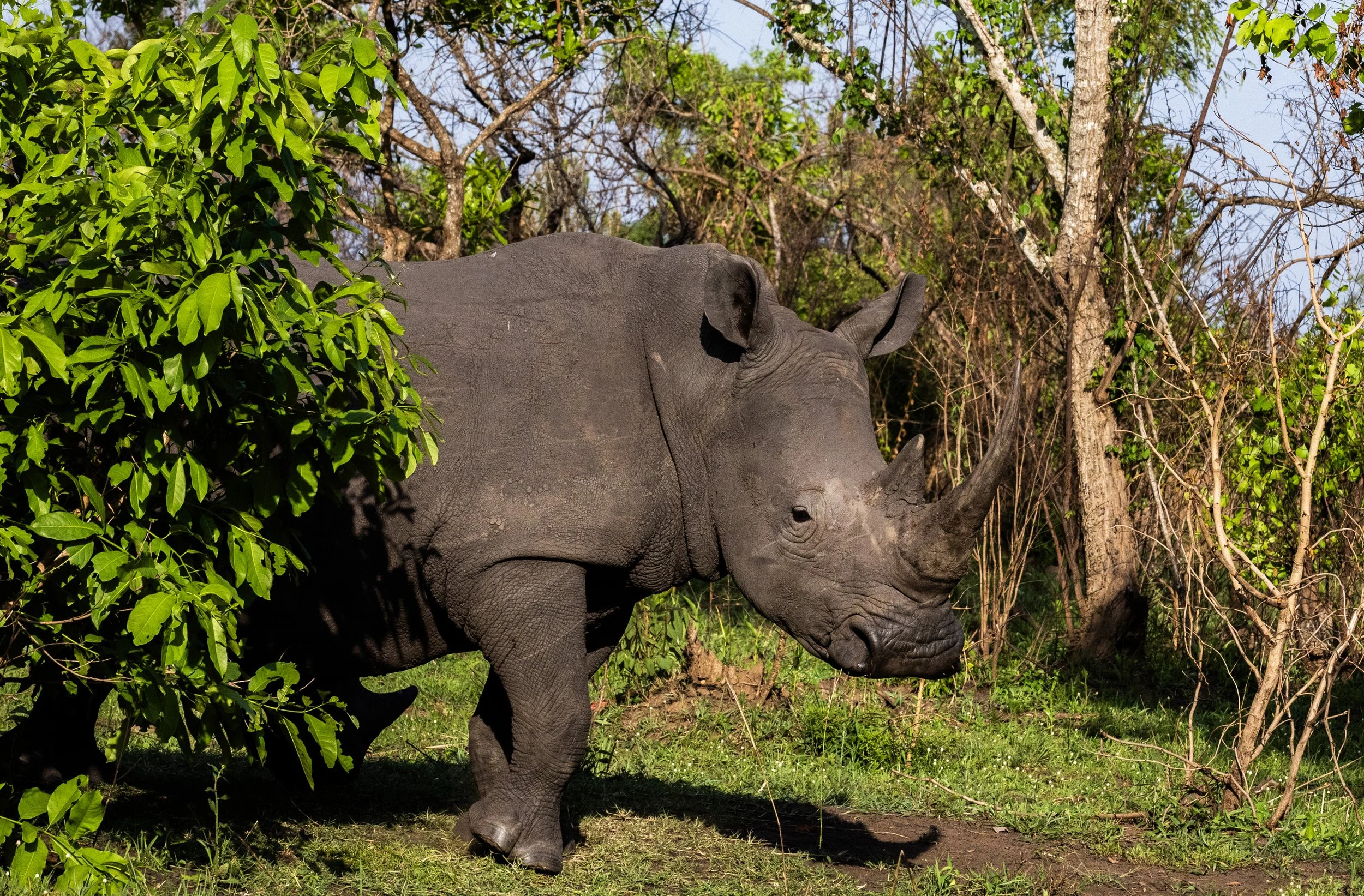
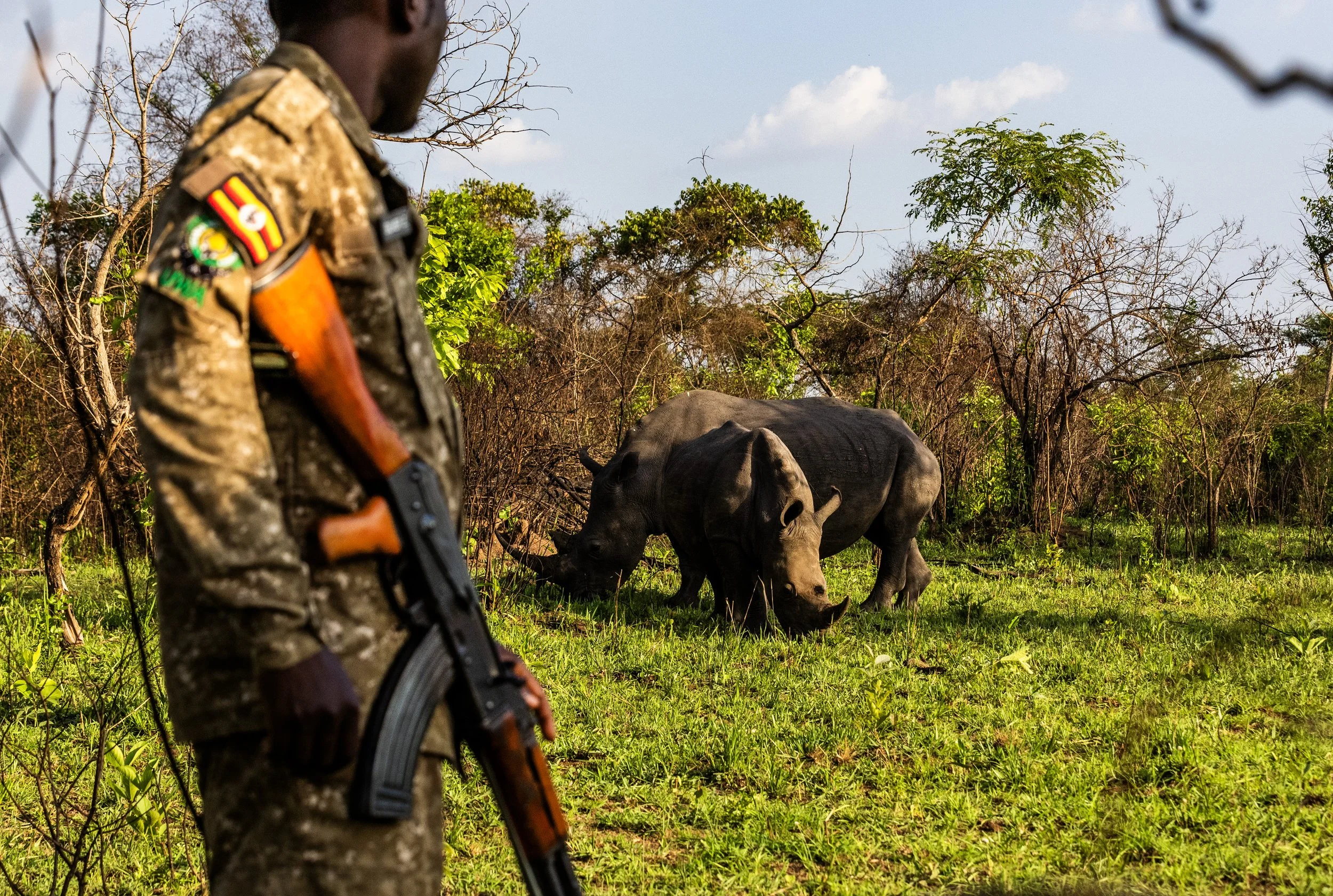
Above: Southern white rhinos at Ziwa Rhino Sanctuary, Uganda, 16 March 2026.
Overview
Rhinos once roamed widely across Uganda but were wiped out by 1983 due to poaching, conflict, and failing protection. To combat the local extinction of rhinos, Ziwa Rhino Sanctuary was established in 2005 through a partnership between the Uganda Wildlife Authority and Rhino Fund Uganda.
After being wiped out by poachers for their horns and meat, rhinos have returned to Uganda's Kidepo Valley National Park for the first time in over 40 years.
We sent internationally renowned photographer and GC ally Paul Hilton to capture the momentous occasion as only he could.
Truly Historic
Translocations back into the wild began—first to Ajai Wildlife Reserve, and now, in a historic milestone, eight rhinos are returning to Kidepo Valley National Park after more than four decades.
On March 17, 2026, the reintroduction involved two rhinos sourced from the United States and Kenya. Now, after two decades of protection, the population has grown to 54.
Global Conservation is proud to be part of this historical moment.
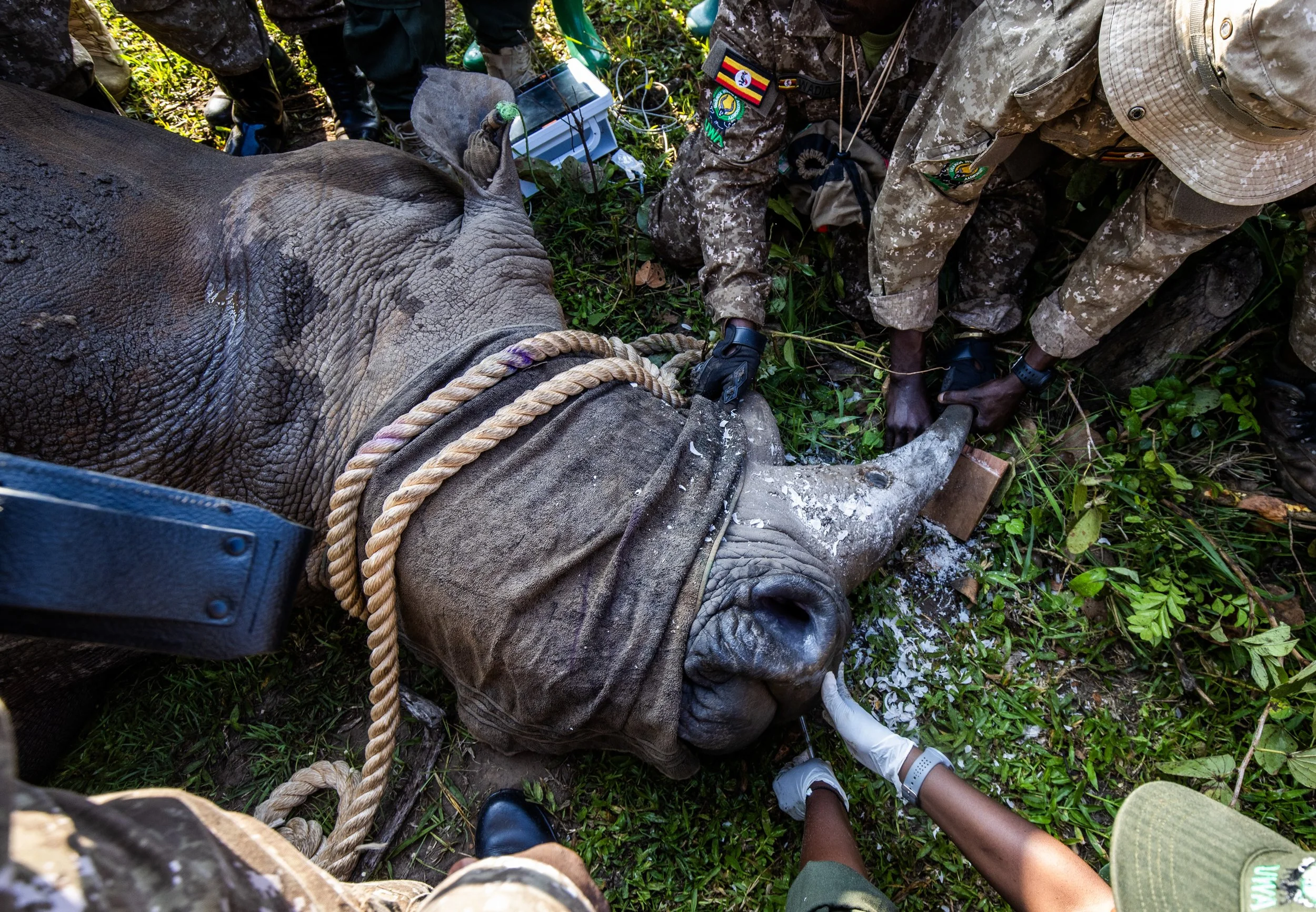
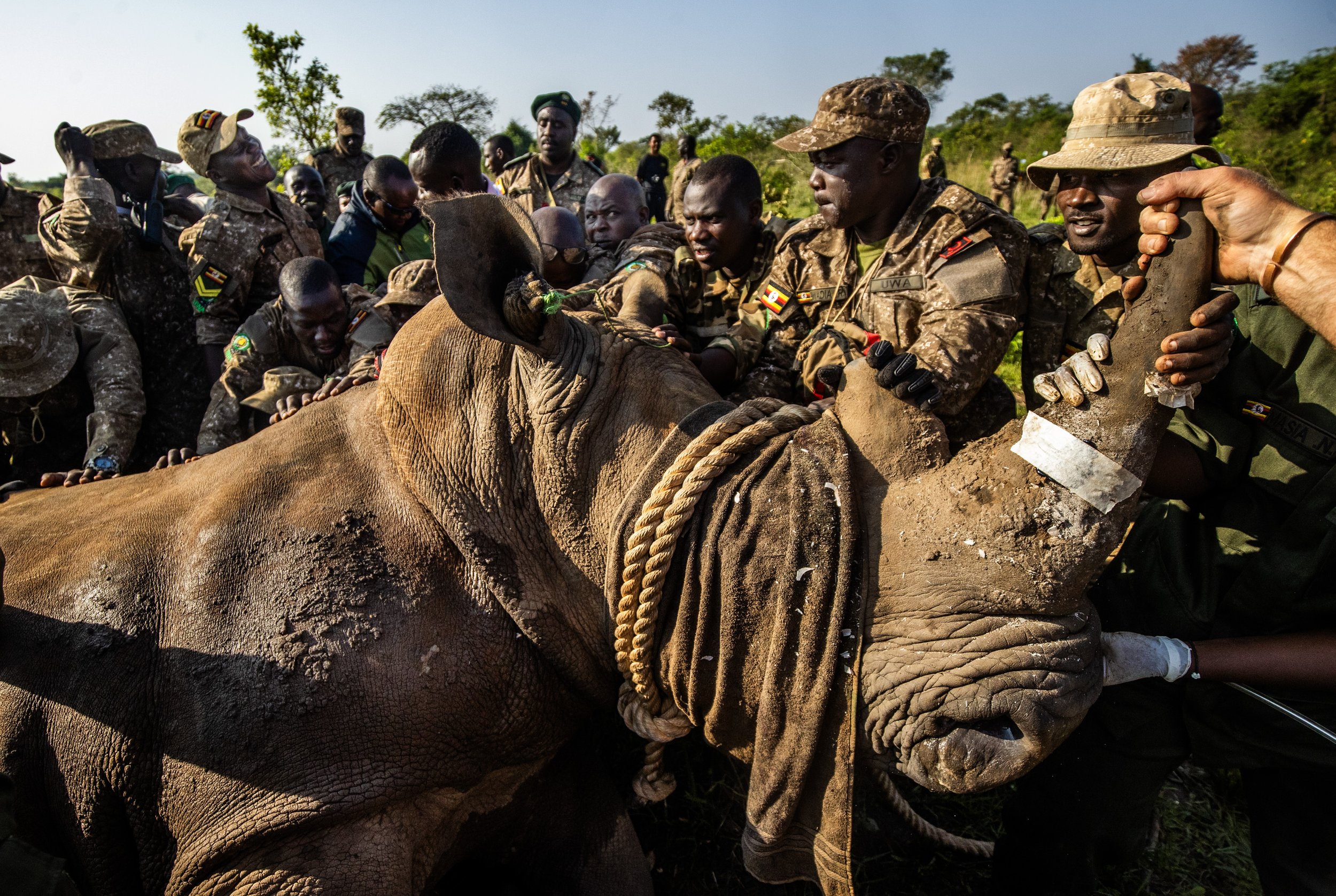
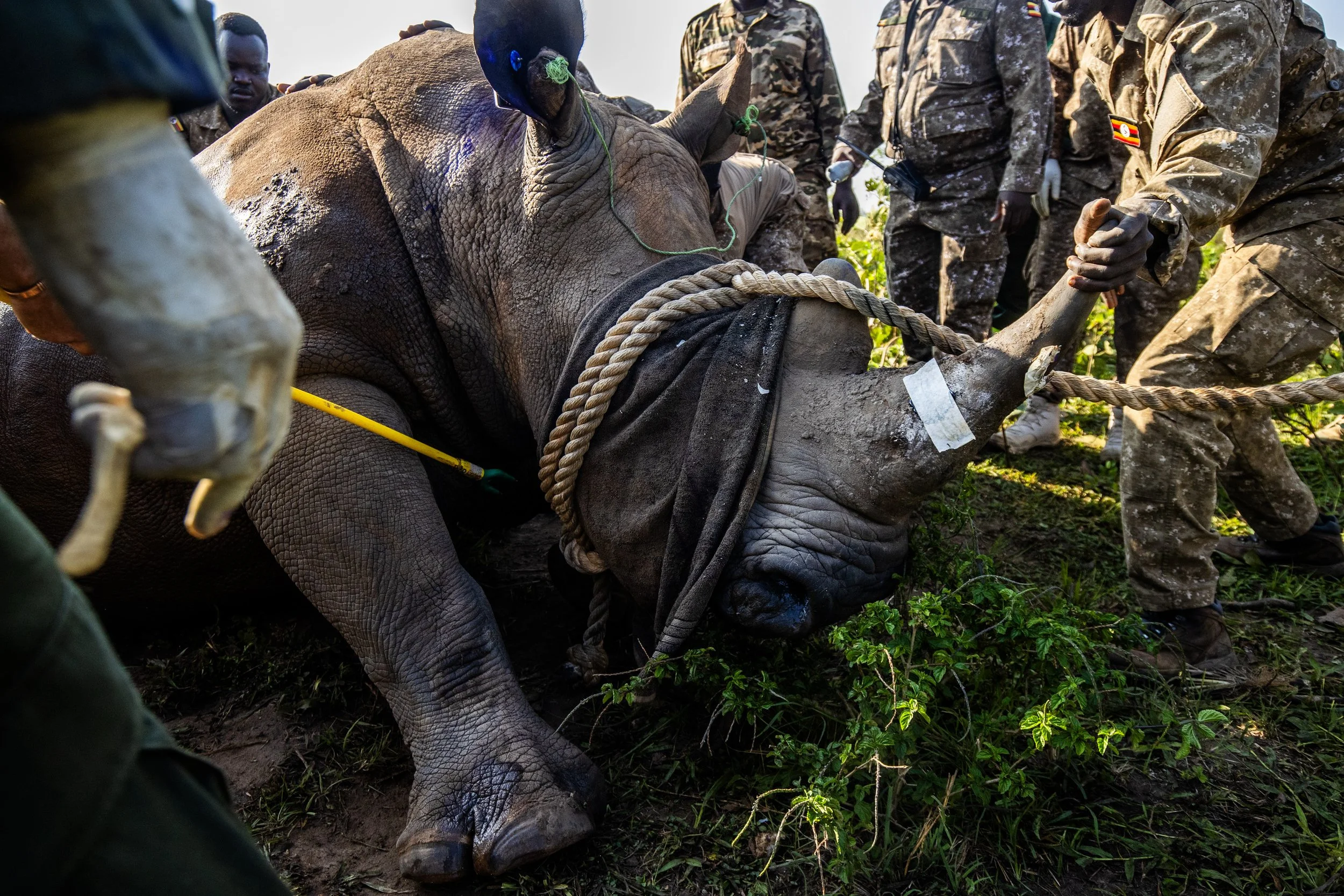
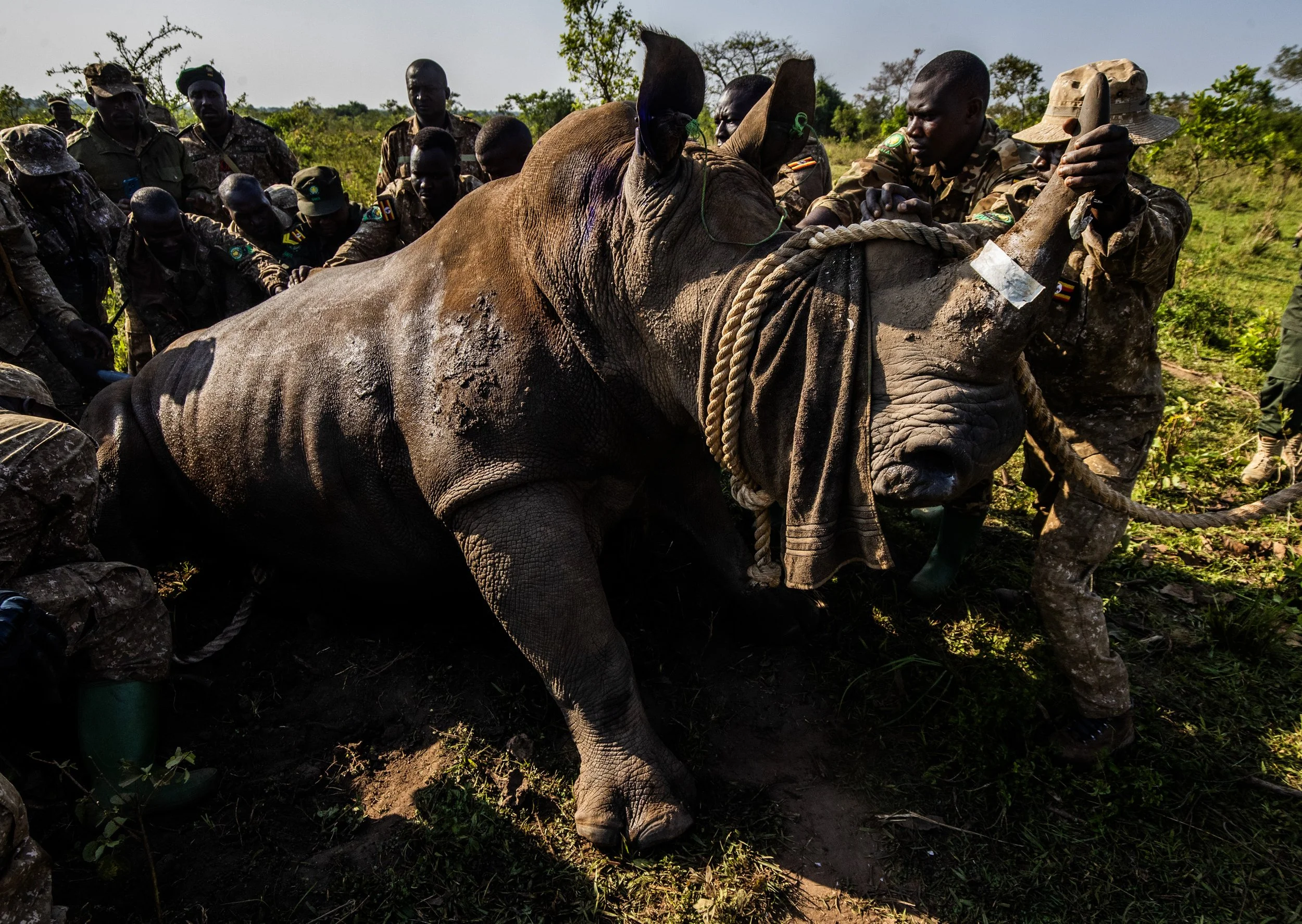
Two southern white rhinos were the first of eight animals planned to re-establish a population in the park on Tuesday. According to the Uganda Wildlife Authority, which is in charge of the transfer.
"This moment marks the beginning of a new rhino story for Kidepo Valley National Park," UWA's executive director James Musinguzi is quoted by Reuters as stating that their disappearance led to the species' total extinction in Uganda's wild.
"Translocation of these rhinos is the first step in restoring a species that once formed part of the park's natural heritage," he stated.
According to Musinguzi, the plan is based on a study that determined that Kidepo was among the finest locations for successfully restoring the species after examining habitat suitability, ecological requirements, and security conditions.
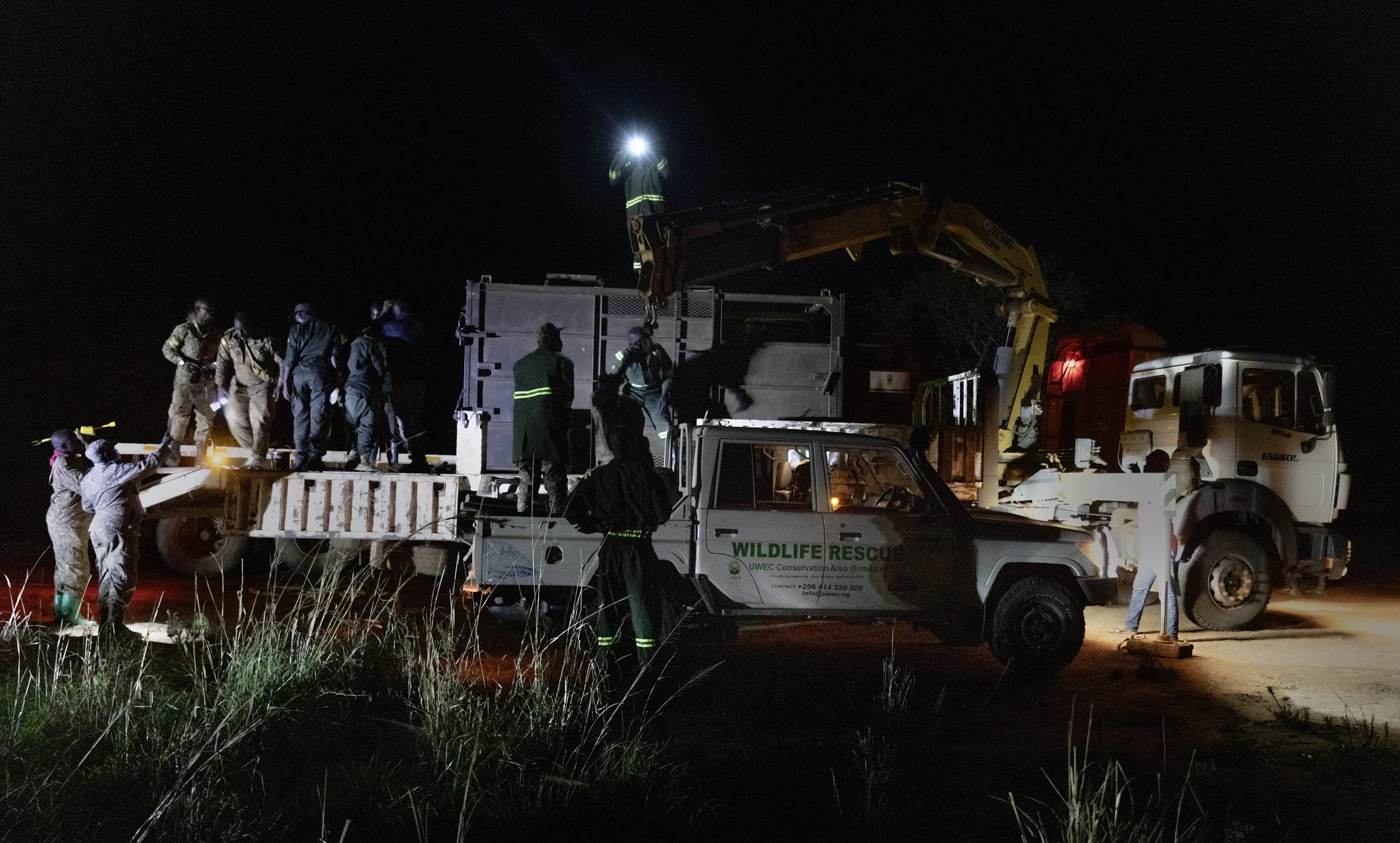
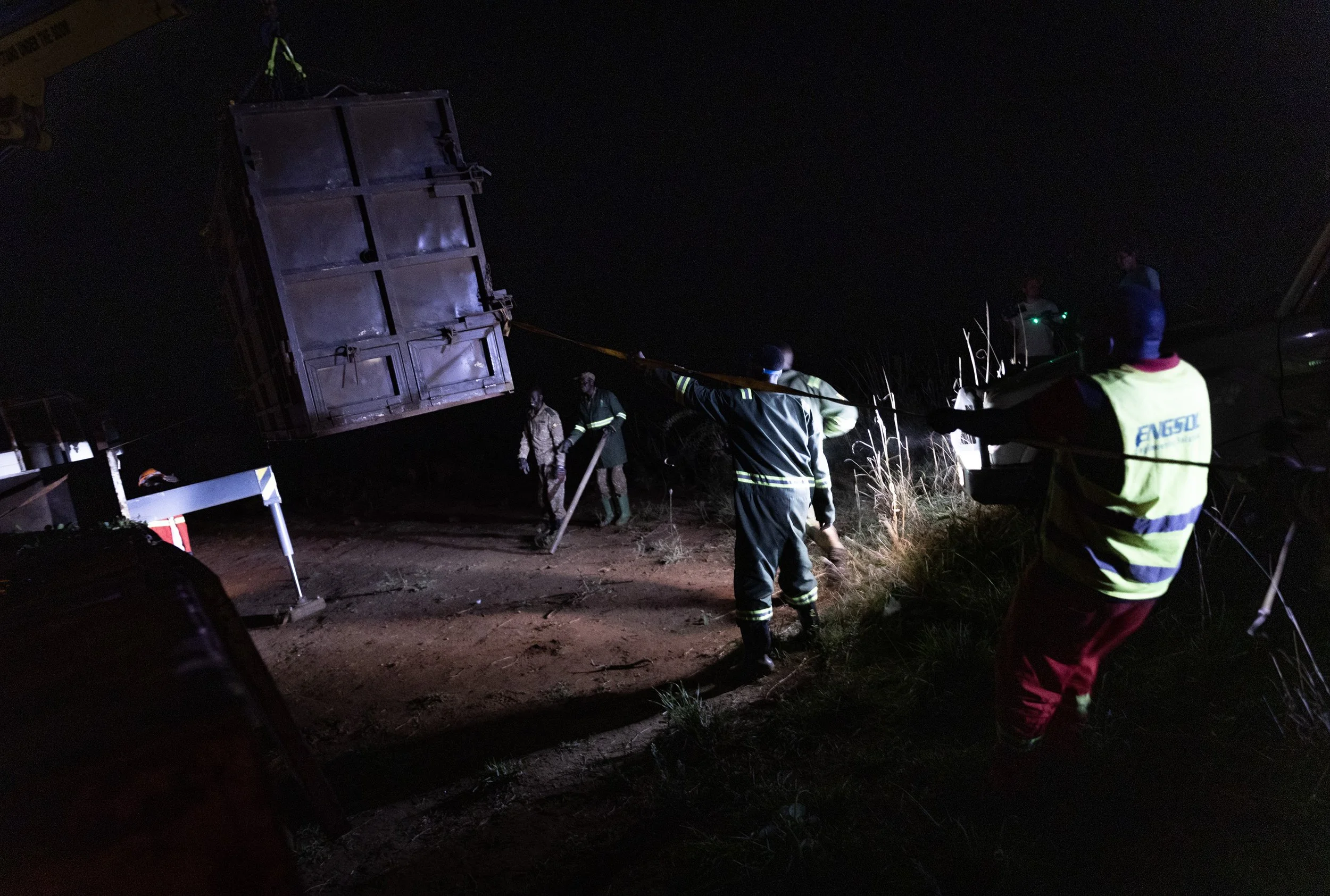
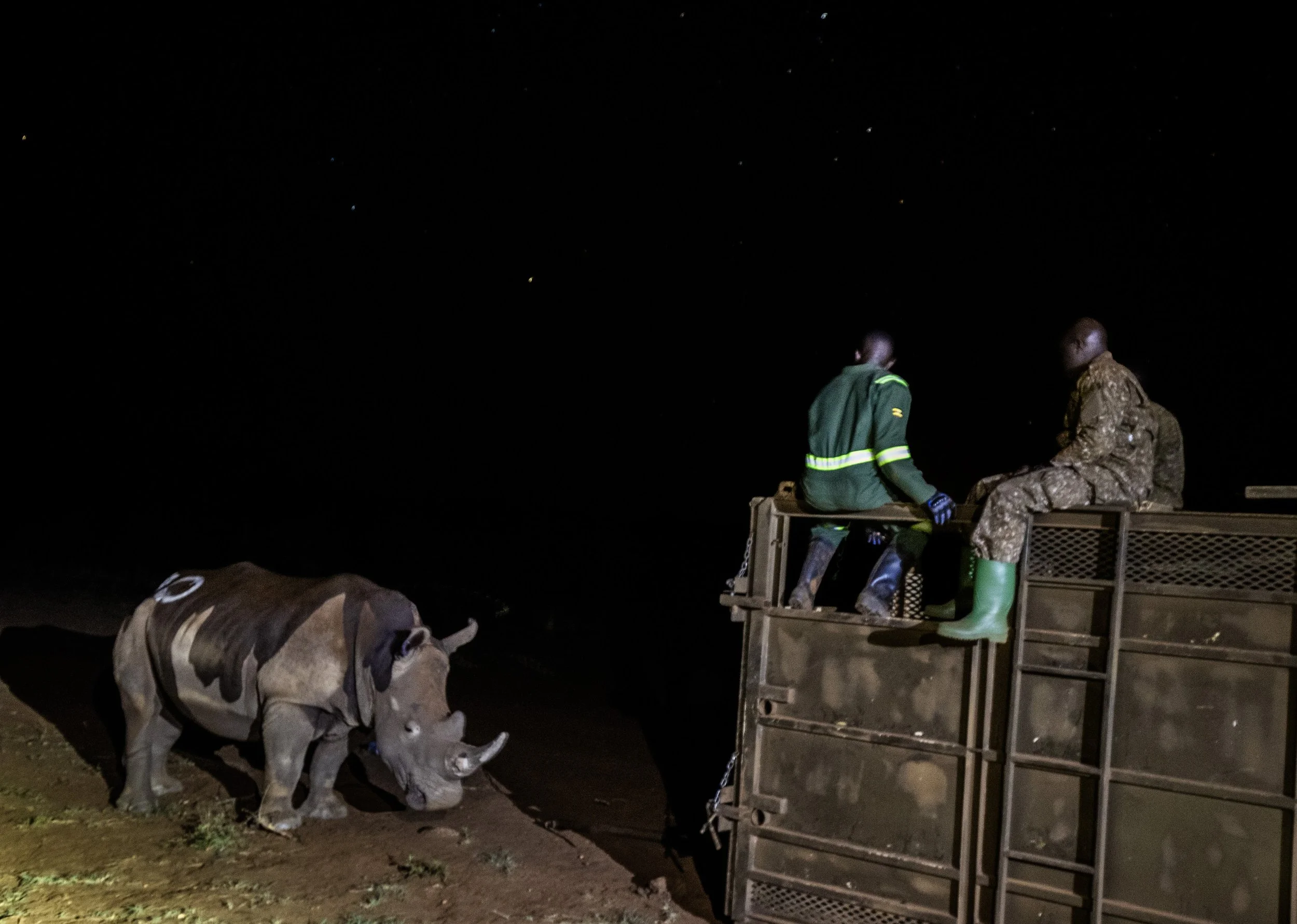
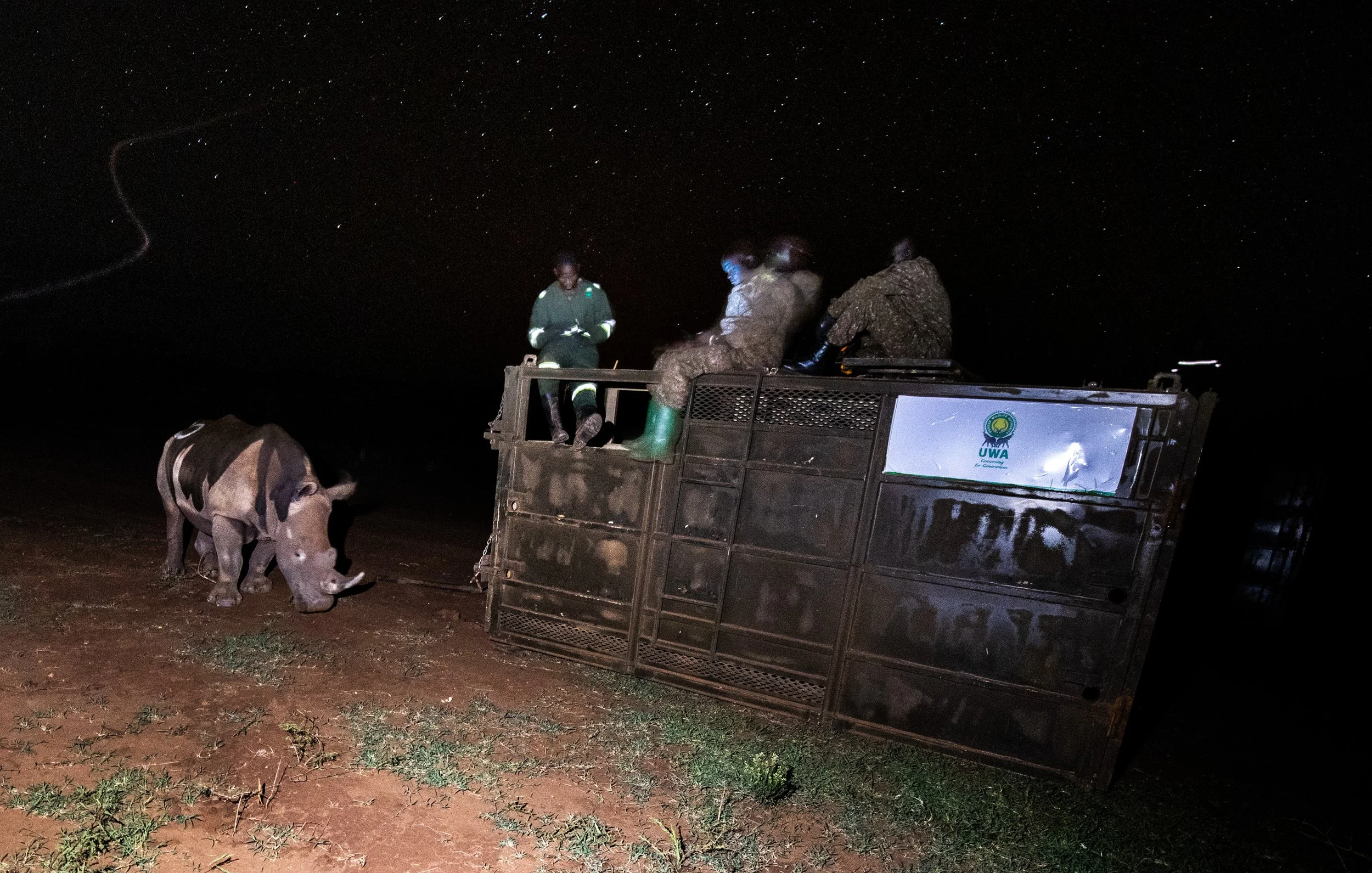
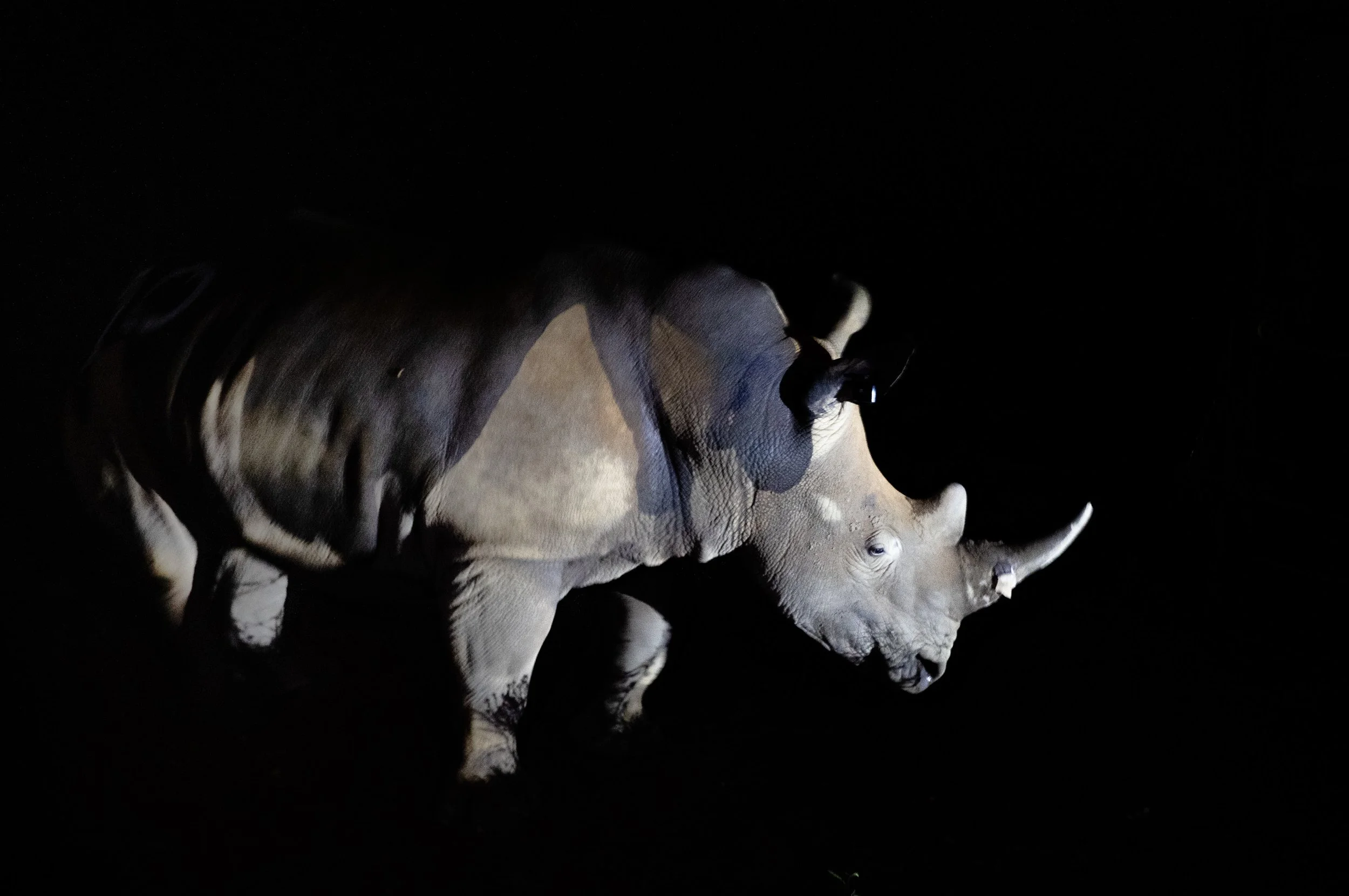
Above: Like something out of the beginning of Jurassic Park during the nighttime transfer of velociraptors, some of these ice-age animals were released into a sanctuary where the rhinos can be carefully monitored as they get used to their surroundings.
According to the UWA, a safe rhino sanctuary with perimeter fencing, access roads, firebreaks, ranger facilities, water systems, and monitoring equipment was set up to guarantee the animals' efficient management and protection.
The two rhinos were transported from a privately owned ranch in Nakasongola, approximately 100 kilometers (62 miles) north of the capital, Kampala, to Kidepo, a huge area of savannah in the isolated northeast of the nation.
Since importing four southern white rhinos from a Kenyan game reserve in 2005, the ranch has been breeding rhinos.
According to conservationists, poaching is still a problem in Uganda, where police have detained and convicted people discovered in possession of pangolins, ivory, and other endangered species.
Because rhino horns are valuable status symbols in many Asian nations and are used in traditional medicine, the illegal rhino horn industry continues to be profitable.
The southern white rhino is considered "near threatened" by the International Union for Conservation of Nature (IUCN) due to a declining population. According to a 2020 study, there were little more than 10,000 of these enormous beasts.
GC Featured FilmHistoric Rhino Reintroductions in Kidepo Valley National Park, Uganda
03/15/26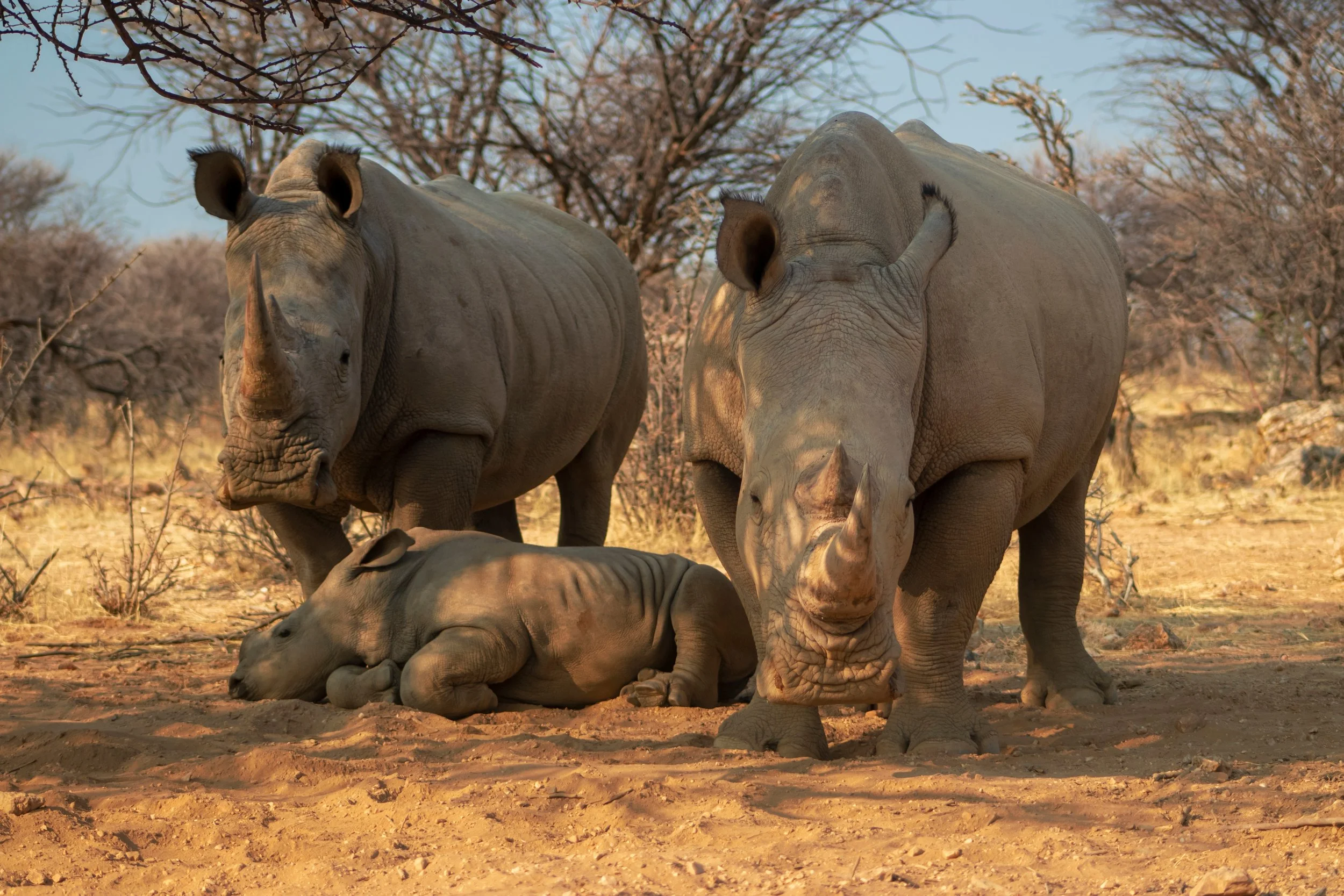
A family of white rhino takes shade in the African Savannah. Photo ©Yulia Lakeienko
In partnership with the Uganda Conservation Foundation (UCF) and the Uganda Wildlife Authority (UWA), will reintroduce rhinoceros to Kidepo Valley National Park in northeastern Uganda in one of Africa's first cross-border wildlife exchanges.
Five white rhinos are scheduled to be transferred from Kenya to Kidepo Valley National Park between March 16 and 20, 2026, in exchange for two species of endangered wildlife sent from Uganda to Kenya. Itinerary is subject to change.
An additional five rhinos will travel from Ziwa Rhino Sanctuary in Uganda to Kidepo. The transfers mark the first wildlife trading agreement between Uganda and Kenya and will restore a species absent from Uganda's wild landscapes for more than 50 years.
The receiving habitat—a new rhino sanctuary in the Narus Valley inside Kidepo Park—is fully complete, including fence lines, access roads, fire management infrastructure, and a refurbished Nataba Gate.
Jeff Morgan, Executive Director of Global Conservation, said, “By bringing back the Rhino, it shows that Uganda is stable again for tourism, national parks are being protected, and Ugandans and international visitors can watch rhinos in their natural setting, which will be an incredible feat.”
Media Access
Members of the press are invited to request access to join the expedition and witness the reintroduction firsthand. Royalty-free footage and photography will be made available. Interview opportunities are available with:
Jeff Morgan, Executive Director, Global Conservation (available by phone or video)
Paul Jan Hilton, Director of Filmmaking, Global Conservation
Michael Keigwin, CEO, Uganda Conservation Foundation
Representatives of Uganda Wildlife Authority
Press Contacts
Julia Pacetti, Verdant — julia@jmpverdant.com
Cordelia Sklansky, Verdant — cordelias@jmpverdant.com
Paul Roberts, Verdant — paul@jmpverdant.com
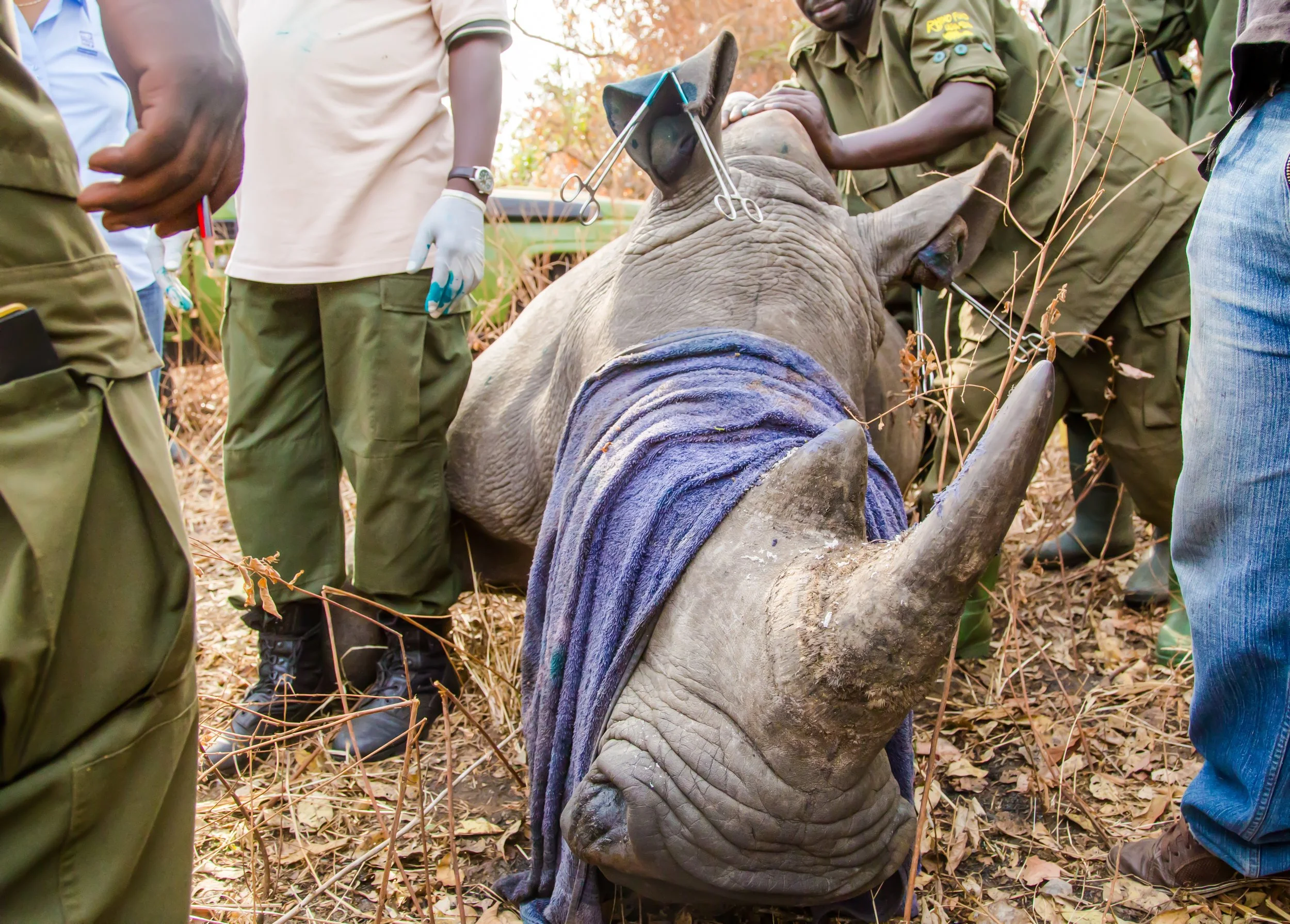
A wild white rhinoceros was sedated, allowing the animal to be microchipped, measured, and sampled for its protection. Photo © Alex Wilco
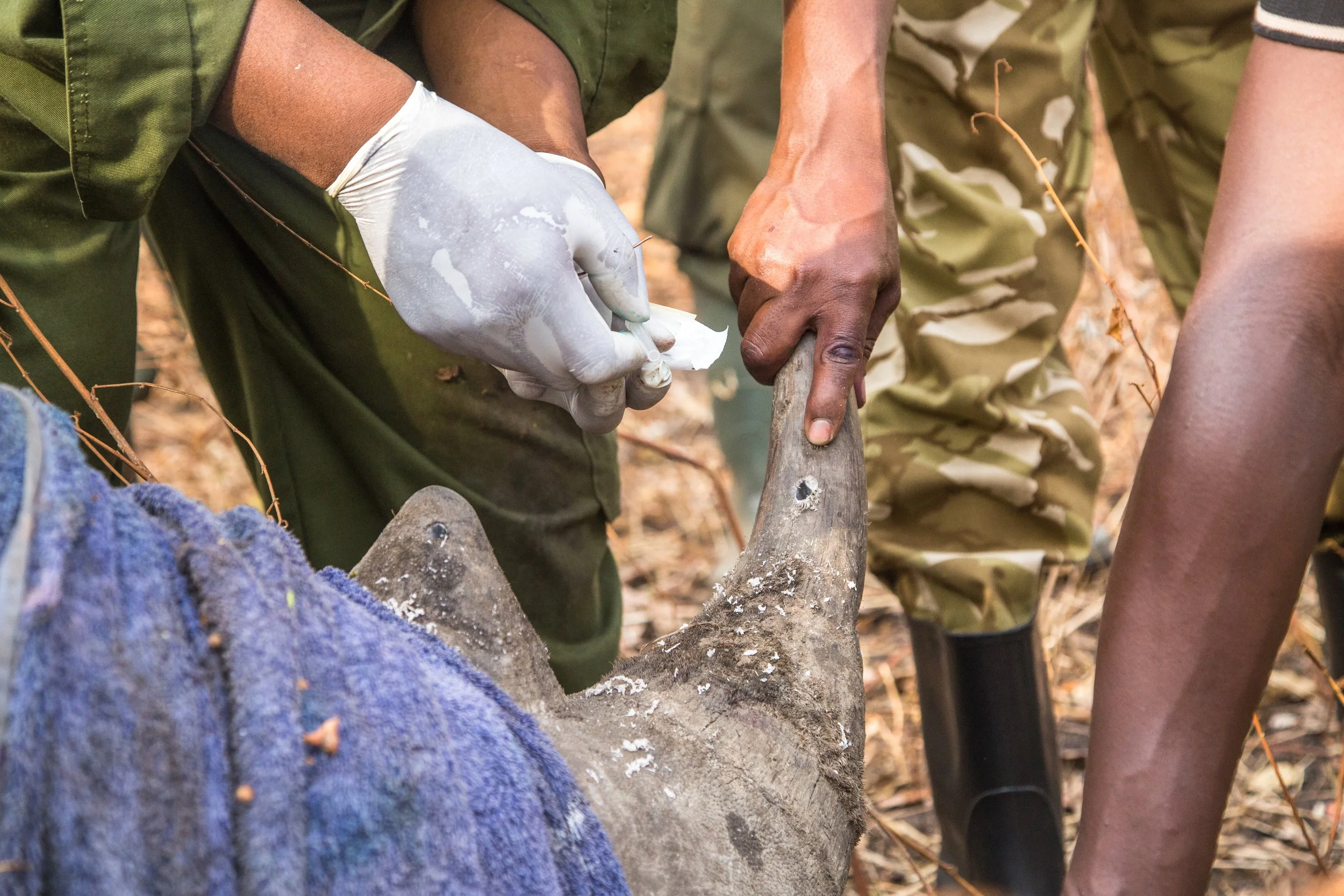
After having its horn drilled, the vet was preparing the microchip to be placed inside. Photo © Alex Wilco
Background: Reintroductions of Rhinos in Uganda
March 2026 – Making History
Rhinos in the wild have been extinct in Uganda for over 50 years. A small private reserve—Ziwa Rhino Sanctuary—has bred a small herd of captive rhinos in a former cattle ranch. With excellent reproduction success in the past 20 years, we now have an opportunity to reintroduce eight (8) rhinos from Ziwa to Kidepo National Park.
With funding from Global Conservation, the Rhino Recovery Fund, the Uganda Conservation Foundation (UCF), and Wild Landscapes/Northern Rangelands Trust (NRT), we are making history by reintroducing rhinos to the wild in Uganda.
Major investments in Park Community Protection over the past 3 years have set the stage where rhinos can be secure, and the Uganda Wildlife Authority is sending 40+ rangers to Kidepo and recruiting 80 more this summer.
Protection of Kidepo Valley is challenging with a common border with South Sudan; cattle raiders and wildlife poaching are prevalent. It is estimated fewer than 20 lions remain in Kidepo due to heavy poaching and snaring. The next 5 years determine whether Kidepo Valley National Park can protect its new arrivals and wildlife across the landscape while providing strong livelihoods from visitors and sustainable agriculture.
Not long ago, Uganda used to be home to both the black and northern white species of rhinoceroses. But by the early 1980s, due to poaching, trafficking, and political turmoil under the dictatorship of Idi Amin, native populations—once thought to number around 700—had been wiped out.
Most national parks are unfenced and suffer from high levels of poaching from criminal syndicates and communities living nearby, as well as the encroachment of human settlements and resulting human-wildlife conflict.
Rhinos were recently reintroduced to Ajai Wildlife Reserve and are faring well. After Kidepo, Murchison Falls will be next, along with other national parks across the country. While enhancing biodiversity, we are improving Uganda’s wildlife tourism and the livelihoods possible under the Kenya Wildlife Tourism model—generating $9 billion and 24% of Foreign Exchange, while employing 250,000 people.
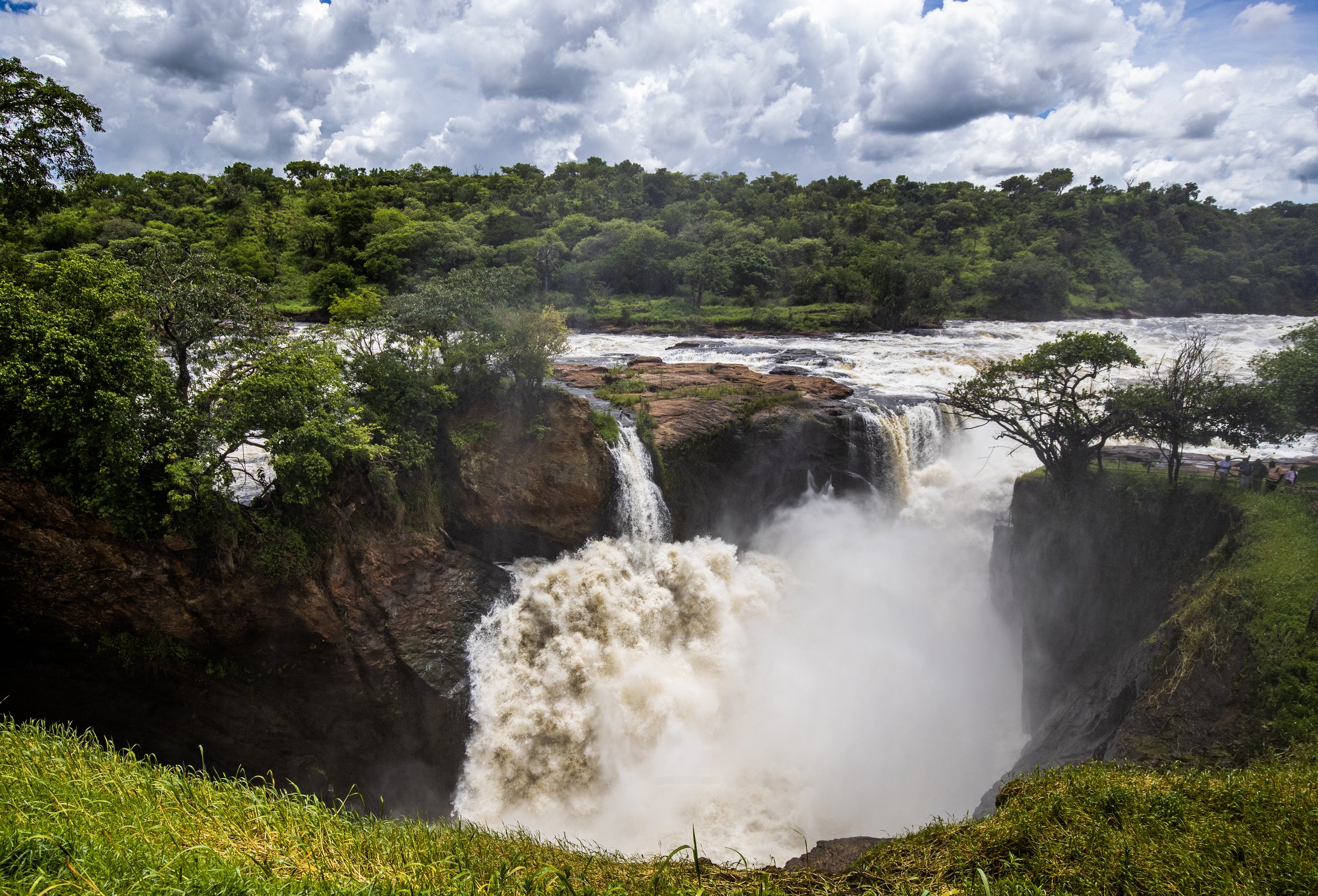
Photo ©Paul Hilton
Background: 7 Years Protecting Murchison Falls National Park
Global Conservation has been protecting Murchison Falls National Park, the Jewel of Africa on the Nile River for the past seven years in partnership with the Uganda Conservation Foundation (UCF) and the Uganda Wildlife Authority. Over $3 million has been invested towards Murchison Falls Recovery with co-funding from UWA, the EU, UK and multiple protection and species funders. A summary of Successes and Challenges.
New Global Conservation Project – Kidepo Valley National Park
Over the past two years, we have been supporting limited national park staff and resources, providing training and equipment, patrol support, and a new Command Center and Armory. See Progress over the Last 2 Years.
Preliminary Itinerary—Subject to Change
Kidepo Valley National Park Rhino Reintroduction | March 15–20, 2026
Saturday, March 15 | Arrive Kampala, Uganda
Transport to Ziwa Rhino Sanctuary.
Sunday, March 16 | Ziwa Rhino Sanctuary — Rhino Preparation for Transport
Sedation and veterinary/scientific approvals. Uganda Wildlife Authority oversight. Custom container transport (approx. 6–8 hours) to Kidepo Valley National Park.
Monday, March 17 | Rhino Arrival — Kidepo Valley National Park
Visits to Rhino Boma. Patrol with Kidepo Rangers.
Tuesday, March 18 | Rhino Habituation — Kidepo Valley National Park
Visits to Rhino Boma; evaluate habituation progress. Logistics coordination: Michael Keigwin, UCF.
Wednesday, March 19 | Rhino Protection — Kidepo Valley National Park
Patrol with Kidepo Rangers. Briefing on threats to Kidepo Valley National Park. Interviews available with Uganda Wildlife Authority, Paul Hilton of Global Conservation, and Jeff Morgan, remotely, of Global Conservation.
Thursday, March 20 | Return to Kampala