Naso Rangers in Panama Burn Down Poacher Camp Sites
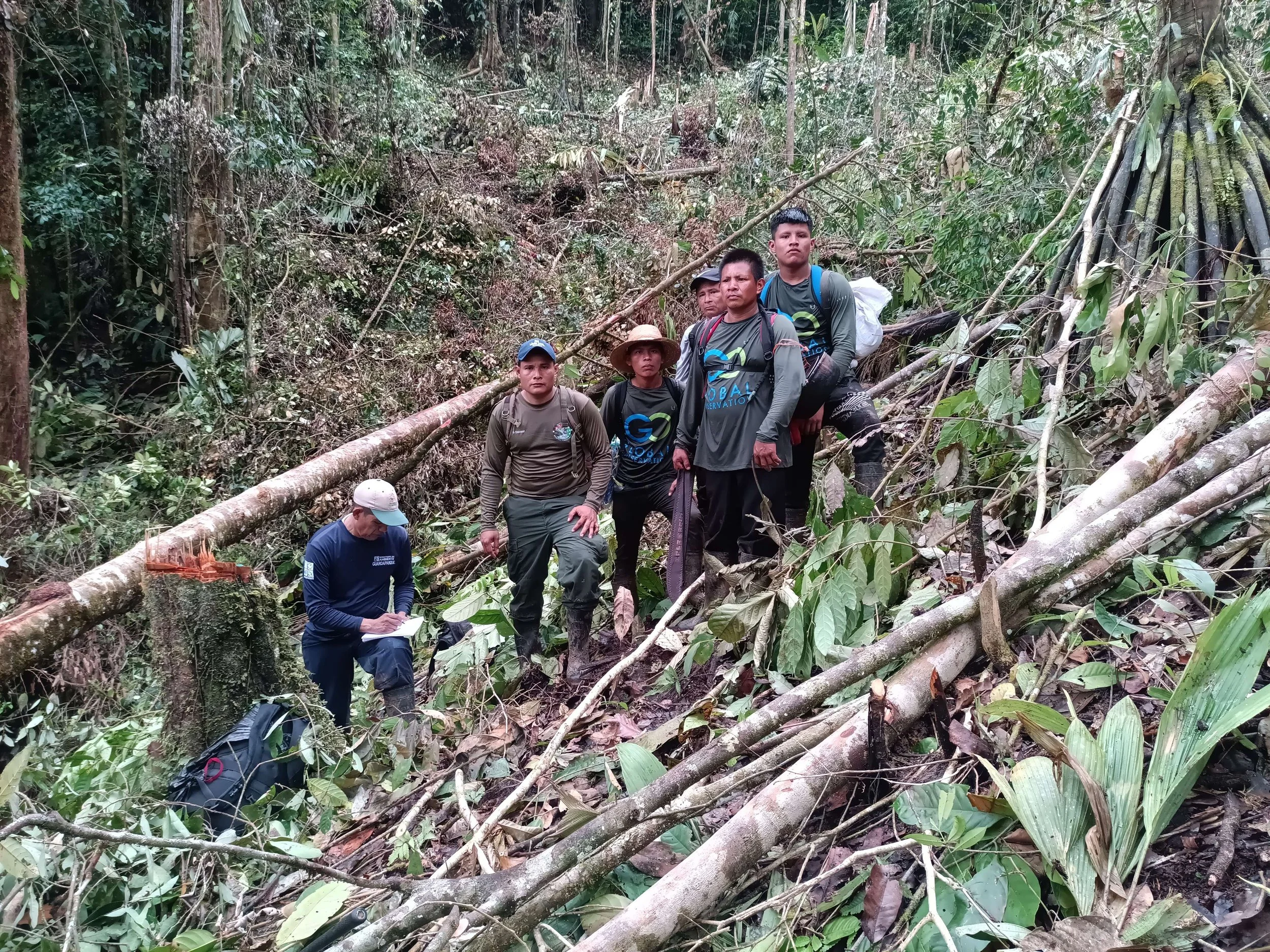
Between June and July, the Naso Kjunkler park ranger group, in coordination with the Ministry of Environment rangers stationed in the Bonyic sector of the Naso Comarca, carried out a series of protection and control operations.
These actions focused on the Agua Caliente sector, a sacred site for the Naso people, where invasions, deforestation, and the establishment of illegal cultivation areas were detected. As a result of these operations, illegal crops and hunter camps were destroyed, and seven formal complaints were filed with the competent authorities.
Patrols covered a total of 391 kilometers in June and recorded 71 kilometers in July.
Marine Poacher Caught in Coiba National Park
On August 18, 2025, the monitoring center reported an alert generated by the radar system, which detected a vessel in the vicinity of Punta Anegada and Jicarón Island.
In response to this alert, a maritime patrol operation was deployed aboard the vessel Coral IX, consisting of five park rangers and two Environmental Police officers.
During the operation, the vessel Norma Alicia was located in the reported area. Upon conducting a boarding inspection, the corresponding documentation was requested, and it was verified that the vessel did not possess the fishing permits issued by Coiba National Park. Furthermore, fishing lines with bait were found already placed within the protected area.
The captain and crew were informed about the park’s regulations, and subsequently, the vessel was ordered to be escorted to the Ministry of Environment headquarters in Punta Gambute for the initiation of the corresponding administrative and legal procedures.
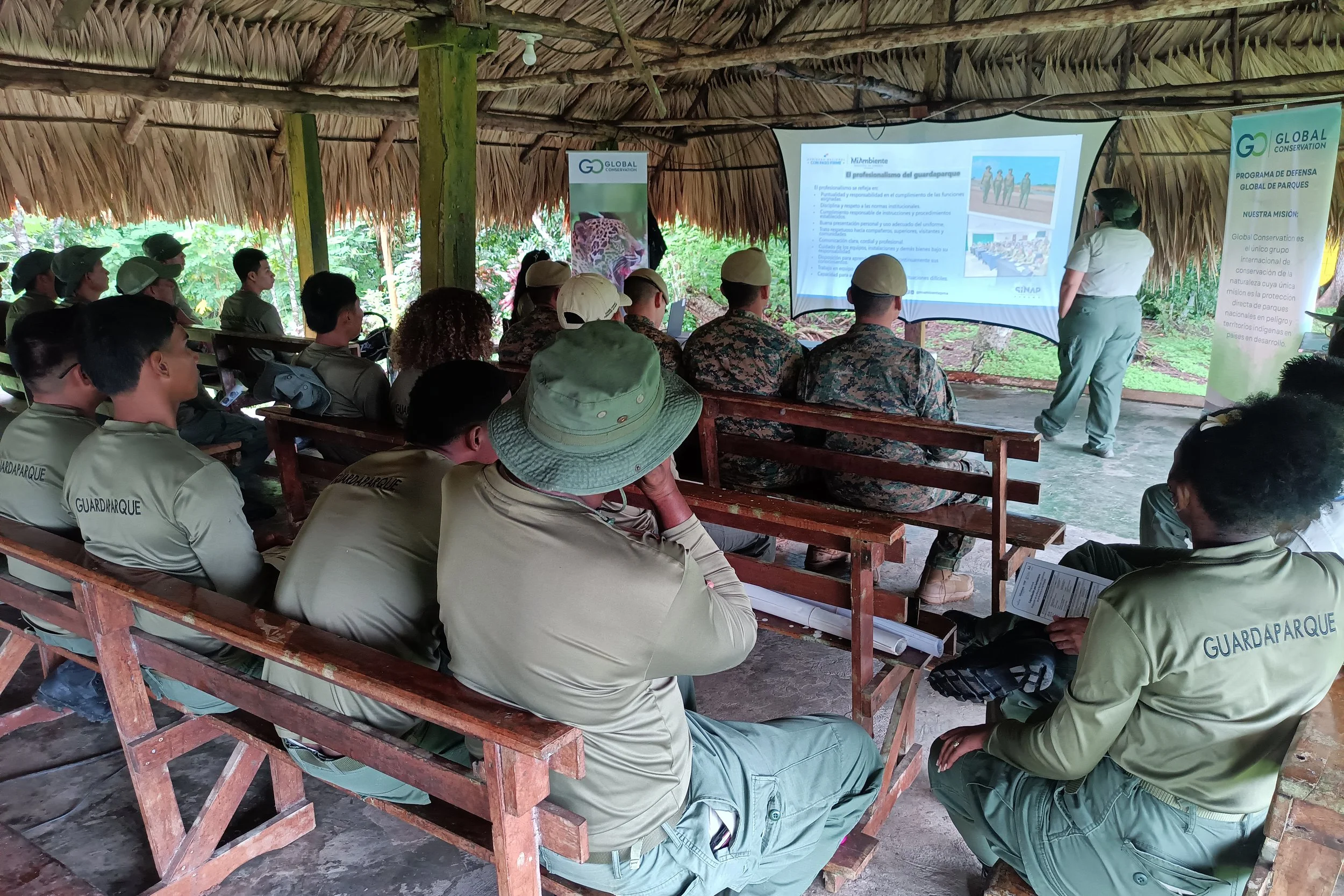
As part of ongoing efforts to strengthen institutional capacities for the protection and conservation of Panama's protected areas, GC, in coordination with the Ministry of Environment, conducted a training program for park rangers and officers of the National Border Service (SENAFRONT) to protect Darién.
Global Conservation is leading a training initiative at the Punta Patiño Wetland of International Importance, bringing together 30 park rangers and 10 National Border Service personnel to strengthen protection, surveillance, and enforcement of environmental regulations.
The Multiple Emmy®-Nominated Series, Hosted by Bob Woodruff and in partnership with Global Conservation, Explores Preservation Efforts in Guatemala’s El Mirador and Panama’s Coiba National Park
Coiba National Park, off the southwest coast of Panama, protects Coiba Island, 38 smaller islands, and the surrounding marine areas in the Gulf of Chiriqui. They are all part of the UNESCO World Heritage Coiba National Park and Special Zone of Marine Protection.
Between June and July, the Naso Kjunkler park ranger group, in coordination with the Ministry of Environment rangers stationed in the Bonyic sector of the Naso Comarca, carried out a series of protection and control operations.
For one week, park rangers will receive training in active patrolling, inter-institutional coordination, and use of the Earth Ranger platform.
Steps taken by Panama in the past year include enacting a province-wide illegal logging moratorium in Darien to stop anarchic cutting and clearing of tropical rainforests until a new permitting system is deployed, while hiring, equipping, and training 240 new national park rangers with the trucks, boats, and equipment they need—with an additional 50 rangers on the way.
The National Border Service of Panama (SENAFRONT), the Public Ministry, and the Ministry of Environment (MiAMBIENTE) dismantled an illegal mining network in the Mangle River, in Alto Tuira, within Darién National Park, near the border between Panama and Colombia.
On May 14th, nearly one hundred philanthropists and environmentalists gathered at The Olympic Club in San Francisco to support Global Conservation and participate in a distinguished panel discussion featuring global leaders in park and wildlife protection, including ABC News’ Bob Woodruff, Martina Sasso, founder of Por El Mar, Secretary Wade Crowfoot of California, and Minister Juan Carlos Navarro of Panama.
The Naso people are battling against illegal squatters, agricultural expansion, and recurring invasions by cattle ranchers, which threaten both their cultural heritage and the region's fragile ecosystems. In response, Global Conservation has partnered with the Naso authorities to implement Global Park Defense. Over the last 18 months, 60 Naso Community Ecoguards, supported by Panama law enforcement, have patrolled thousands of kilometers to map threats, dismantle illegal settlements, and protect the integrity of the Naso Comarca.
With the support of the Foundation for Sustainable Conservation (FUNCOS), Global Conservation has put in place, for the first time, real community protection for these two large newly-designated Indigenous Territories—called Comarcas in Panama and Communal Reserves in Peru.
Global Conservation (GC) has signed a multi-year agreement with the Ministry of Environment (MiaAmbiente) of Panama to strengthen conservation and stop illegal activities, such as logging and mining, within the country’s largest national parks.