
Immediate Help Needed: Sumatran Orangutan Population Drops Nearly 20 Percent
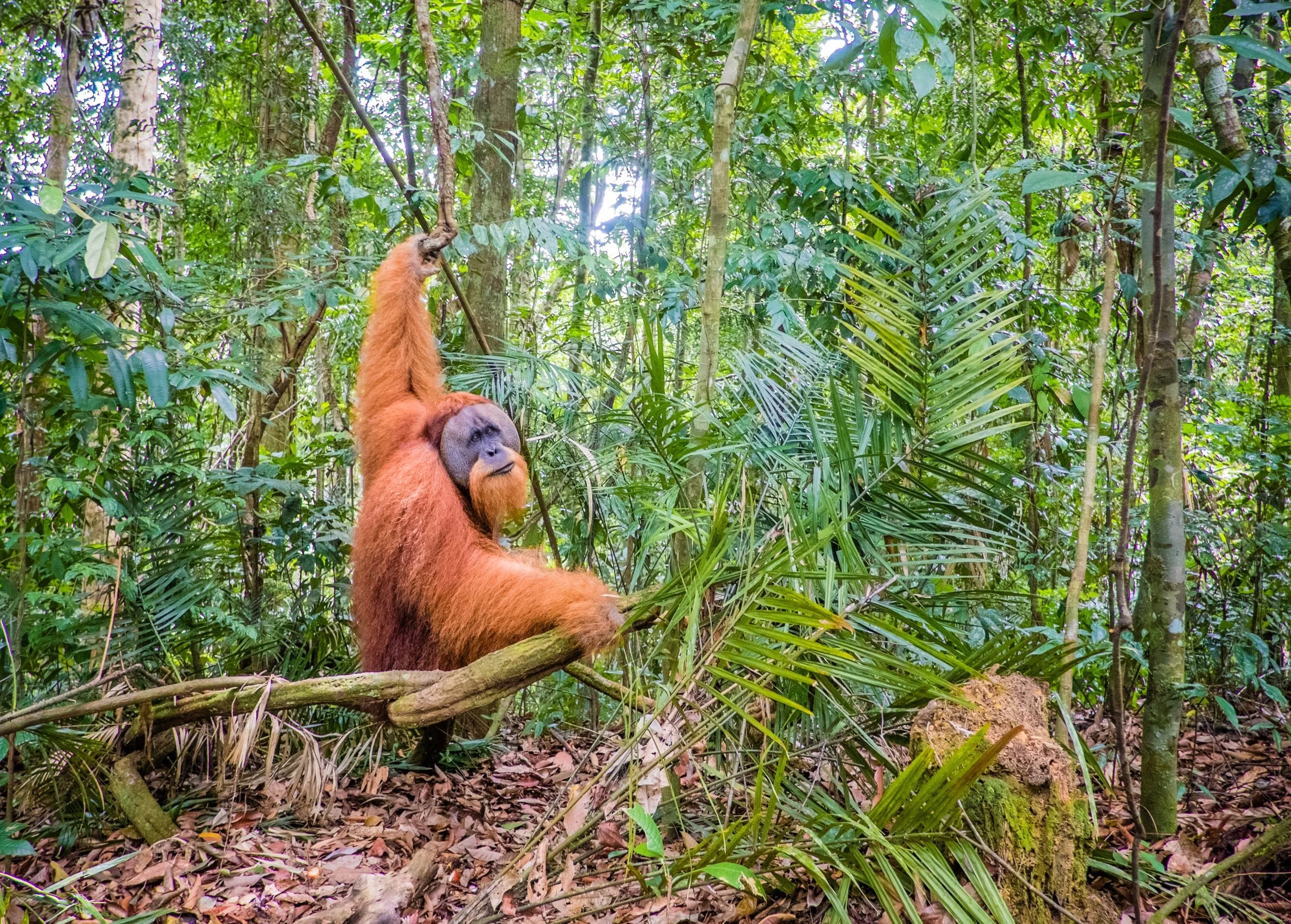
The Sumatran orangutan population is steadily decreasing. The population has fallen by 19.5% since 2011, according to recent survey results published in a respected scientific journal. The current population stands at 11,694 individuals. At the same time, there are only an estimated 716 remaining Tapanuli orangutans, making their population a critically endangered species.
The assessment, which was carried out in conjunction with the Ministry of Forestry, also found that about 82% of the orangutan population is still seen in protected areas. But over 2,200 orangs, or about 20% of the entire population, inhabit unprotected areas that have extremely inadequate protections.
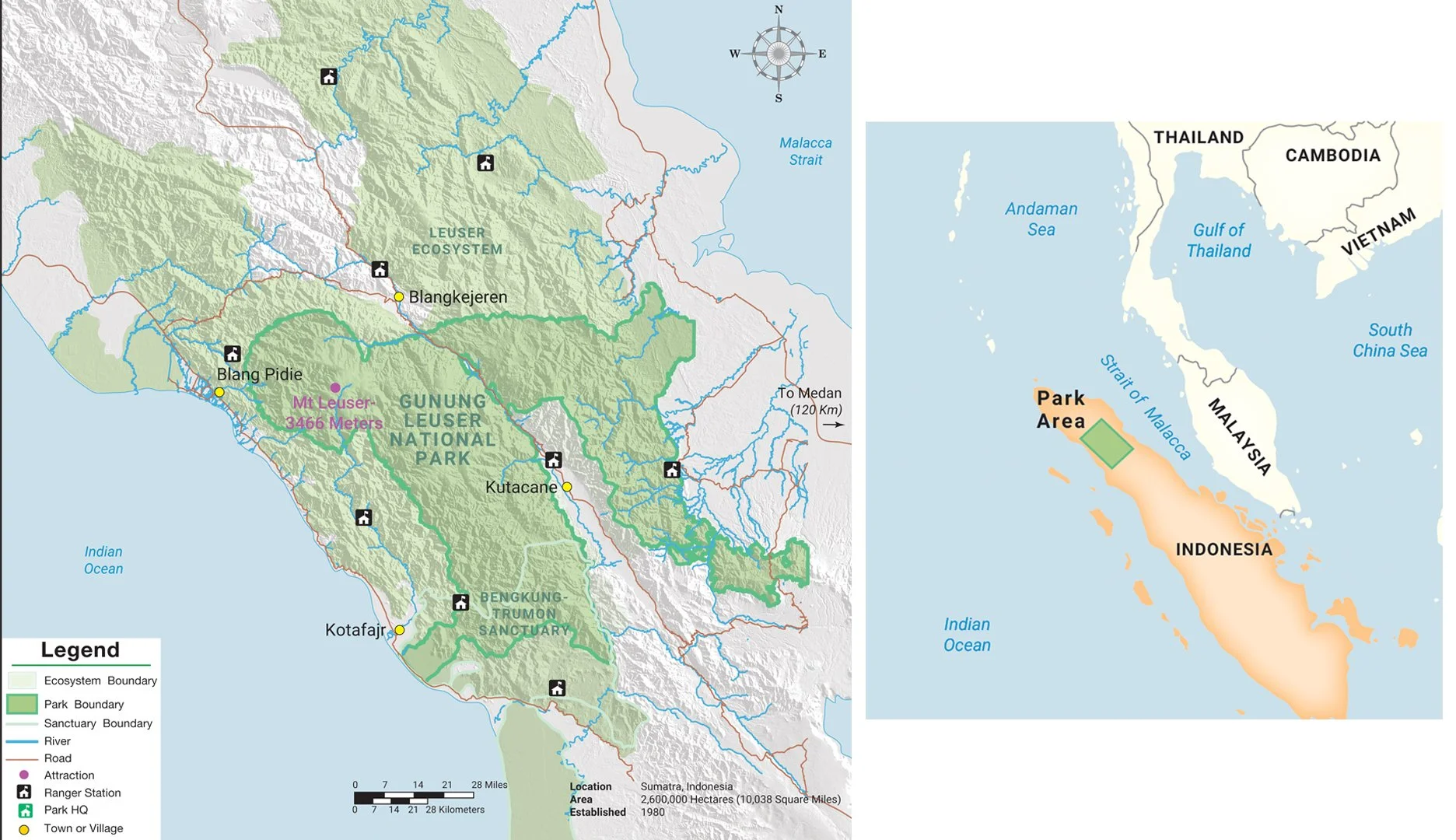
The Lueser ecosystem contains some of the last orangutans on Earth. It’s also the last place on Earth where tigers, rhinos, elephants, and orangutans coexist in the wild.
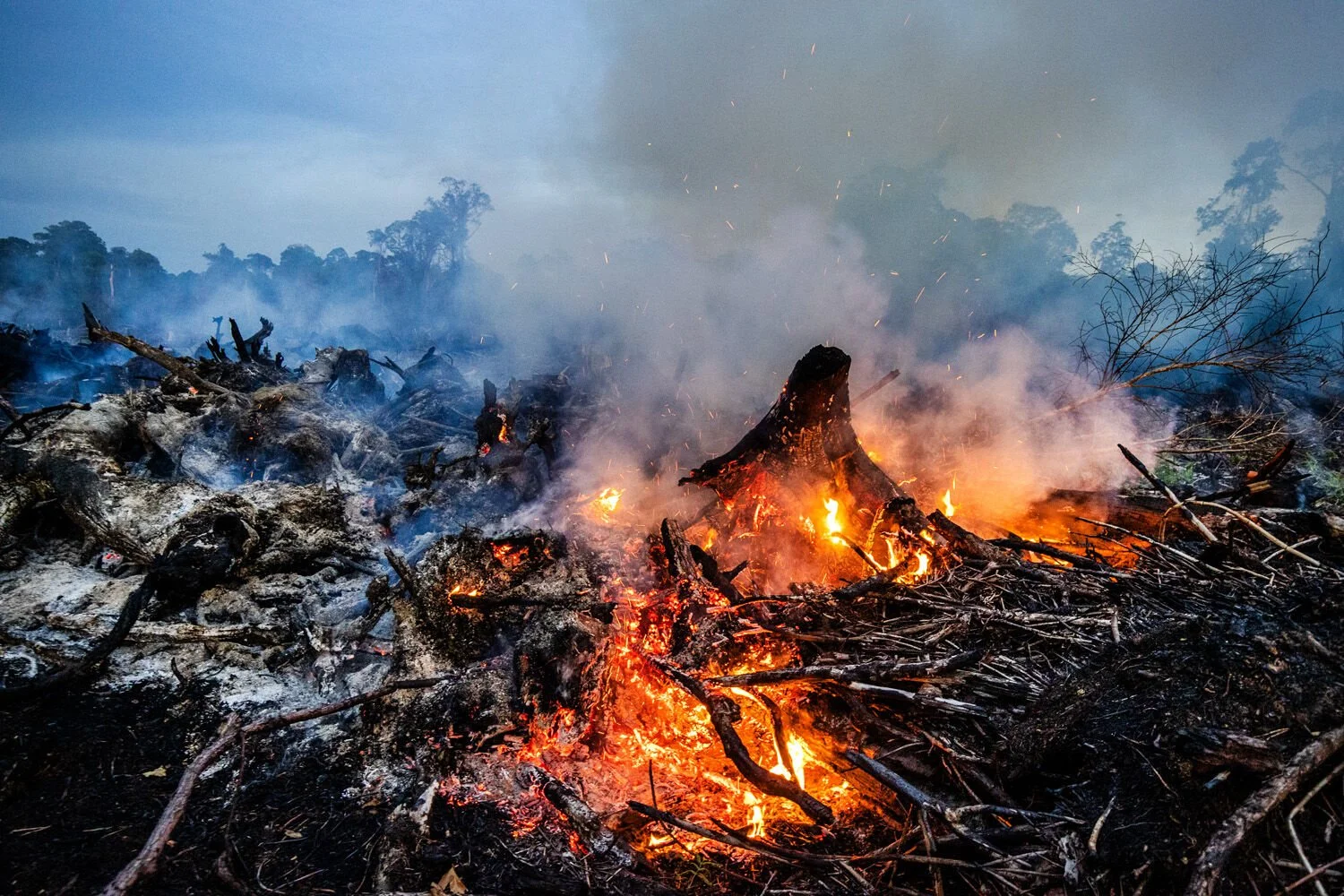
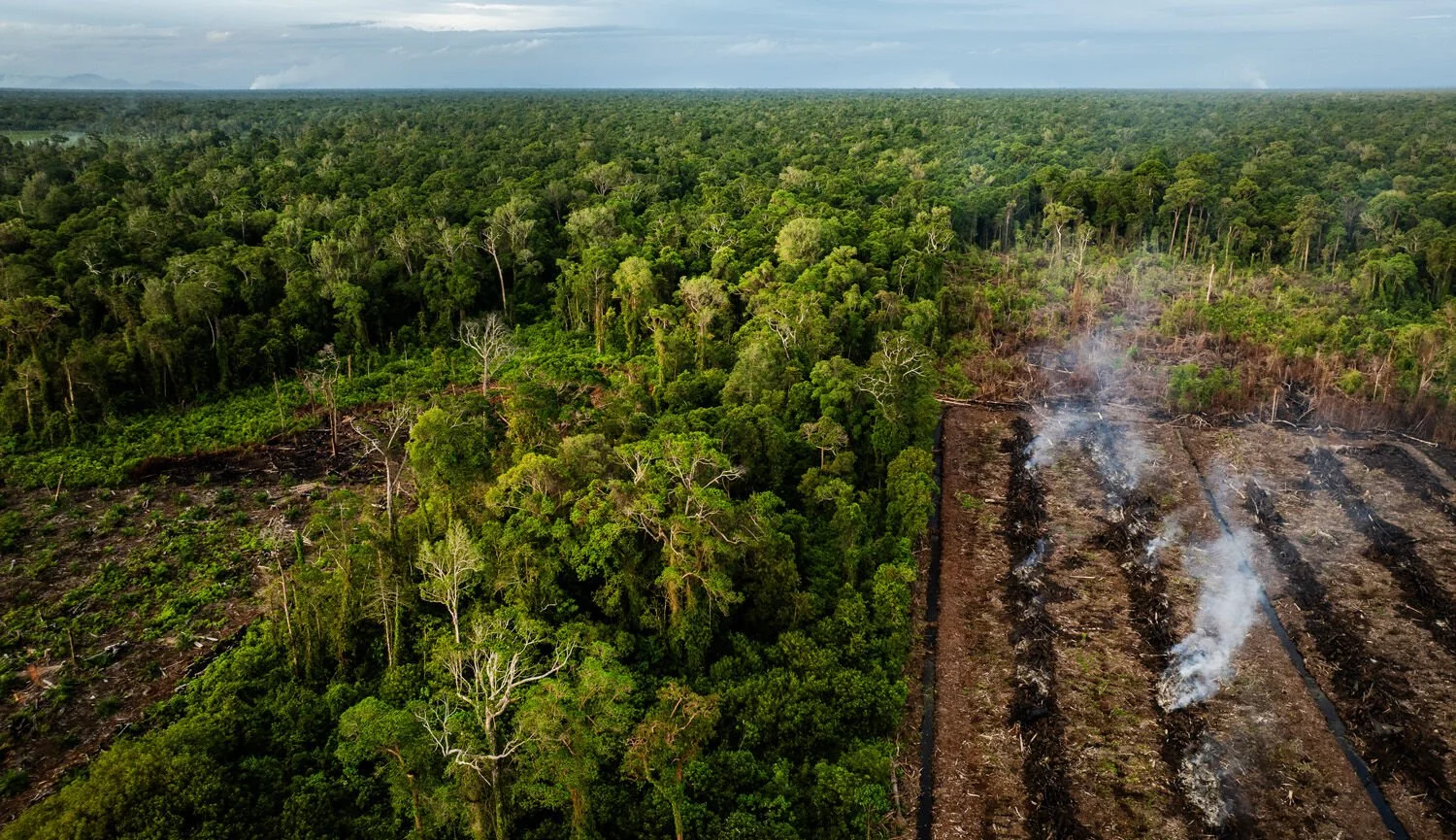
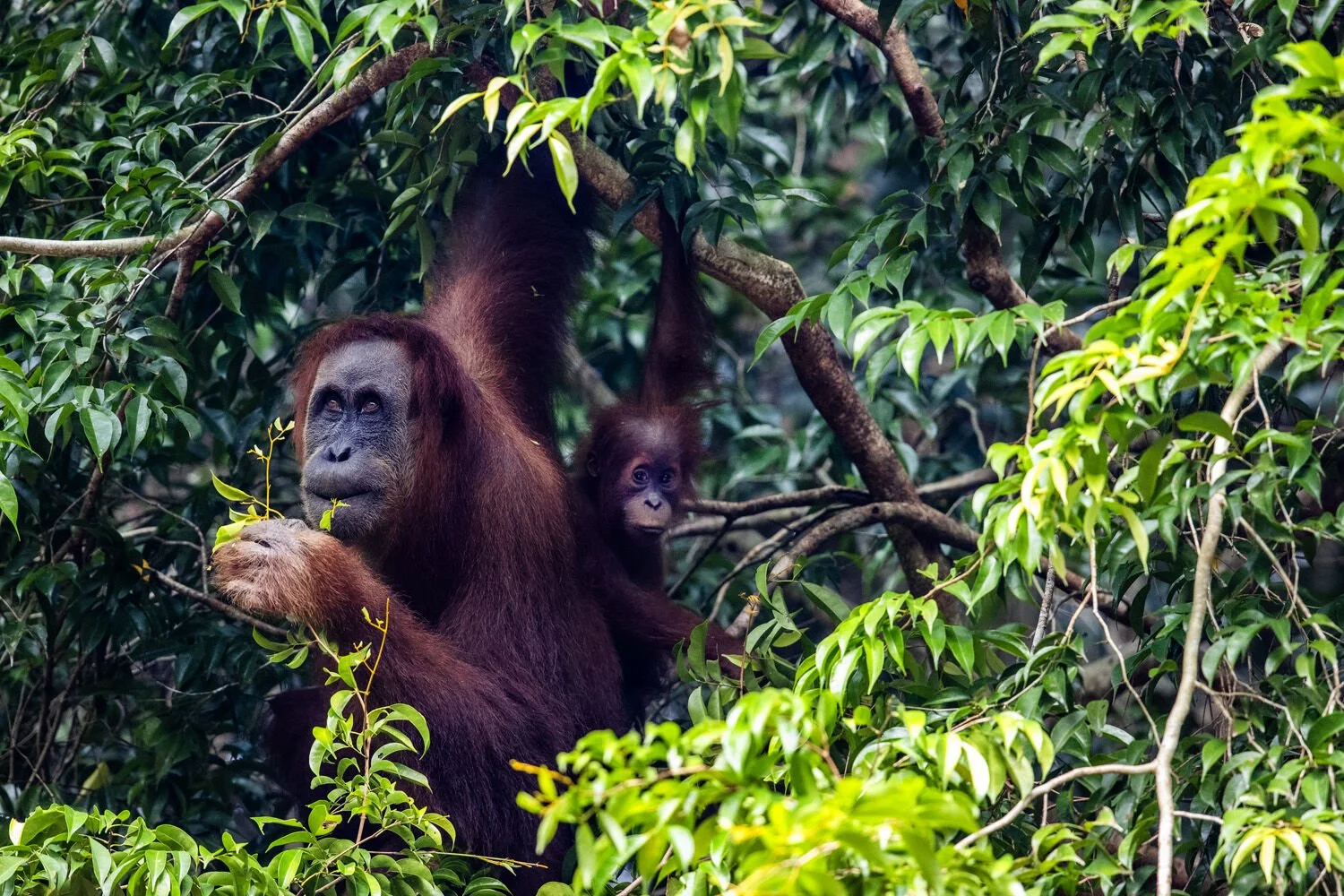
Above: Photos ©Paul Hilton
Since 2015, Global Conservation has taken action to assist in the protection of orangutans and the Leuser Ecosystem in Indonesia. Help has come in many forms, including funding for better land monitoring, the capture of illegal poachers, and the conviction of a large palm oil company.
With the ongoing deforestation in Indonesia, orangutans face the risk of becoming the first great ape to disappear in the modern era.
Threats and Habitat Loss
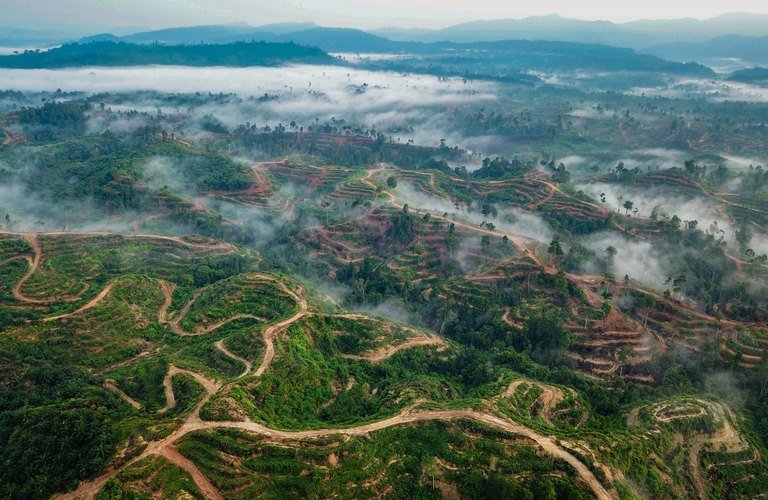
The destruction of orangutan habitats is mostly attributable to the cultivation of palm oil, a monoculture crop. Imports of palm oil into the United States have increased by 485% over the last decade, making it the most frequently used vegetable oil in the world. Palm oil is found in about half of the packaged goods sold at your neighborhood supermarket, including a wide variety of fast food items, as well as cosmetics, baked goods, and hair care products.
Legal and illegal removal of intact forest ecosystems is proceeding at a rapid pace, despite the president of Indonesia's promises to halt the further clearing of virgin forests in national parks and protected regions for palm oil plantations.
Over the course of more than a decade, the Leuser ecosystem had the greatest loss of life, with almost 2,000 individuals disappearing. The population in Rawa Tripa dropped from 212 to 52, a 75% decrease. In the meanwhile, there was a precipitous decline of 332 individuals, or nearly 40%, in the Batu Ardan population.
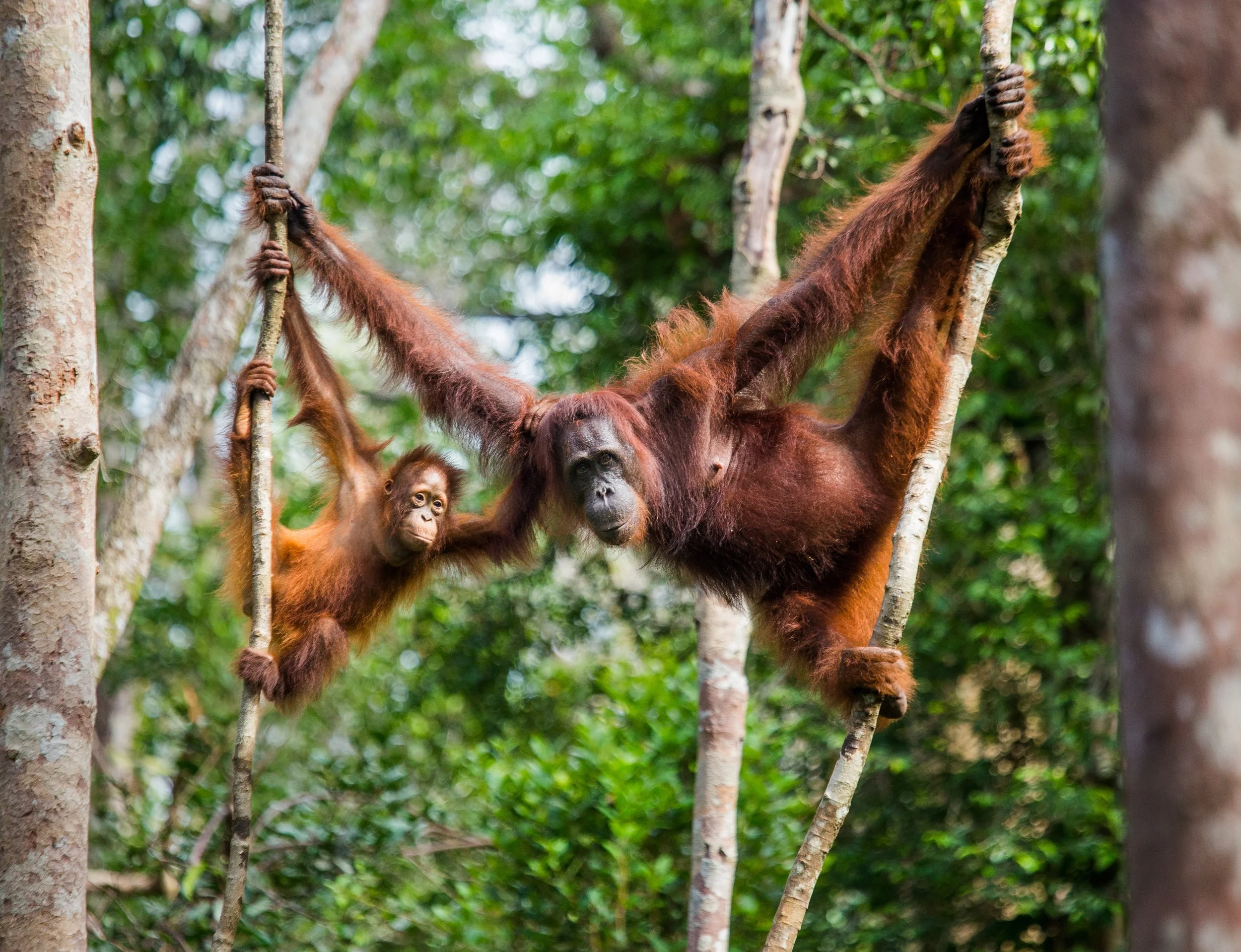
Orangutans face a wide range of dangers, including but not limited to poaching, illegal trafficking, habitat fragmentation, human-wildlife conflict, and habitat degradation. It's evident that illegal wildlife trafficking is still prevalent, as evidenced by the repatriation of Sumatran orangutans from Thailand in late 2025.
In order to combat poaching and trafficking, local conservation organization Geopix is requesting that the government restore degraded forest land, strengthen enforcement of laws against these crimes, and increase protection for ecological corridors that connect habitats. In addition, the group is demanding that all development policies that may have an effect on orangutan habitats incorporate conservation measures.
Orangutans will become extinct more quickly than previously assessed unless immediate action is taken.
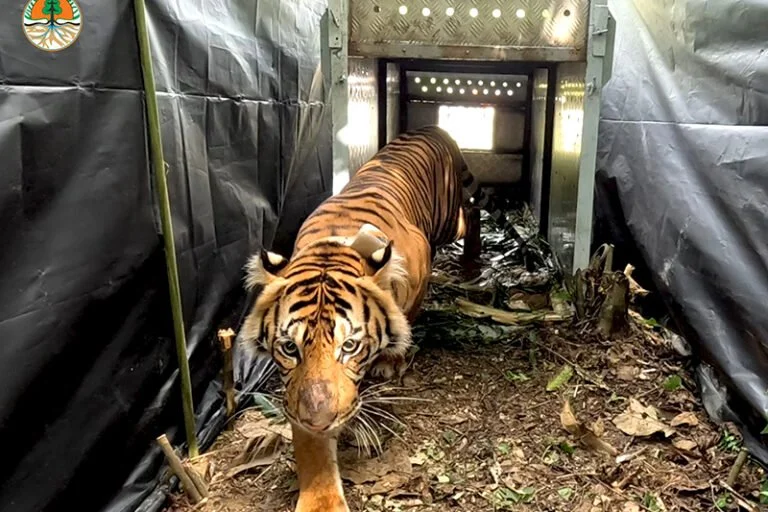




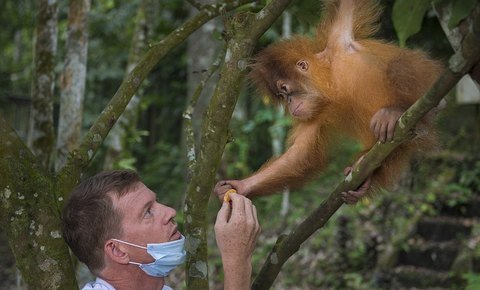

The FKL Wildlife Protection Teams have made significant progress in safeguarding the biodiversity of the Bengkung Trumon Megafauna Sanctuary (BTMS) and the Suaq region from January to November 2024. Eight Wildlife Protection Teams conducted 88 patrol missions, covering 5,807 km, documenting vital wildlife presence through sightings, including 1,896 orangutans, 1,182 Malayan bears, 844 Sumatran tigers, and 221 Sumatran elephants. These efforts also dismantled 15 snares and documented 35 poaching cases.