
Global Conservation Strengthens its Partnership with ANPN Gabon for the Protection of Minkébé National Park
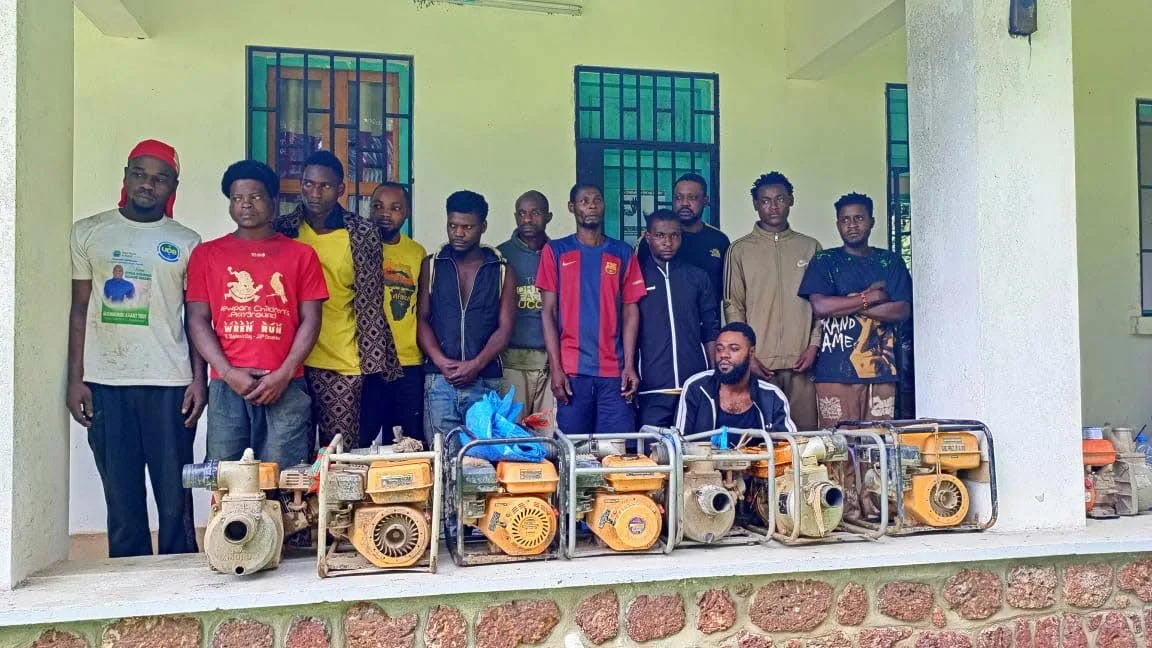
Illegal gold miners arrested and pumps captured in Minkébé National Park.
Reinforcing Park and Wildlife Protection for Gabon’s Largest National Park and one of Central Africa's Last Intact Tropical Rainforests—Refuge for Critically Endangered African Forest Elephants, Gorillas, and Leopards
Global Conservation (GC) and Agence Nationale des Parcs Nationaux du Gabon (ANPN) have formalized their collaborative agreement to support the protection and the management of Minkébé National Park, operating since February 2025. This formal agreement marks an important step in strengthening field-based conservation in Gabon’s largest national park and one of the largest remaining intact tropical forests in the world.
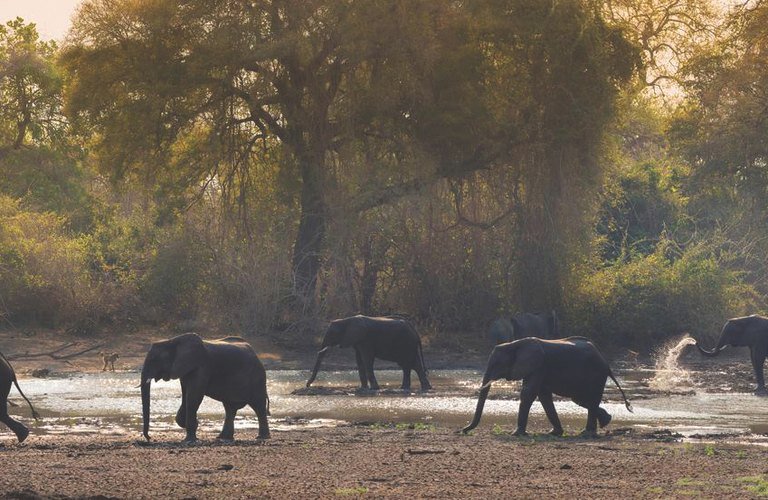
Gabon is estimated to hold the largest remaining population of African Forest Elephants (classified as Critically Endangered by IUCN) on the continent, and Minkébé National Park is central to their long-term survival. African forest elephant populations have been devastated to under 135,000 today, 80% of which are only in Gabon.
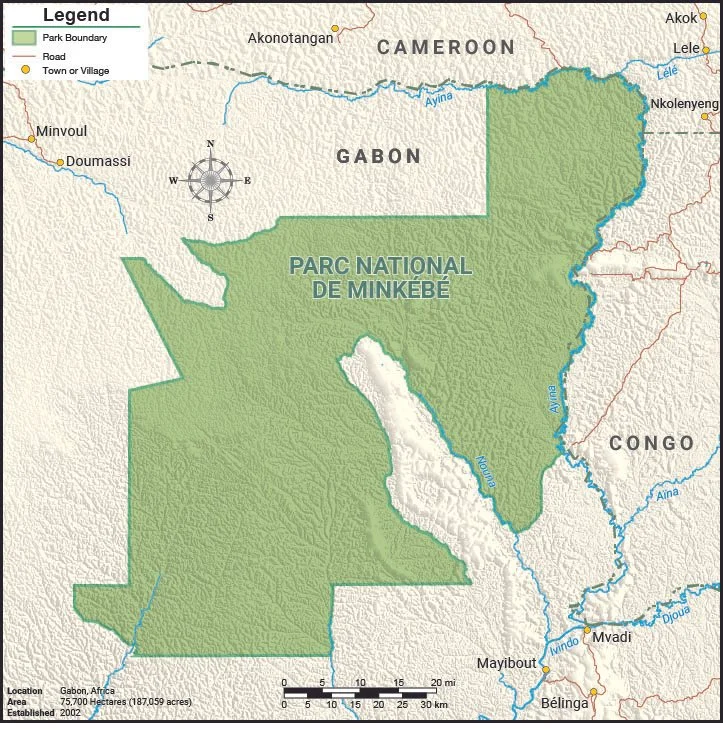
Covering an area of over 7,500 km² in northeastern Gabon, Minkébé National Park is crossed by multiple major river systems draining into the Ivindo and Ntem basins and features distinctive granite inselbergs formed on one of Central Africa's most ancient geological substrates.
The park is home to exceptional biodiversity, including populations of Western Lowland Gorillas, Chimpanzees, large mammals including the Bongo antelope, Forest Buffalo, Leopard, and African Golden Cat, and a rich avifauna, including notable unique species such as the Spot-breasted Ibis and Rachel's Malimbe, both of which are confirmed in the KBA factsheet.
African Forest Elephants play an indispensable ecological role as seed dispersers and forest architects. Their slow reproductive rates with a single calf raised over four to six years make population recovery from sustained poaching, disease, and habitat destruction very difficult.
Field reports and ranger intelligence indicate that Minkébé faces sustained pressure from cross-border ivory poaching originating from poaching syndicates operating across the Cameroon-Gabon border. While the full scale of this threat requires further systematic scientific assessment, available evidence points to significant and ongoing impact on elephant populations in the region.
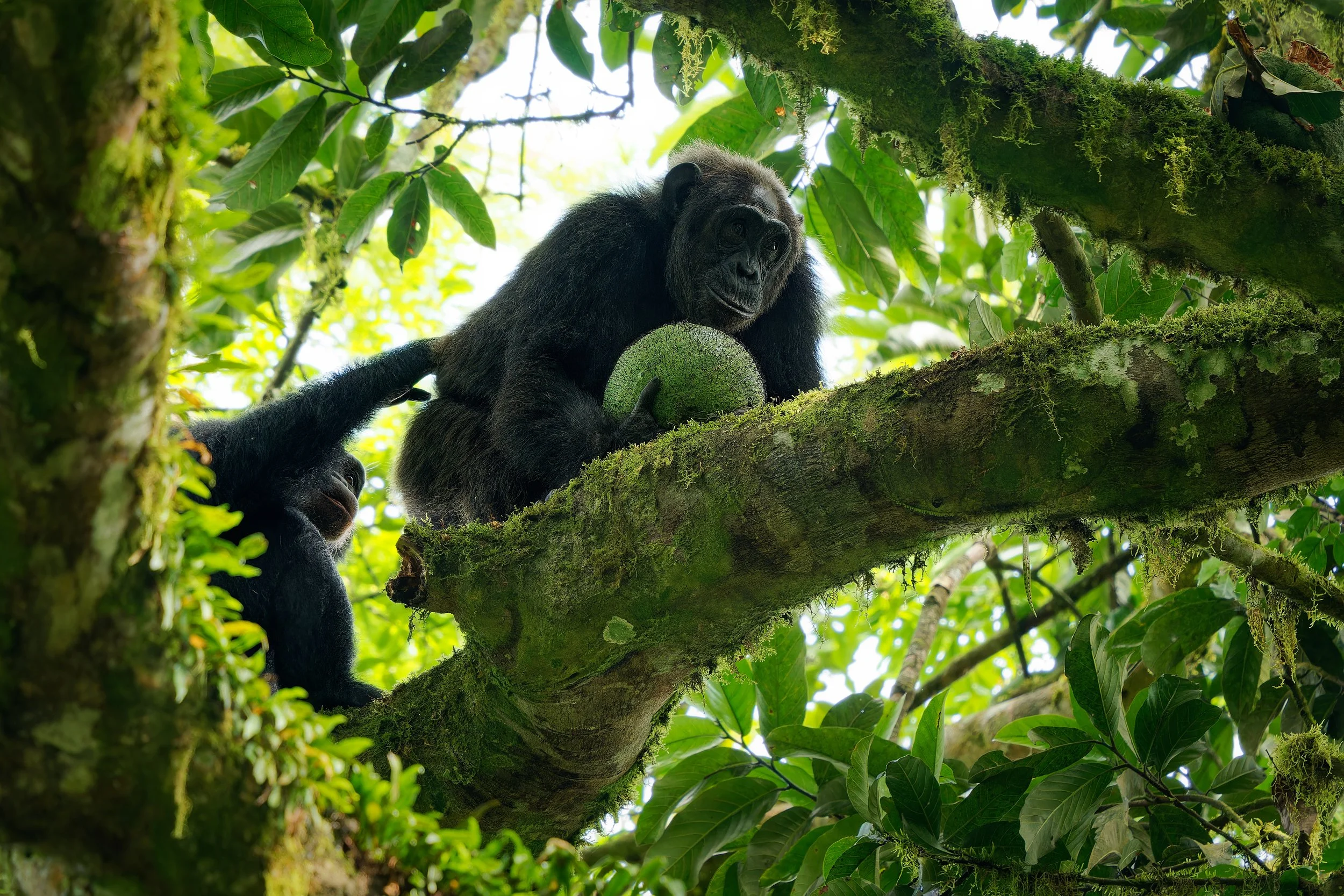
A chimpanzee carries a large fruit in the canopy of a large tree complex.
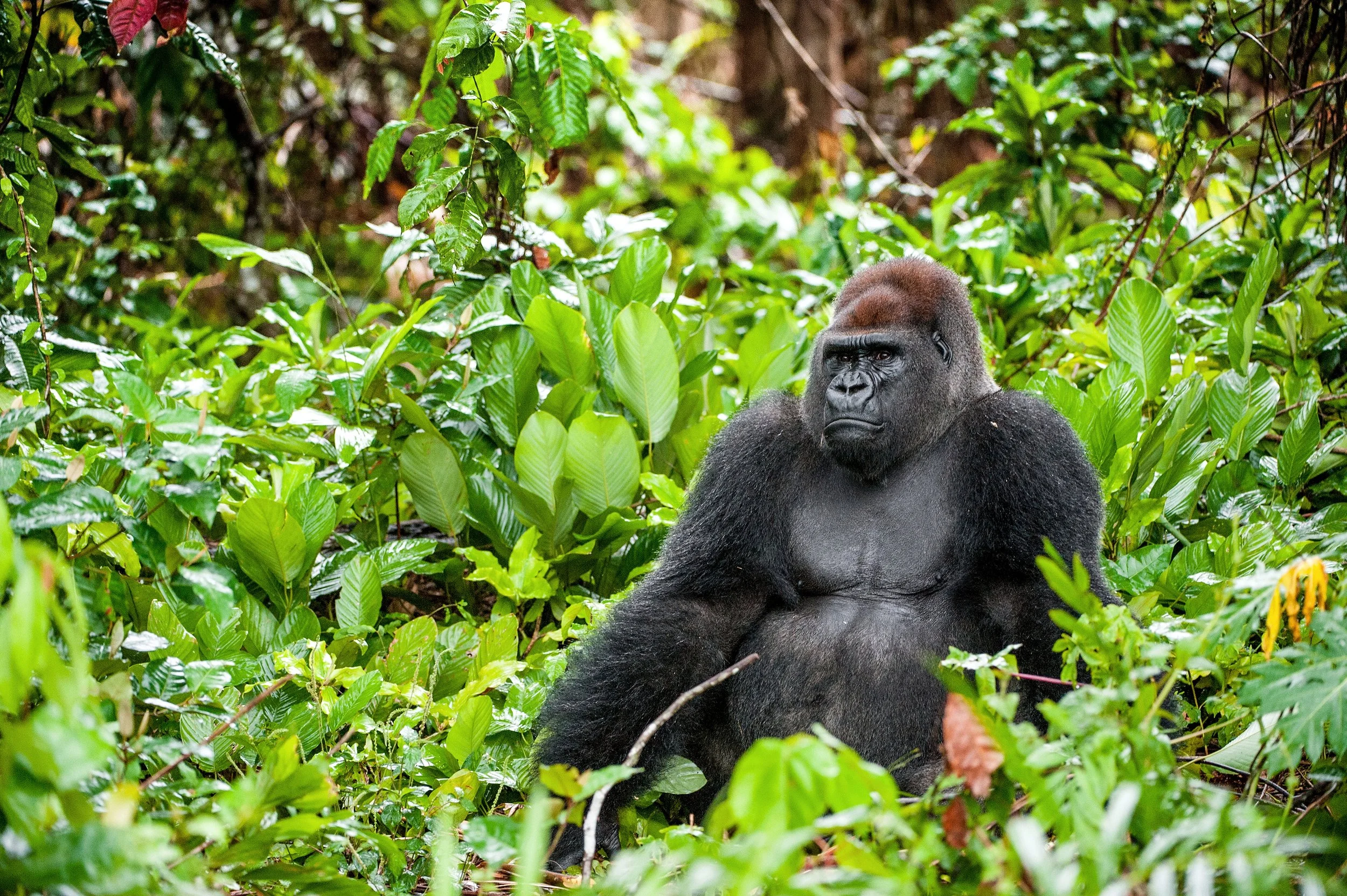
Western lowland gorillas, the smallest of all gorilla species, are Critically Endangered and are becoming rarer every day.
This partnership draws on GC's proven Global Park Defence and Community Protection programs and field experience in the Dja Rainforest Complex of Cameroon (Dja Biosphere Reserve, Nki National Park, Ngoyla Wildlife Reserve, and Mengame Gorilla Sanctuary) over the past 4 years.
In Cameroon, GC’s work also incorporates the adjacent commercial logging concessions into the protection strategy, working with 12 communities and forestry companies to monitor illegal wildlife poaching within their concessions. Cameroon recently reinforced a new wildlife law.
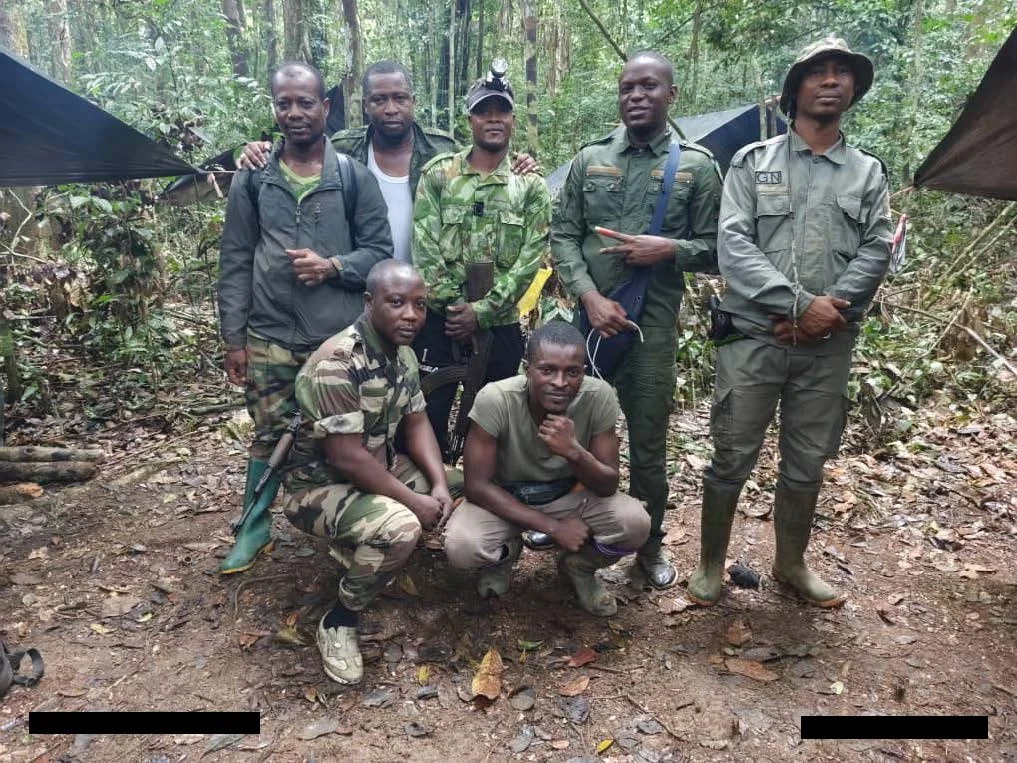
GC-supported long-range patrolling with Minkébé National Park rangers against elephant poaching.
As elephant poaching is being undertaken primarily by Cameroon-based syndicates entering from the North of Minkébé across the border, Global Conservation’s strong base of operations in Cameroon is critical to this program’s success. Cameroon recently enacted a new Wildlife Law with stiff fines and prison penalties for poaching of Class A species, including African Forest Elephants, Gorillas, Leopards, and Pangolins.
Oliver Fankem, GC’s Director of Central Africa, states, “Global Conservation's protection work spans the border between Gabon and Cameroon, combining intelligence on trafficking networks with field-based monitoring and ranger support. The data collected so far has provided a new understanding of the transboundary dimension of this crisis. Our engagement in this landscape involves intelligence networks, rapid field assessments, camera surveillance, and training of rangers for long-range, targeted patrols to prevent further incursions. Global Conservation’s Dja-Minkébé protection work has the potential to be a model for cross-border elephant protection across Central Africa.”
According to Minkébé National Park Conservator Gaël Obame Essono, "Over the past two years, the support of Global Conservation for our ranger teams in Minkébé has been concrete and meaningful. Through patrol operations and the deployment of camera traps across key corridors across the border between Gabon and Cameroon, we have begun to build the scientific baseline that is needed to have a better picture of where elephants still persist in the northern sector of Minkébé National Park, where poaching pressure remains highest and where our protection efforts must be concentrated."
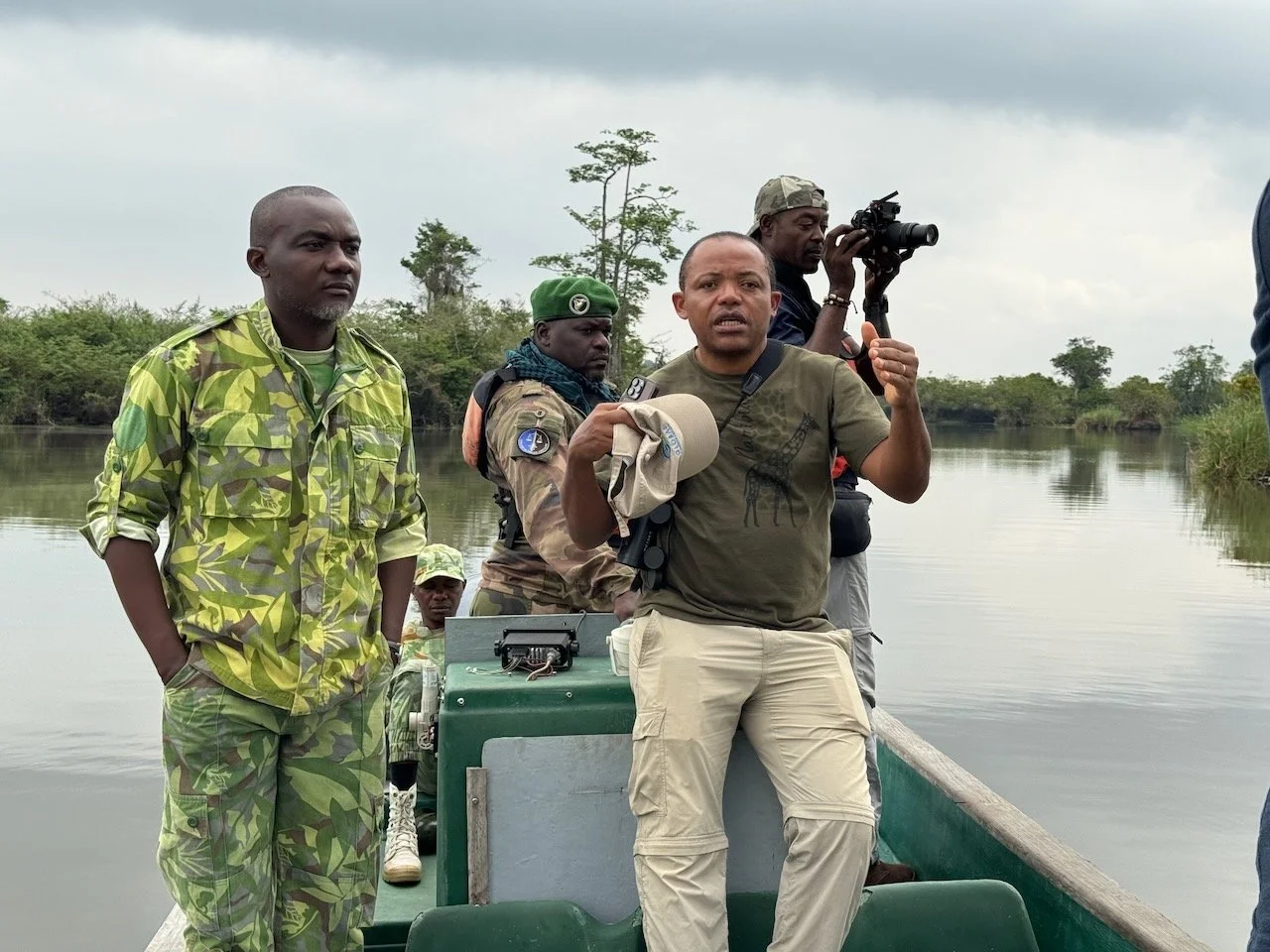
Pictured right-center is Oliver Fankem, GC’s Director of Central Africa, while on patrol.
"This strong foundation is essential. We cannot protect what we do not see. I am grateful to Global Conservation for walking alongside our teams in difficult terrain and under difficult conditions. I sincerely hope this partnership grows not only to confront the ongoing ivory crisis in Minkébé directly but also to establish a standard of evidence-based protection with other NGOs joining this effort on the foundation we are building together. I am confident we can turn the tide."
GC's broader conservation program in Central Africa is supported in part by the European Union's NaturAfrica TRIDOM program and the United Kingdom's DEFRA Illegal Wildlife Trade (IWT) Challenge Fund. These grants currently support GC's operations in southeastern Cameroon, contiguous to the north of Minkébé National Park. Discussions regarding the potential extension of programmatic support to Gabon are ongoing and subject to formal grant scope agreements with respective donors.


Packed with highlights of conservation successes from around the world at our project sites, this report features the effectiveness that the Global Park Defense and Community Engagement programs have for protecting culturally rich and highly biodiverse natural ecosystems in the most threatened parts of our world—land or sea.