
Minkebe National Park, Gabon
Project Summary
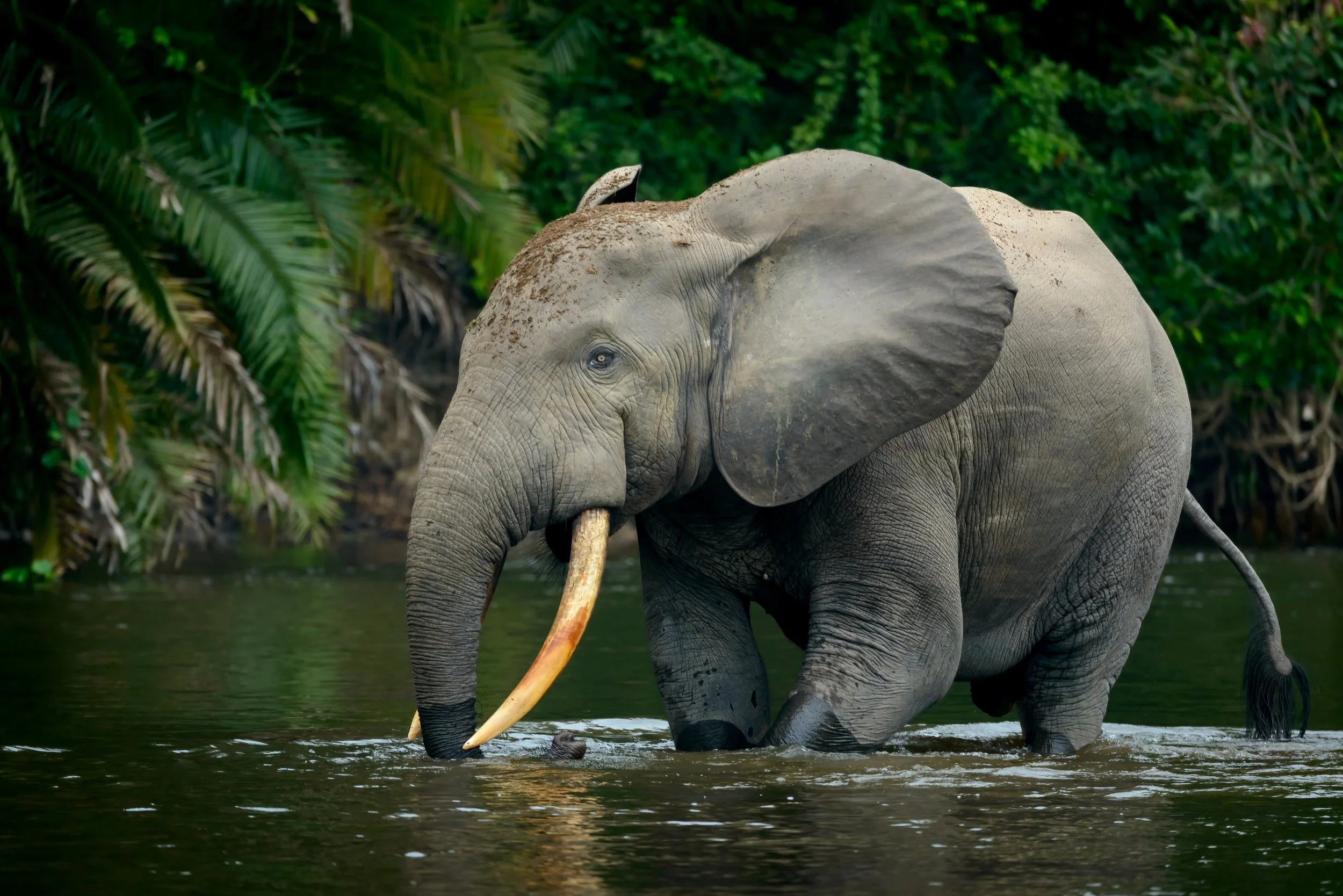
Global Conservation seeks to strengthen protection systems and active patrolling to protect the last remaining African Forest Elephants in Minkebe National Park, Gabon.
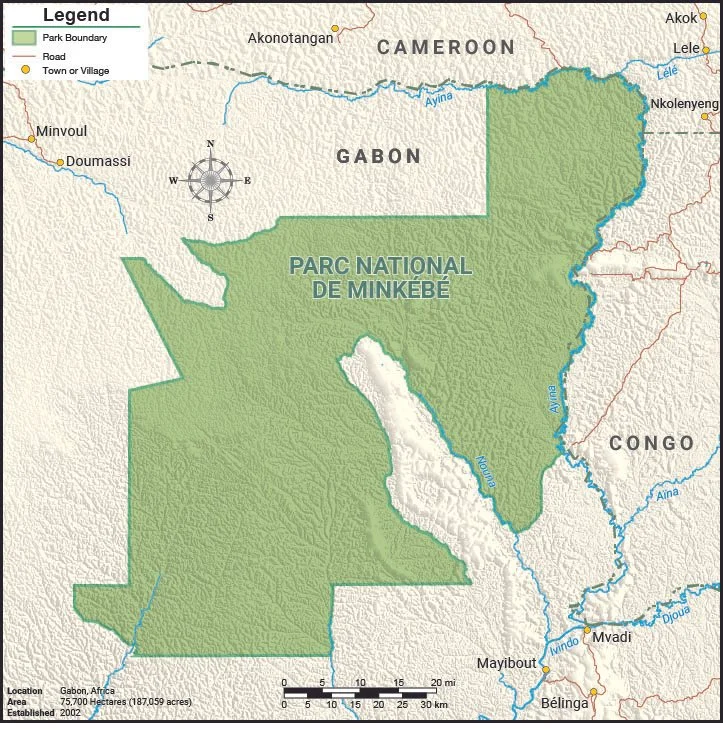
The GC Project is centered on Minkébé National Park (7,570 km²) in northeastern Gabon, one of the largest protected areas in the country and historically home to the highest forest elephant densities recorded in Central Africa. Minkébé forms a key component of the Dja Rainforest Complex and wider TRIDOM Conservation Landscape—both of the highest priority for African Forest Elephants.
In the past 20 years, Minkebe National Park has lost over 80% of its African Forest Elephant Population killed for ivory, and now there are less than 25,000 elephants estimated to survive in the park. Forest elephants in Africa have been decimated from 300,000 in 1990 to under 135,000 today in Africa. Gabon is now the last sanctuary for approximately 95,000 African Forest Elephants, 75% of Africa’s total population.
In Laguardia et al. (2021), a national genetic survey found evidence of poaching pressure along the Minkebe’s border with Cameroon, showing a heavily male-skewed elephant population consistent with sustained ivory hunting. The species is now listed as Critically Endangered following a recent IUCN assessment (Maisels et al., 2025).
Global Conservation’s goal in the next 4 years is to secure Minkébé National Park’s elephant recovery in Africa’s most important forest elephant stronghold by disrupting transboundary ivory trafficking from Cameroon and improving protection effectiveness and overall patrolling coverage and interdictions.
Global Conservation is working under a signed National Park Protection MOU with Gabon’s National Agency for National Parks (ANPN) to secure this critical African Forest Elephant habitat of intact dense tropical forests without human settlements on the Gabon side of the border.
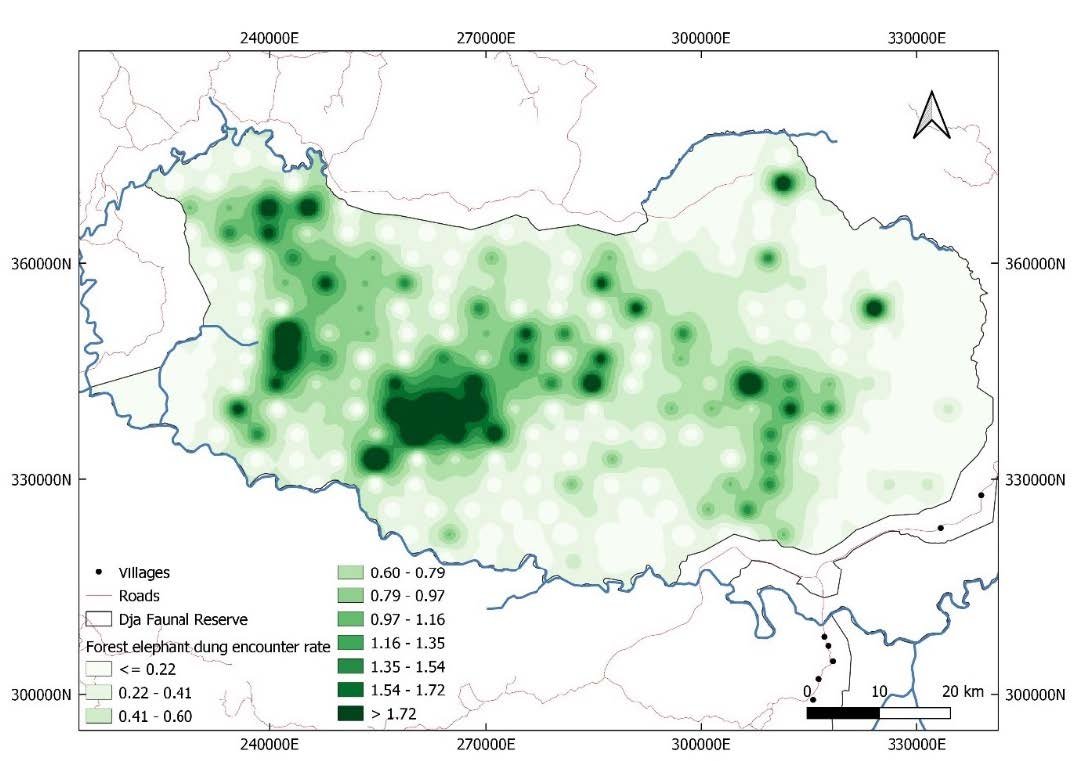
Oliver Fankem's scientific studies of African Forest Elephant populations and densities in nearby Dja Faunal Reserve.
The primary threat to the survival of African Forest Elephants in Minkebe National Park and Gabon is driven from Cameroon to the North, which is a primary trafficking and transit hub linking Central African ivory dealer syndicates to International Wildlife Trafficking (IWT) markets. As well, commercial logging and mining around Minkebe affect critical elephant corridors and the health of their populations.
Just north of Minkebe National Park in Cameroon, Djoum-based poaching syndicates from Cameroon operate regular elephant poaching missions into Gabon, killing thousands of African Forest Elephants every year. In the past four years, over 450 ivory tusks were seized in Djoum, including the arrests of Colonel Ango Ango, who has been banned from travel to the United States and Europe.
Global Conservation Announces New Partnership for the Protection of Minkébé National Park
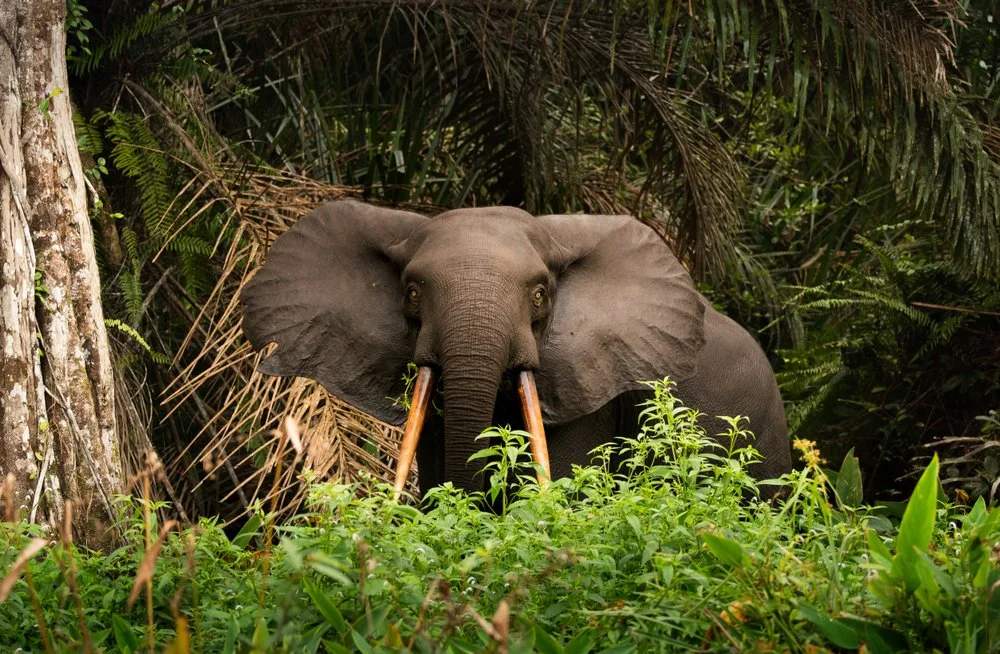
One of Central Africa's last intact tropical rainforests, Minkébé National Park is a critical refuge for the endangered African Forest Elephant.
Global Conservation and the Gabonese National Parks Agency (ANPN) have formalized a collaborative agreement to support the protection and the management of Minkébé National Park. This agreement marks an important step in strengthening field-based conservation in one of the second largest remaining intact forest blocks in the world after the Amazon.
Gabon is estimated to hold the largest national population of forest elephants (classified as Critically Endangered by the IUCN) on the continent, and Minkébé is central to their long-term survival. Covering an area of over 7,500 km² in northeastern Gabon, Minkébé National Park is crossed by multiple major river systems draining into the Ivindo and Ntem basins.
African Forest Elephants play an indispensable ecological role as seed dispersers and forest architects. Their slow reproductive rates, with a single calf every four to over six years, depending on individual age and habitat conditions, make population recovery from sustained pressure very difficult.
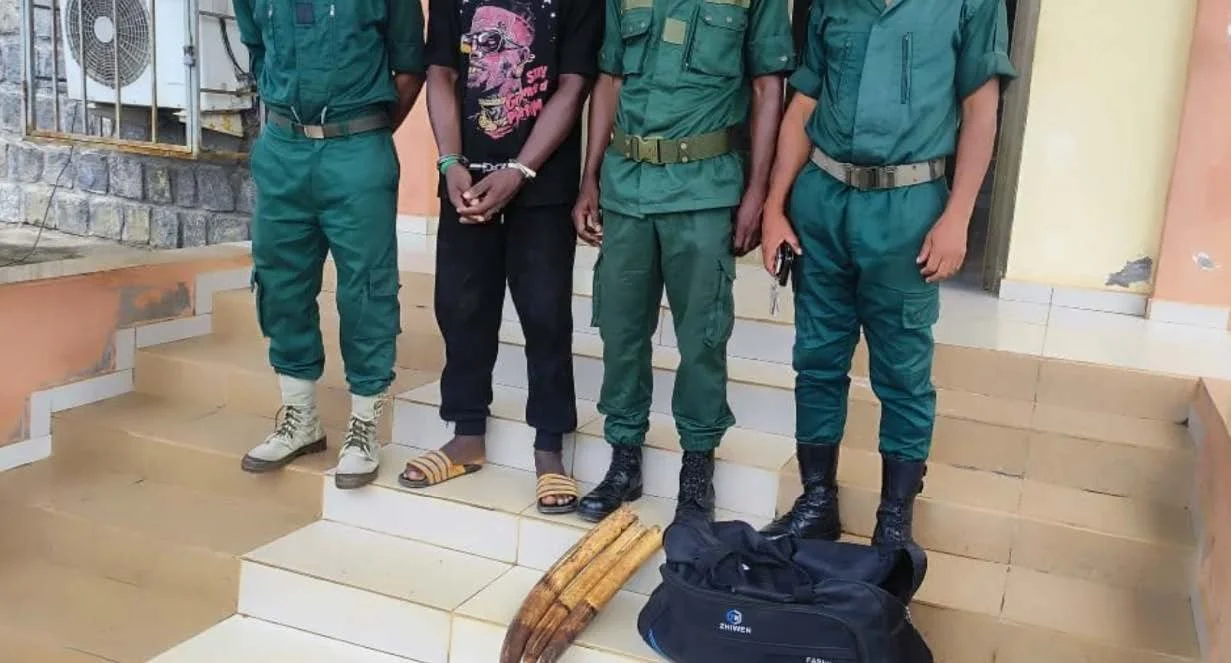
Field reports and ranger intelligence indicate that Minkébé faces sustained pressure from cross-border ivory poaching originating from poaching syndicates operating across the Cameroon-Gabon border. While the full scale of this threat requires further systematic scientific assessment, available evidence points to significant and ongoing impact on elephant populations in the region.
Global Conservation and ANPN have signed a collaborative agreement focused on targeted support for Minkébé National Park. Under this agreement, GC is providing technical assistance and support for ranger patrol operations in the park as an initial phase of engagement.
This partnership draws on GC's field experience in ranger support and park protection systems in the Cameroon TRIDOM landscape (Dja Biopshere Reserve, Nki National Park, Ngoyla Wildlife Reserve, and Mengame Gorilla Sanctuary), including logging concessions, with the aim of progressively strengthening ANPN's operational capacity in Minkébé over time. GC is now working closely with Minkebe NP rangers and park management staff, with the scope and scale of support to be developed jointly as the partnership evolves.
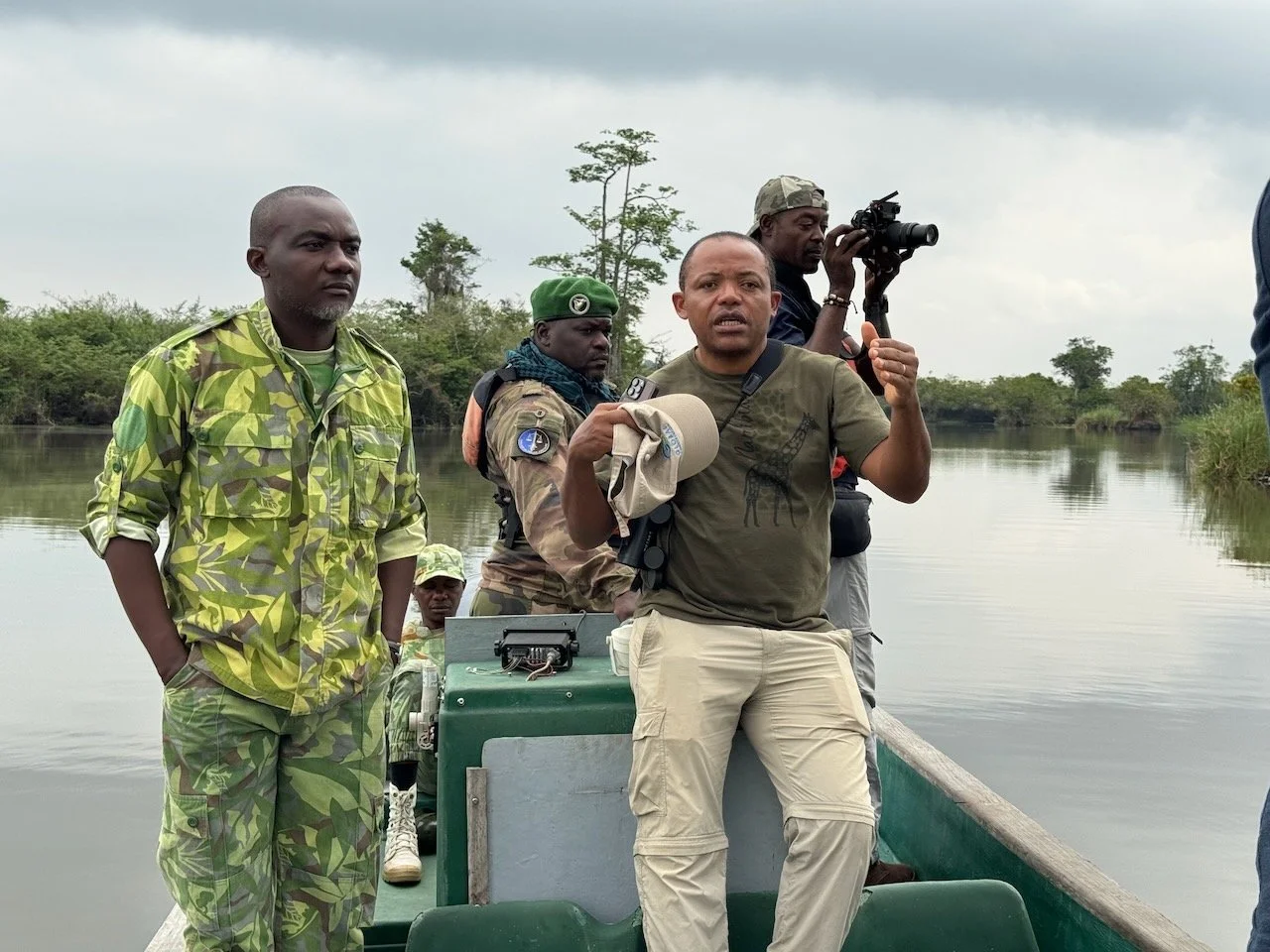
Pictured right-center is Oliver Fankem, GC’s Director of Central Africa, while on patrol.
Oliver Fankem, GC Director of Central Africa, states that “Global Conservation spans the border by combining intelligence on trafficking networks with field-based monitoring and ranger support. Data collected so far has helped understand the transboundary dimension of this crisis in a way that has not been previously done. Our engagement in this landscape began with a quick assessment, and ranger training followed by targeted patrol support to prevent further incursions. Global Conservation intervention If sustained, it has the potential to be a model for cross-border elephant protection across Central Africa."
According to the Minkebe Conservator, "Over the past two years, the support of Global Conservation to our ranger teams in Minkébé has been concrete and meaningful. Through patrol operations and the deployment of camera traps across key corridors across the border between Gabon and Cameroon, we have begun to build the scientific baseline that is needed to have a better picture of where elephants still persist in the northern sector of MInkebe National PArk, where poaching pressure remains highest, and where our protection efforts must be concentrated. This foundation is essential. We cannot protect what we do not see. I am grateful to Global Conservation for walking alongside our teams in difficult terrain and under difficult conditions. I sincerely hope this partnership grows not only to confront the ongoing ivory crisis in Minkébé directly but also to establish a standard of evidence-based protection with other NGOs joining this effort on the foundation we are building together. I am confident we can turn the tide."
Global Conservation's broader conservation program in Central Africa is supported in part by the European Union's NaturAfrica TRIDOM program and the United Kingdom's DEFRA Illegal Wildlife Trade (IWT) Challenge Fund. These grants currently support GC's operations in Cameroon.
Progress in the Past 2 Years
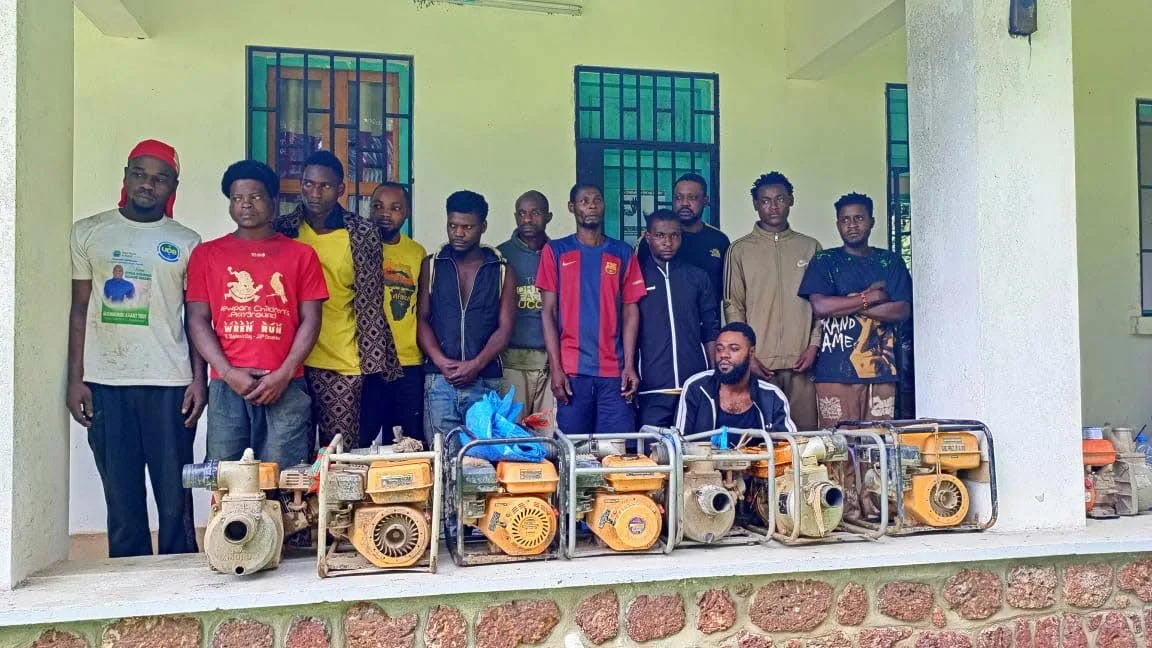
Illegal gold miners arrested and pumps captured in Minkébé National Park.
Global Conservation and Gabon’s National Agency for National Parks (ANPN) have intensified conservation efforts in Minkebe, including anti-poaching patrols, transport and equipment, communications gear, ranger training, and community outreach programs—critical components of Global Park Defense and Community Protection. Collaborative scientific research and monitoring projects led by Oliver Fankem are helping to track wildlife populations and assess the health of the park’s ecosystems.
Based on our signed MOU with ANPN, Global Conservation has since been working to assess the park's overall protection systems, including carrying out surveillance patrols in the northern quarter of Minkébé and its periphery along the Cameroon border. As well, patrolling has been intensified in the interzone between the Dja Faunal Reserve and the Gabon border, covering both national parks and the commercial logging and community concessions, mapping threats and known elephant poaching and trafficking trails out of Minkebe into Cameroon.
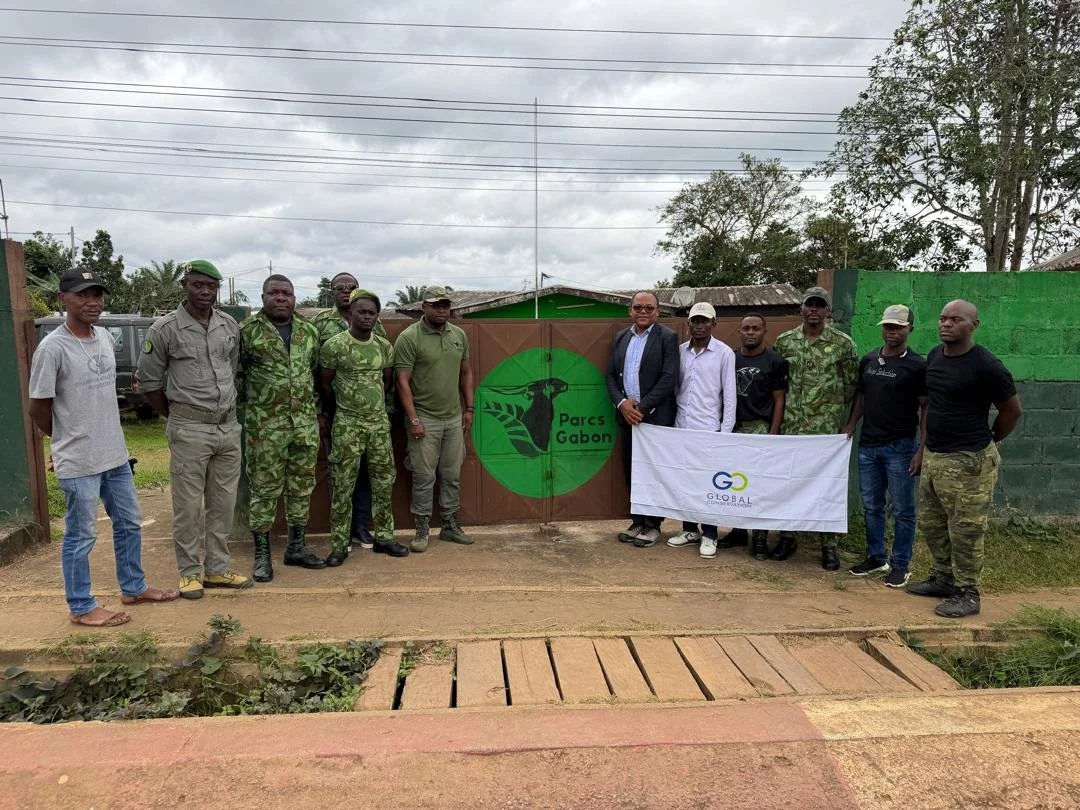
Together with ANPN and Minkébé National Park authorities, we have established Rapid Response Teams based in Oyem (Minkébé headquarters), from which all patrol missions are launched. To date, GC funding has supported six patrol missions of 21 days each within Minkébé National Park, resulting in several arrests of poachers and illegal miners.
Reinforcing the national park authority’s technical and human capabilities with equipment, EarthRanger systems, training, and patrol operations support, we are now working to bring the same level of patrolling and surveillance coverage to northern Minkébé and protect the national park against the established ivory trafficking trails already identified on the Cameroon side.
On the investigative side, we work closely with Conservation Justice in Gabon on transboundary operations. Six months ago, this collaboration led to the arrest of a major trafficker in Cameroon, based on intelligence shared through Conservation Justice.
On the biodiversity assessment side, we successfully deployed, for the first time, two grids of 36 cameras in northern Minkébé, with surveillance also carried out during patrol deployments to complete the assessment. We have further provided equipment for satellite communications, including InReach devices and subscriptions and PDAs, and are upgrading the Command Center.
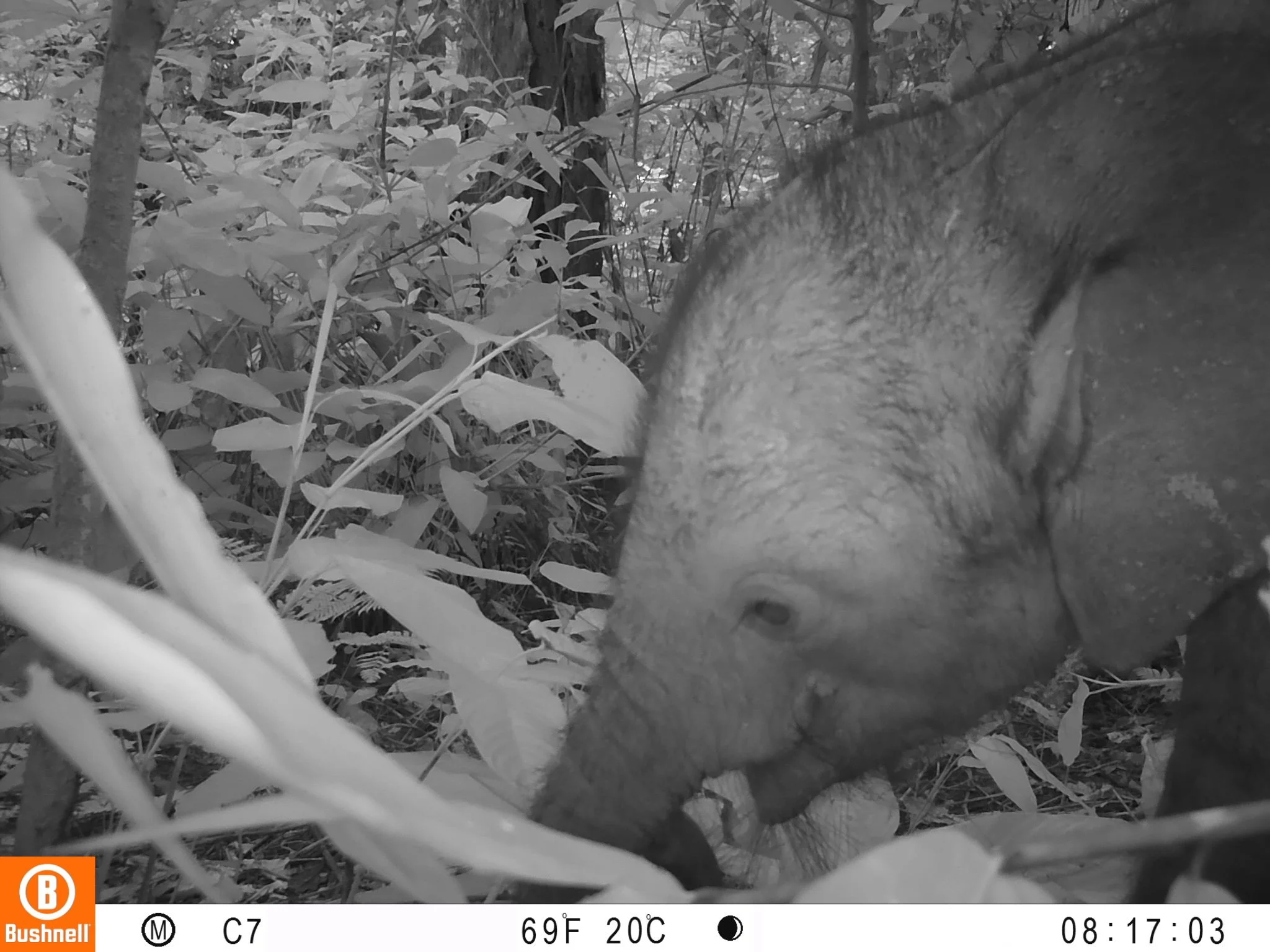
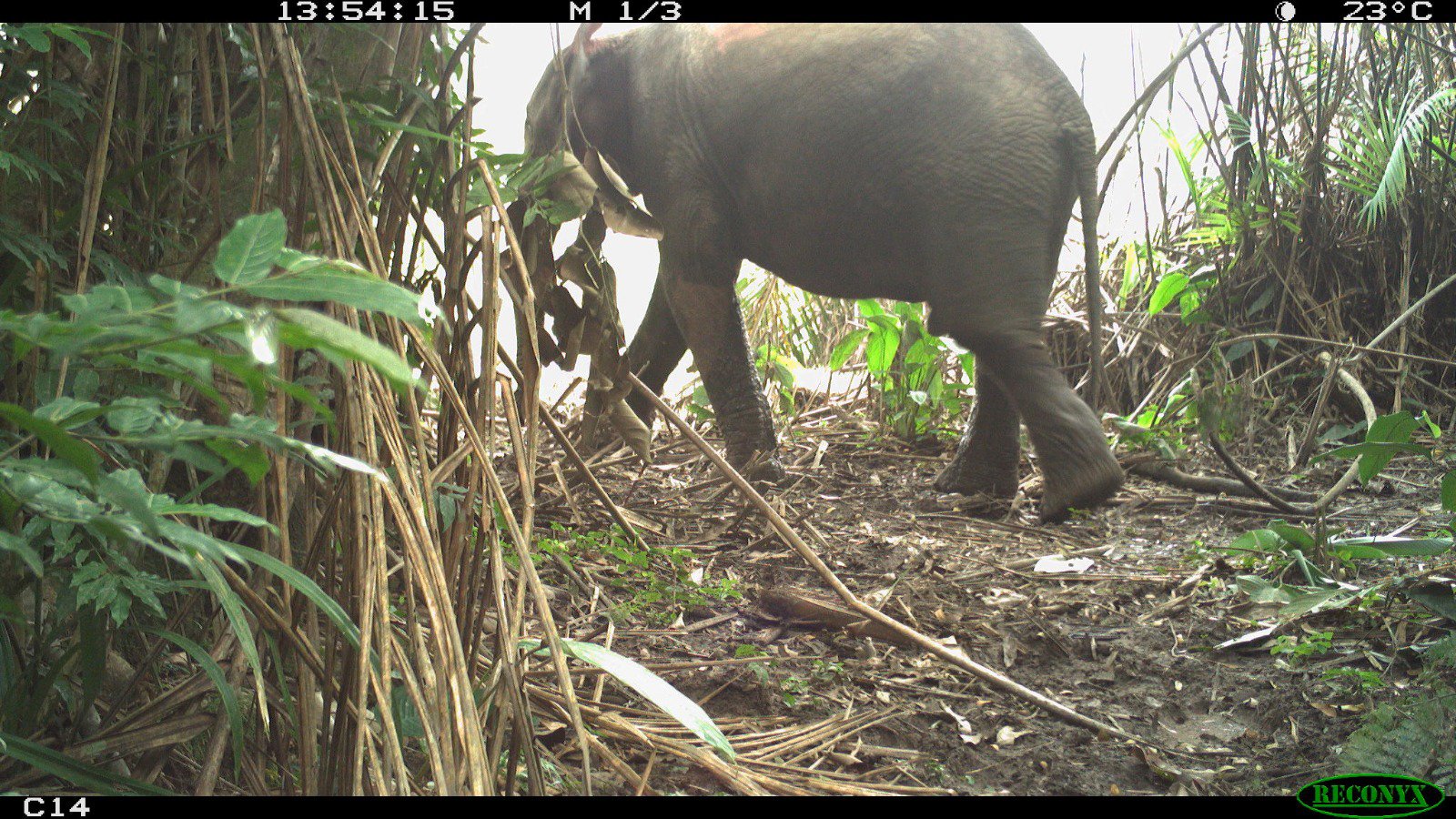
A Baby forest elephant was captured recently on the GC camera trap network.
Importance of Minkebe National Park, Gabon
Today, Minkebe National Park is one of the last intact tropical rainforests in Central Africa. Established in 2002, it covers over 750,000 hectares and is buffered by over 1.2 million hectares of commercial forestry concessions, all critical habitat for African Forest Elephants. Minkebe is crossed by four large rivers and contains some of the largest trees in Africa—hundreds of years old and over 50 meters in height.
Minkebe is believed to contain the largest population of African Forest Elephants of any protected area in Africa. In the forests of Minkebe there are about 25,000 African Forest Elephants remaining, hiding deeper into the forest away from the Cameroon border when most of the ivory poachers come. Minkebe is also one of the richest areas in terms of primates, with 16 species in which we can find gorillas and chimpanzees, black coloboes, and Mandrill monkeys.
Theory of Change
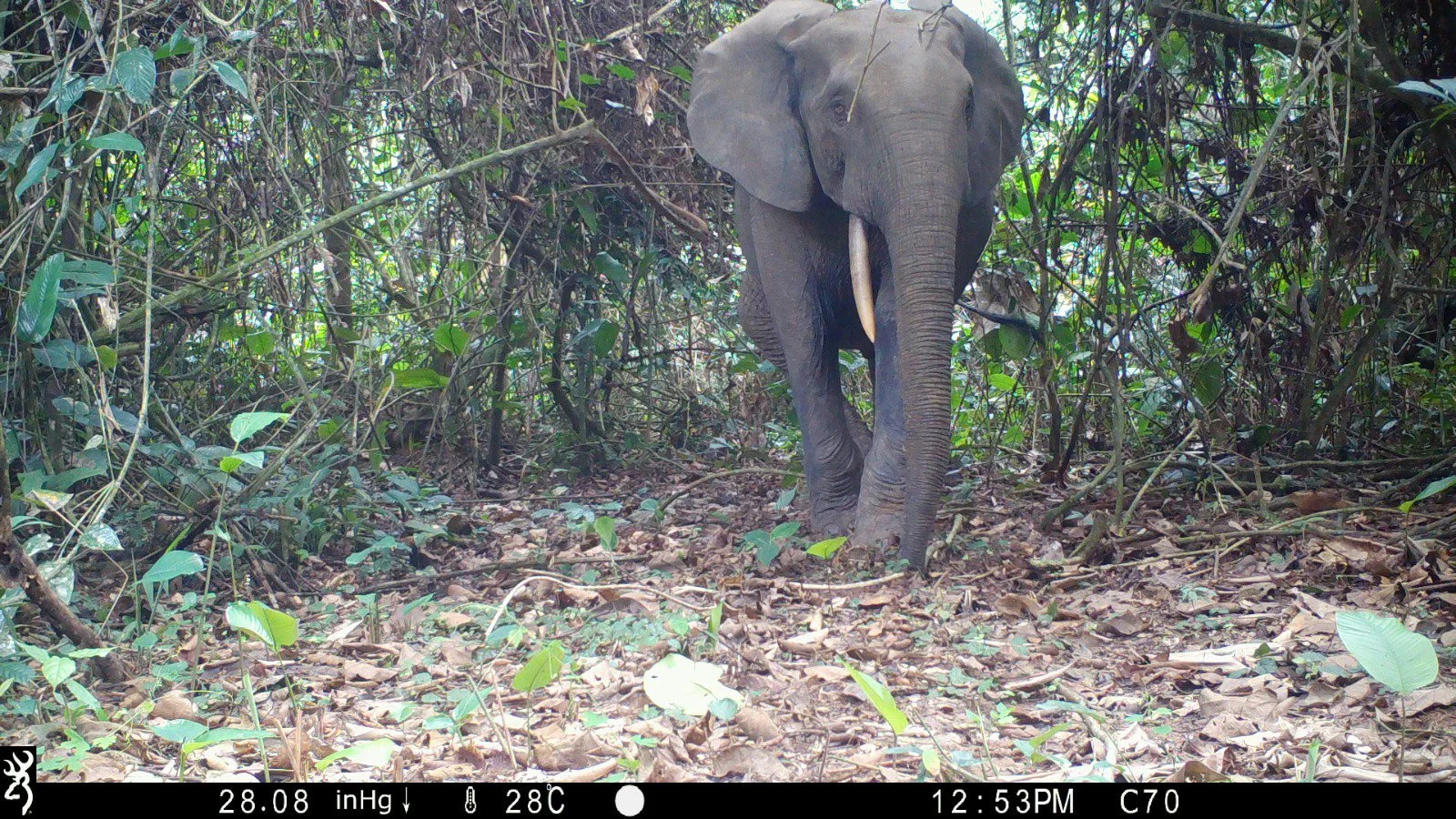
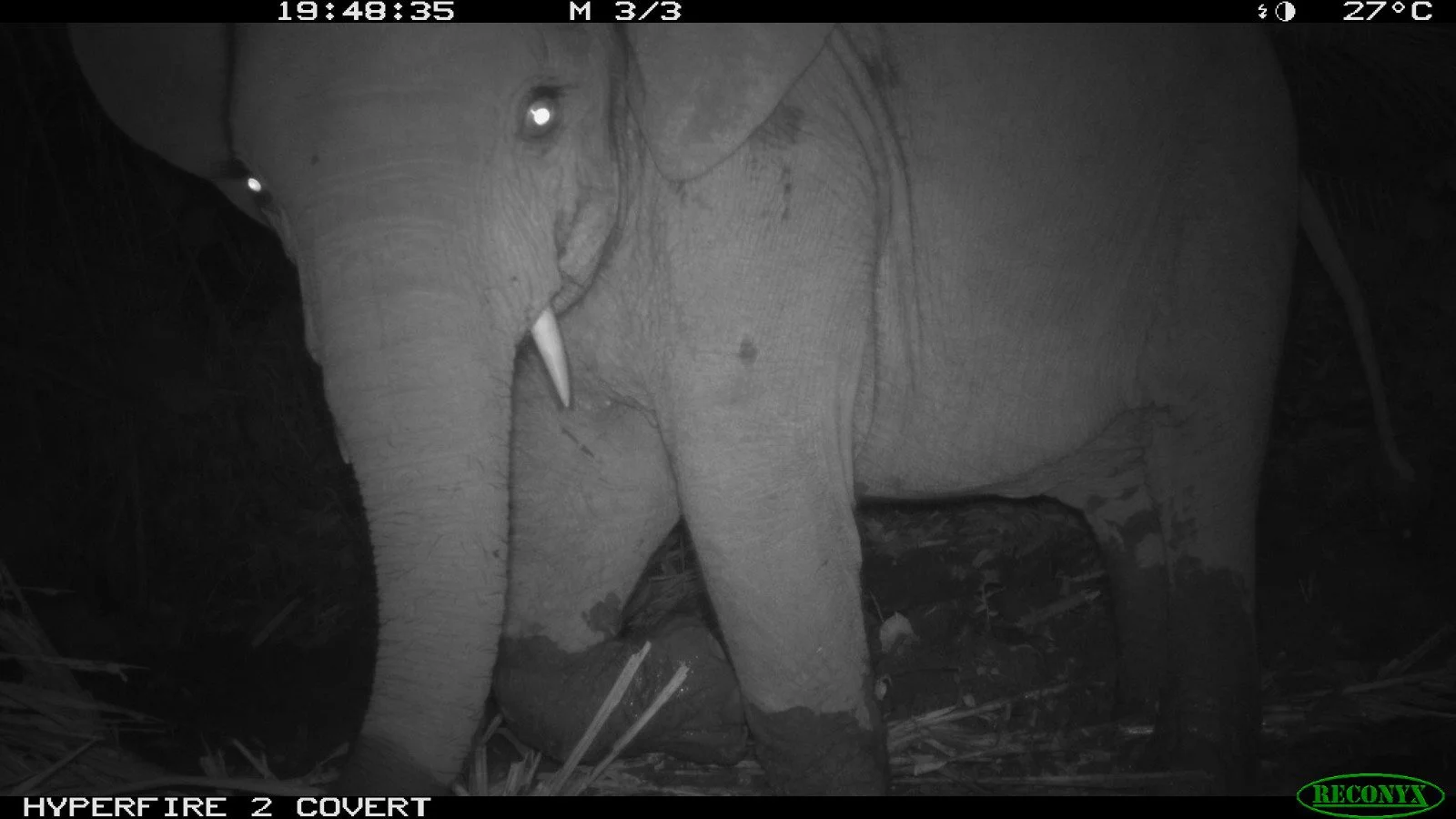
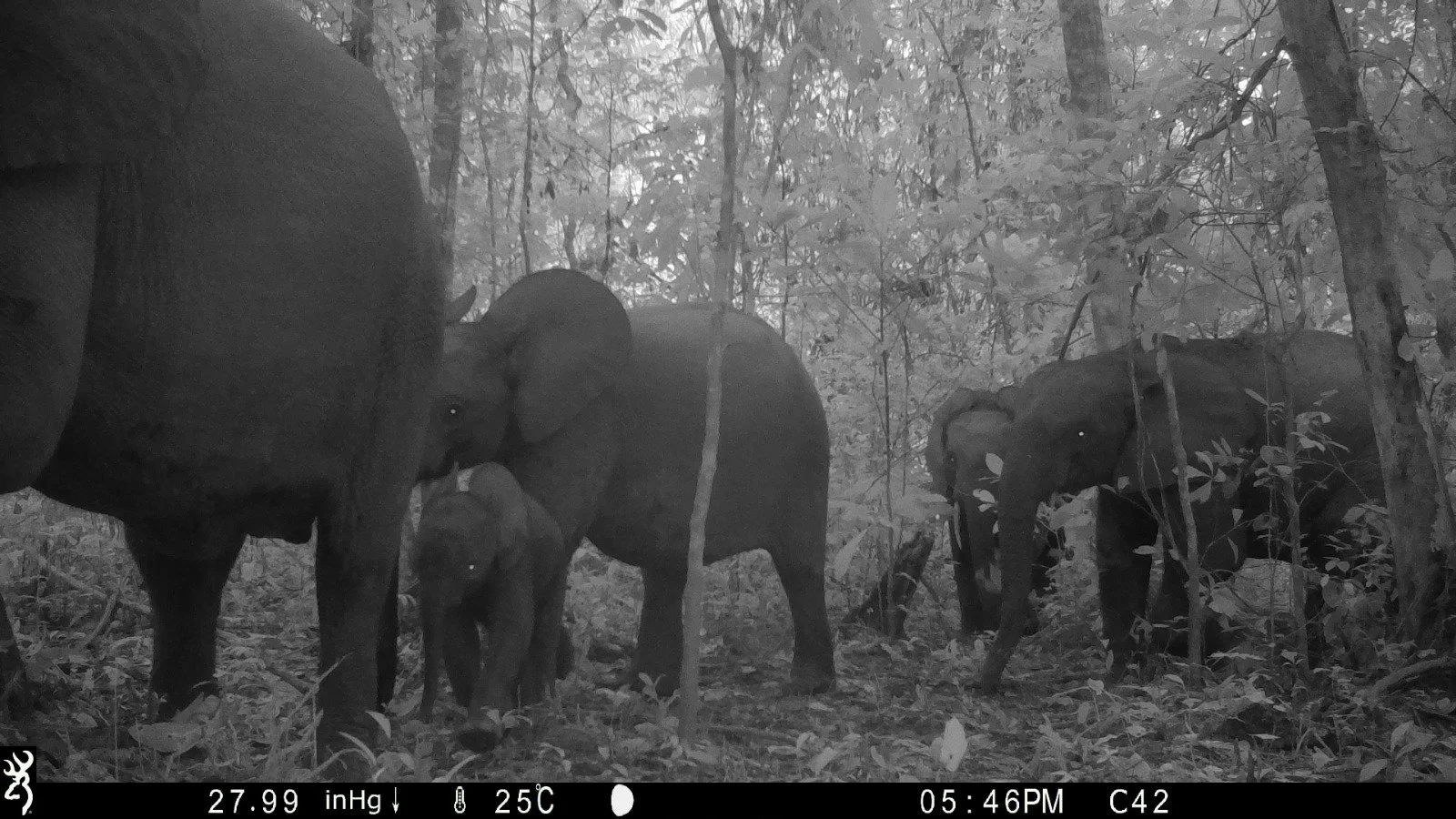
Through this project, GC looks to continue protecting elephants and other wildlife in the national parks in which they live in Cameroon and Gabon by aligning a strong counter wildlife trafficking (CWT) project framework with the organization’s already proven Global Park Defense (GPD) model for park and wildlife protection that combines community protection, SMART patrolling, surveillance, patrol operations, intelligence, and arrest and prosecution support to reduce environmental crime in national parks.
Global Park Defense will be deployed in a 5-year strategy, working closely as well with Cameroon’s Ministry of Forestry and Wildlife (MINFOF). GC has a partnership with MINFOF and specific project agreements with the Conservation Service of MINFOF that works in the Dja and Ngoyla Reserves and Nki National Park (NNP), supporting the implementation of the SMART approach for site-based protection while strengthening law enforcement.
Global Conservation and Gabon’s National Agency for National Parks (ANPN) have intensified conservation efforts in Minkebe, including anti-poaching patrols, transport and equipment, communications gear, ranger training, and community outreach programs—critical components of Global Park Defense and Community Protection. Collaborative scientific research and monitoring projects led by Oliver Fankem are helping to track wildlife populations and assess the health of the park’s ecosystems.
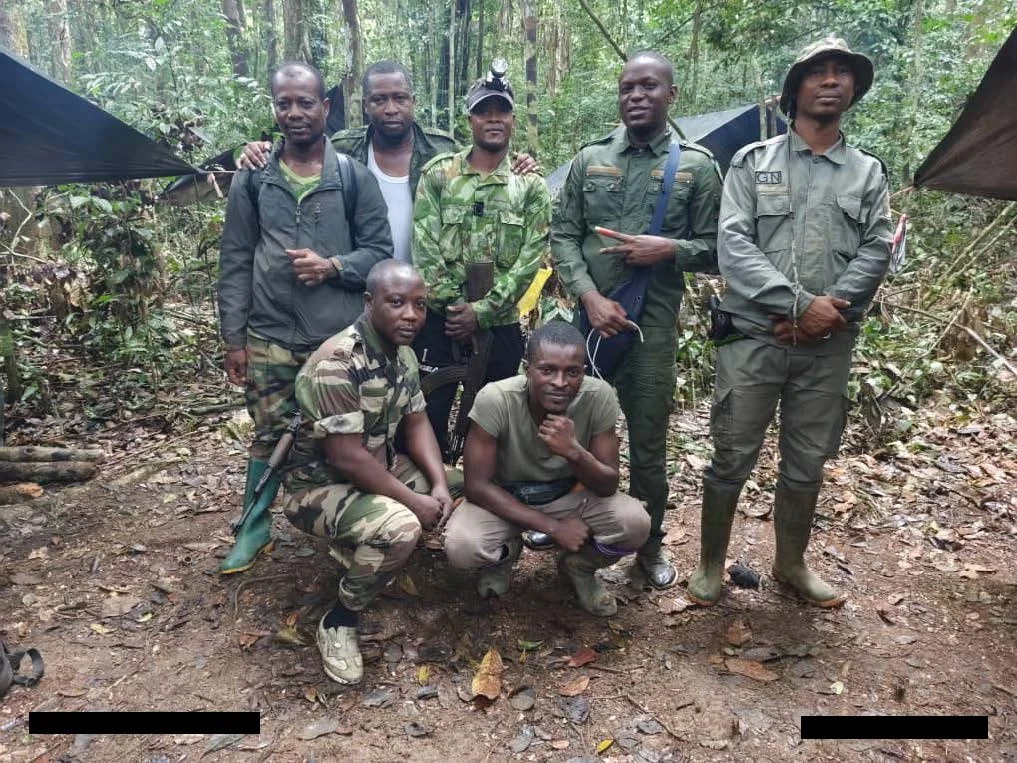
GC-supported long-range patrolling with Minkébé National Park rangers against elephant poaching.
Global Conservation directly supports Gabon’s National Park Rangers and Community Ecoguards to deploy Global Park Defense and Community Protection, combining SMART Patrolling, Trailcam Surveillance, Satellite Monitoring, Area-wide Communications, Rapid Response Teams, and Community Involvement.
Global Conservation supports dedicated Minkebe Rapid Response Teams and Ranger Patrol Teams of Gabon’s National Agency for National Parks (ANPN). Combining SMART and EarthRanger park protection systems and deploying next-generation satellite Trailcameras along the border on all trails used by elephant poachers will enable rapid interdiction of illegal intrusions into Gabon and Cameroon forests—before they can kill.
GC Minkebe’s integrated disparate protection forces in the region include law enforcement, community patrolling, park rangers, and forest concessionaires providing critical training, integration, systems and equipment, and transportation and patrol operations support.
Global Conservation is undertaking regular African Forest Elephant monitoring and population density studies to focus protection efforts against incoming ivory poaching networks, primarily from Cameroon.
GC Leadership in Gabon and Cameroon

Global Conservation delivery of uniforms, boots, equipment, and patrolling gear at the newly refurbished Lomie HQ for Dja Faunal Reserve.
Global Conservation has been operational in this landscape since 2021, led by Oliver Fankem, GC Director of Central Africa, who brings 17 years of regional experience protecting wildlife across Gabon and Southeast Cameroon.
His track record includes involvement in two major ivory enforcement operations over the past decade, as well as publishing the most recent peer-reviewed paper on forest elephants in the TRIDOM Cameroon. This long-term presence, supported by DEFRA and the EU NATURE AFRICA TRIDOM program, both addressing illegal wildlife trade across the landscape, made Minkébé an obvious choice for extending our fight against IWT across the Cameroon–Gabon border. On the Cameroon side, GC employs nearly 20 persons in permanent field bases in Djoum, Mintom, and Lomié, enabling continuous engagement with local law enforcement, community surveillance networks, and judicial systems, forming a strong foundation for cross-border coordination.
In Gabon, a collaboration agreement formalized through an MOU with the Agence Nationale des Parcs Nationaux (ANPN) has anchored our work in Minkébé since 2024. Over the past two years, this has included biannual in-person coordination missions, complemented by additional missions as needed for camera-trap deployment training, SMART patrol system training, and related capacity-building activities. Beyond these missions, GC has identified a dedicated ANPN focal person embedded within the park's personnel structure, ensuring continuous institutional linkage and sustained on-the-ground coordination with Minkébé National Park.
Oliver Fankem, GC’s Director of Central Africa, leads the Park and Elephant Protection program in Minkebe National Park, Gabon for this grant. He has worked in Gabon and Southeast Cameroon’s Dja Rainforest Network for over 18 years to protect wildlife in protected areas and works closely with adjacent forestry concessions, helping their Forest Management Units (FMU) put in place measures and procedures to protect elephants and other wildlife in their concessions while they carry out selective logging activities.
Oliver Fankem developed and wrote a definitive toolkit for managing wildlife in logging concessions in Central Africa, providing best practices and lessons learned on wildlife protection over 1 million hectares of FMU’s management by forestry companies such as Pallisco, SFID, and others.
Oliver Fankem is a leading scientist in Cameroon on the research and conservation of African Forest Elephants and is the co-author of numerous scientific papers, including “Vanishing Giants: Assessing forest elephant status and conservation strategies in Cameroon's Dja-Ngoyla Complex.”
Primary Goals and Objectives
Primary Goals
Secure the long-term recovery of Minkébé's Critically Endangered Forest Elephant population by permanently disrupting transboundary trafficking between Gabon and Cameroon.
Reinforce the National Park and Wildlife Protection Cababilities of Minkebe National Park authorities and ranger teams.
Primary Objectives
Strengthening National Rark Ranger Infrastructure, including a new Command Center with upgraded communications and field equipment, and deployment of Satellite and Cellular Cameras for real-time surveillance.
Expanding Surveillance and Evidence-gathering, through covert camera trap networks and SMART-based patrol data to map and document activities on known ivory trafficking trails.
Deploying Raprid Response Teams and Long-Range Patrols against key incursion trails identified in both Gabon and Cameroon.
Conducting Indepth Cross-Border Investigations by GC and Conservation Justice which have already led to the arrest of major traffickers, and new coordination channels with GIZ, COMIFAC, and Cameroon-based partners to enable real-time, joint law enforcement response across the border.
Project Background and Context
Gabon forests hold the fate of one of the world's most threatened large mammals: the African Forest Elephant. Once distributed across the dense rainforests of West and Central Africa, forest elephant numbers have collapsed over the past three decades, driven overwhelmingly by ivory poaching.
The IUCN now classifies the species as Critically Endangered. Against this backdrop of continent-wide decline, Gabon has emerged as the single most important refuge for the species on Earth. Of the estimated 135,690 forest elephants remaining across their entire range (Maisels et al. 2025), Gabon alone is home to approximately 95,000 individuals, which makes Gabon an essential pillar for the recovery of the global population. This situation can be explained by the fact that Gabon retains an exceptional expanse of intact, contiguous forest landscape capable of sustaining viable elephant populations at scale.
However, this stronghold status is fragile, as more than half of Gabon's elephants live outside protected areas, where they are directly exposed to poaching, habitat loss, and escalating human-wildlife conflict as agricultural and logging fronts expand. Even within protected areas, enforcement capacity is often insufficient to match the sophistication and reach of transnational trafficking networks (Intel reveals that poachers use Thuraya Satellite phones). Holding the majority of the world's forest elephants does not make Gabon's population safe; it makes its protection an urgent global responsibility. If Gabon's populations decline as Cameroon's have, the consequences would not be a national loss but a global extinction-level event for the species.
Cameroon's trajectory serves as a clear illustration of the stakes involved. Once home to substantial forest elephant populations, Cameroon has been devastated by decades of poaching and ivory trafficking and now retains only an estimated 6,153 forest elephants (IUCN 2024), confined largely to the southeast of the country. This happened as trafficking networks were left to operate with insufficient enforcement, converting a once-substantial population into a remnant one within a generation.
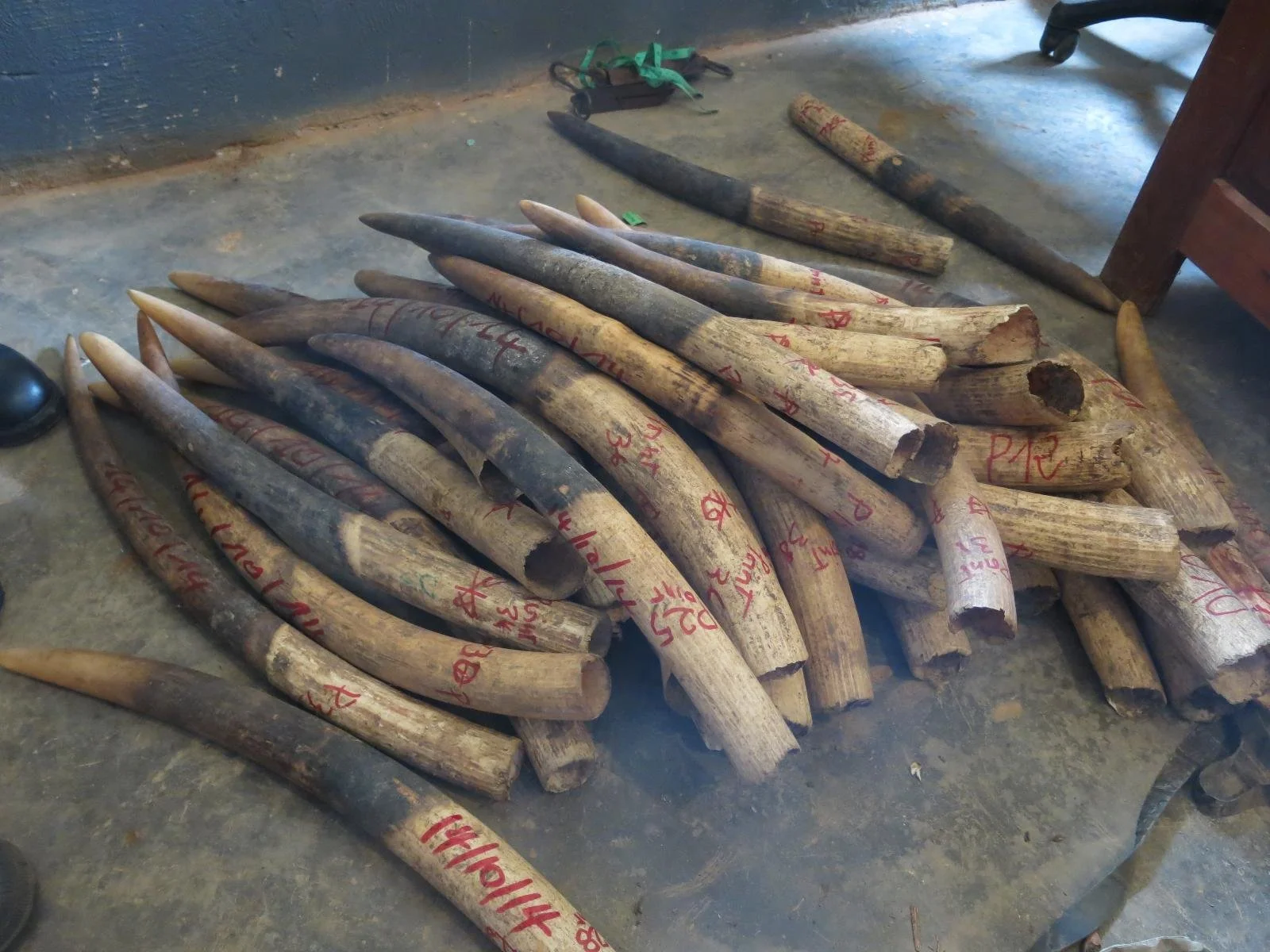

Today, Cameroon functions primarily as a transit and trafficking hub, linking ivory sourced from Gabon and other Central African supply zones to international IWT markets. This scenario of Gabon as a source and Cameroon as a transit corridor justifies why cross-border protection linked to Minkébé is so critical: it is the point at which poaching in Gabon converts into trafficking through Cameroon and the last point at which interdiction is possible before ivory disappears into international trade networks through Minvoul, Oveng, and Djoum. International bodies, including the IUCN, UNODC, the European Union, the UK, and the US government, have consistently identified weak cross-border law enforcement coordination and the sophistication of transnational criminal networks as the primary drivers of continued biodiversity loss in this region. Gabon and Cameroon have strengthened their legal frameworks, which in both countries are robust on paper, but a persistent enforcement and coordination gap remains on the ground.
Within this regional picture, Minkébé National Park holds a uniquely critical position, but recent park ecogard field deployment (GC-supported Surveillance and camera trapping missions) shows that Minkébé's elephants are retreating deeper into the Park, away from the Cameroon border, specifically to avoid the areas where ivory poachers are most active.
This behavioral pattern is itself evidence of sustained, border-driven poaching pressure; the remaining elephant population is pushed and compressed by trafficking activity emanating from Cameroon, travelling only across the forest to Gabon and returning to Cameroon undetected. If Left unaddressed, this pressure will continue, as has occurred in Cameroon; sustained trafficking access to a border zone can, over time, convert a stronghold population into a remnant one. Anecdotal information from Hubert E. and the former Gabonese Minister of forest (Prof. Lee white) suggested poachers from Cameroon travel beyond 100km inside Gabon.
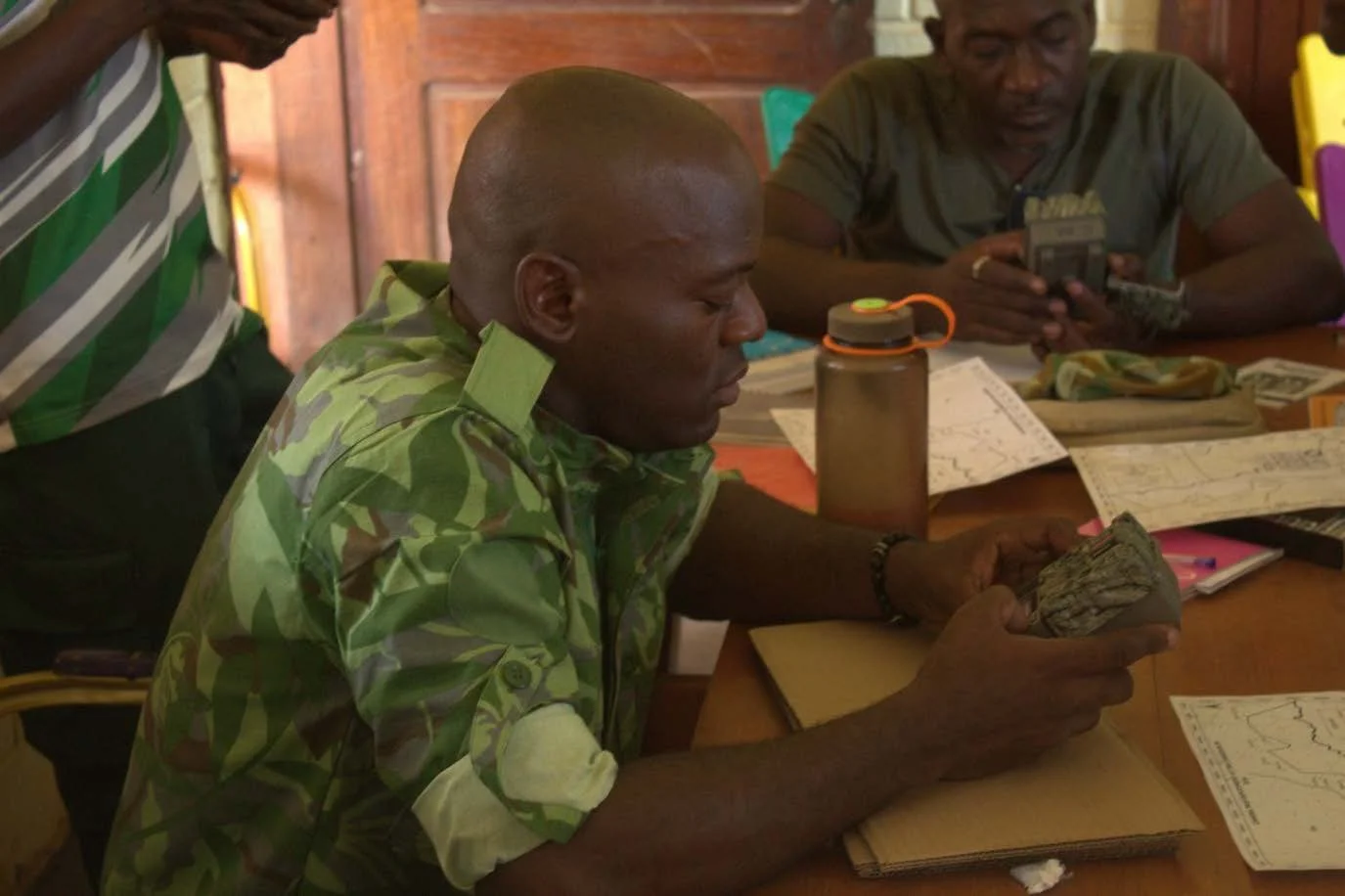
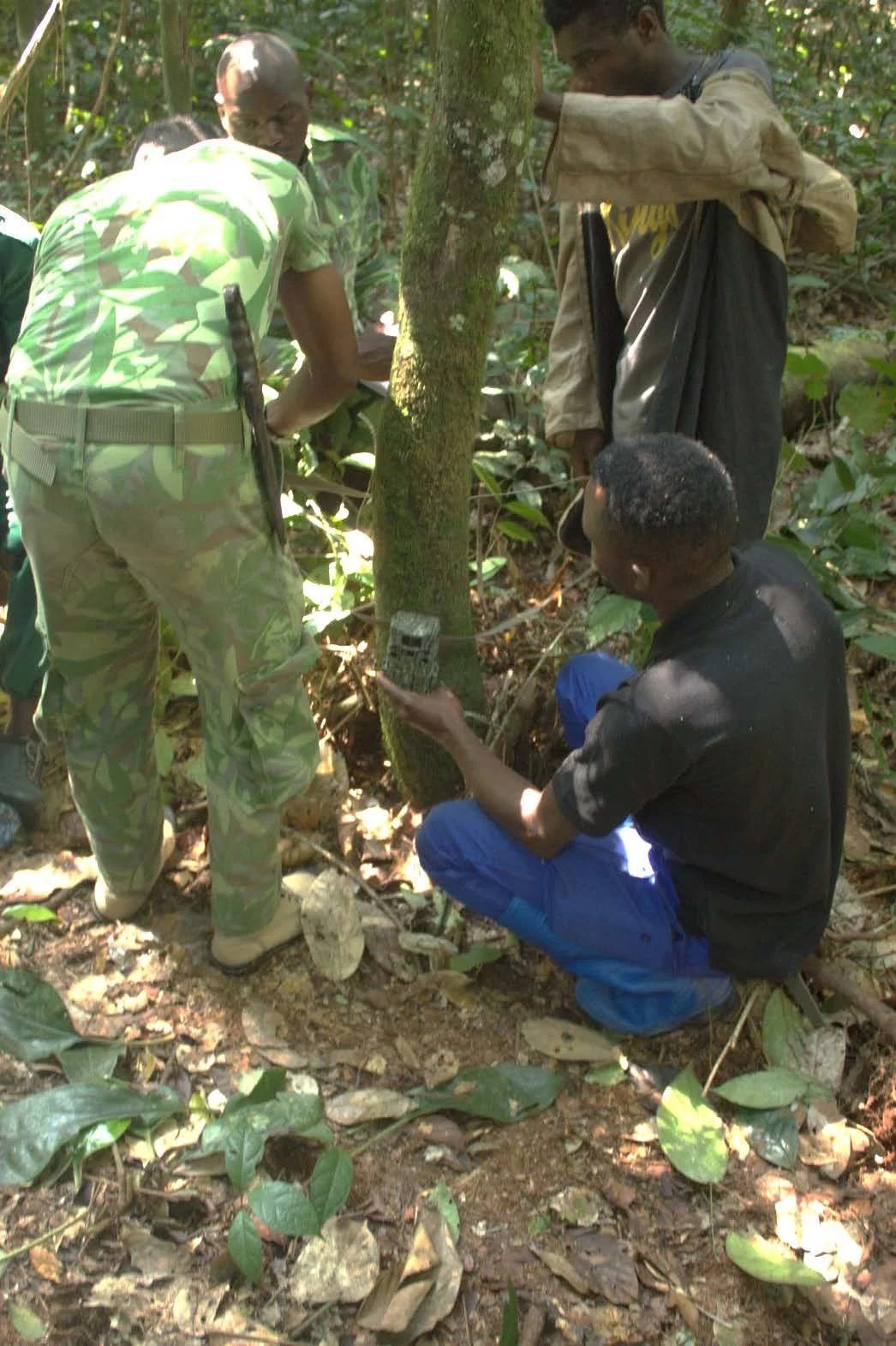
GC and Gabon's National Agency for National Parks (ANPN) have already intensified conservation efforts in Minkébé under an existing partnership signed in December 2024 to support anti-poaching patrols, equipment, communications, and ranger training, which are part of the core components of the Global Park Defense and Community Protection model.
This work is led on the ground by Oliver Fankem, GC's Director of Central Africa, who brings over 18 years of experience protecting wildlife across Southeast Cameroon's Dja Rainforest landscape with a direct link to Minkebe. To date, this collaboration has led to several field missions in Minkebe NP, including training Minkebe staff in camera trap deployment, SMART data collection, provision of tools such as inreach and PDA, and deployment of two 36-camera grids. In addition, we have also been working in collaboration on conservation justice in investigation, operation, arrest, and prosecution.
A recent GC Investigation resulted in the arrest in April 2026 of a trafficker with an ivory tusk from Gabon on his way to delivery in Cameroon. The arrest was done thanks to the information-sharing system with Conservation Justice, who are very active outside the park in Gabon. These achievements demonstrate that the operational model works, but they remain partial, under-resourced, and insufficiently consolidated to durably close the trafficking corridor.
Despite these initial results, Minkébe National Park’s protection system remains under-equipped and under-staffed relative to the scale of what it needs to protect one of the largest forest elephant strongholds on the continent, sitting directly against an active trafficking frontier.
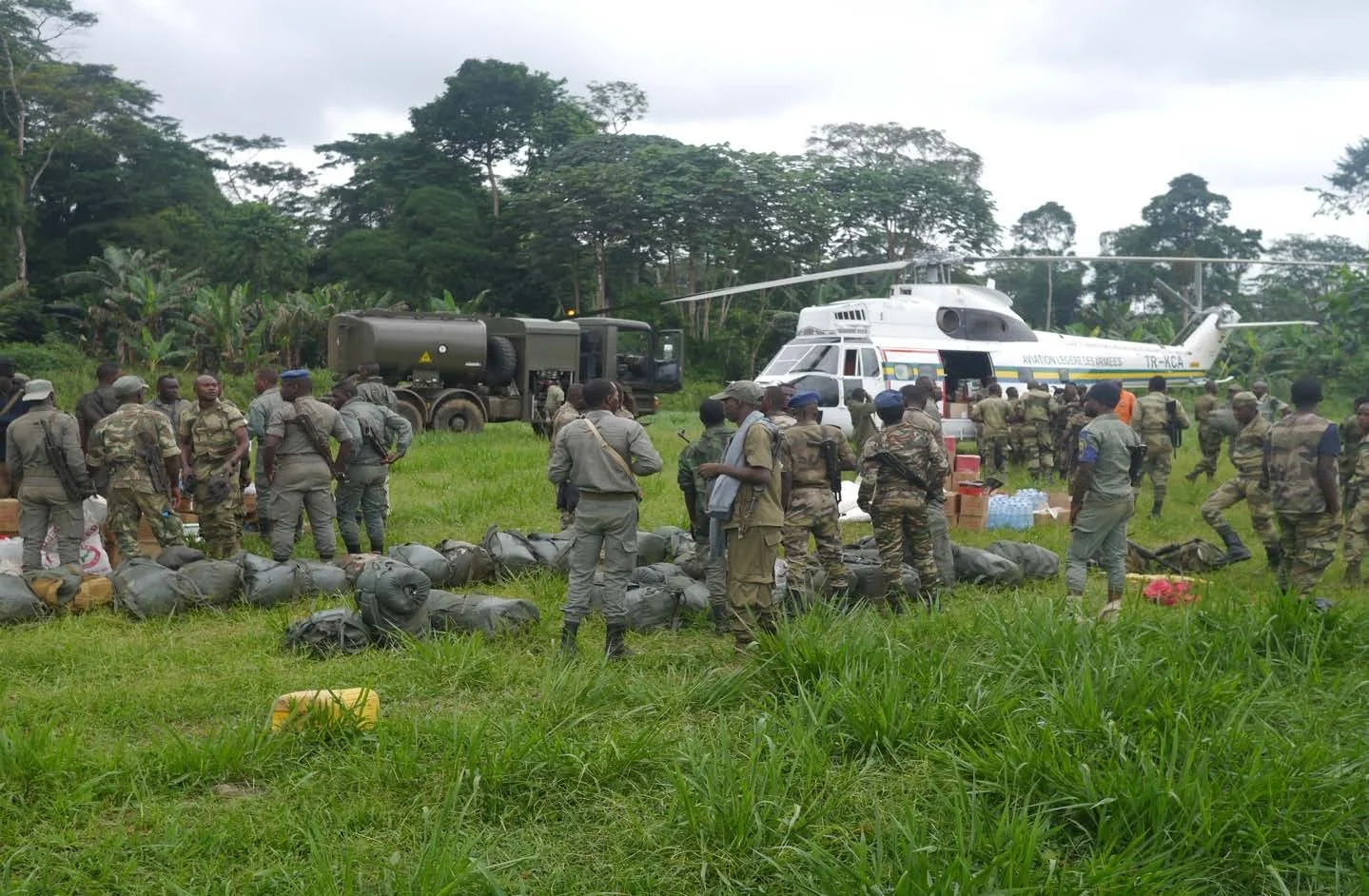
Ecoguards from Gabon's National Parks Agency (ANPN) and troops from Gabon's military prepare for a 30-day anti-poaching deployment in Gabon's remote Minkébé National Park. Credit: Bill Kanapaux/USFWS
Addressing Critical Gaps
Three critical gaps must be addressed to convert isolated successes into a permanent, functioning protection system for Minkebe National Park.
Strengthening the Operational System—Minkebe's Command Center and Operations Room require significant upgrading and park-wide communications. Rapid Response capacity must be reinforced through additional ranger training, equipment, and satellite communications. Reliable access to all sectors of the national park and the ability to react swiftly to trafficking incidents are foundational. Without them, intelligence and surveillance gains cannot be translated into successful interdictions.
Consolidating Surveillance and Evidence-Gathering—Building on the initial camera grid deployment, dedicated surveillance teams and expanded covert camera trap networks, including next-generation satellite trail cameras along border trails, are needed to systematically document trafficking activity across the full extent of the park's vulnerable northern boundary. This must be paired with deepened intelligence-sharing with Conservation Justice to strengthen investigations and prosecutions beyond the few arrests achieved to date.
Deploying Targeted Tactical Patrols—Stopping long-running ivory trafficking routes running from Cameroon into Gabon is critical. We have already mapped primary poacher trails on the ground and independently confirmed by Minkébé's SMART patrol data. These routes must now be permanently manned by Minkébé rangers to close known incursion points and disrupt trafficking at its most active, evidence-confirmed trails rather than responding reactively after incursions have already occurred.
Project Importance
The GC Minkebe Protection Project is critical to stopping the Gabon Elephant Poaching Crisis, a direct result of unhindered poaching and trafficking across the border from Cameroon’s sophisticated trafficking networks. By disrupting this corridor with intensive law enforcement and park ranger teams, we will cut off the critical supply route feeding the broader ivory trade.
Global Conservation's MOU with Minkébé National Park and ANPN provides the basis for long-term elephant protection in Gabon's largest national park, and timely deployment of our Global Park Defense and Community Protection programs is critical. Building on over a decade of wildlife surveys led by Oliver Fankem, rapid assessments and fieldwork will deliver updated elephant presence, distribution, and corridor data across the TRIDOM landscape—vital science enabling adaptive management into the future.
Beyond elephants, this work strengthens Minkébé ranger capacity and judicial and enforcement institutions and protects the wider forest ecosystem and species sharing elephants' range, a foundation for community and wildlife security that will outlast the project itself.
High Potential for Success

The suggested activities in this proposal are not a novel approach. Rather, it is the application of a well-established, evidence-based protection model—GC's Global Park Defense and Community Protection program operational in 22 countries.
Fighting International Wildlife Trafficking (IWT), principally for elephant ivory, has been previously identified and applied across other conservation landscapes throughout the TRIDOM. Lessons learned from similar approaches and efforts suggest that this suite of activities, applied together over time, can meaningfully diminish IWT and strengthen elephant protection within Minkebe and its wider periphery.
SMART (Spatial Monitoring and Reporting Tool) and Erath Ranger, which underpins this project's patrols and is close to real-time team coordination and communication, are used in over several protected areas worldwide. In Thailand's Huai Kha Khaeng and Thungyai Naresuan Wildlife Sanctuaries, SMART-based patrolling produced a measurable decrease in poaching pressure, prompting national scale-up.
In Uganda's Queen Elizabeth Protected Area, SMART-data-driven patrol allocation increased detection of poaching by up to 250% without additional ranger numbers. Directly concentrating new patrols on trafficking trails has already been discussed with Minkebe staff, including the conservator, during the GC-Minkebe coordination meeting held in Oyem in July 2026. Also, a close look at old Minkébé's SMART data shows a pattern that was reinforced by Gabon's national elephant survey (Laguardia et al., 2021), confirming ongoing poaching pressure in the Minkebe border zone.
This proposal builds on lessons from Global Conservation's parallel work in Cameroon's Dja and Ngoyla region, where comparable law enforcement, community engagement, and surveillance activities are already being tested along the same transboundary landscape, one increasingly critical to addressing IWT, yet historically under-resourced. While that work operates independently across the border, its early results directly inform the design of activities proposed here for Minkébé. Beyond Central Africa, comparable precedents include La Amistad International Park (Costa Rica–Panama), demonstrating this model's effectiveness across international borders, and Komodo National Park, Indonesia, where intelligence-led enforcement dismantled a poaching network—closely paralleling Minkébé's own arrest of a major trafficker via Conservation Justice.
While the core model is proven, this project adds one tailored innovation: a community and private-sector intelligence network built around how trafficking actually happens in Minkébé. Unlike most corridors reliant on roads and transit hubs, traffickers here cross the border entirely on foot through the forest interior, making them largely invisible to conventional, road-based enforcement. Indigenous communities and forestry personnel are uniquely positioned as first-hand observers, and a structured referral pathway into Conservation Justice's EAGLE Network adds a forest-level intelligence layer that complements, rather than duplicates, existing investigative work.
The project combines data-driven patrol targeting, technology-assisted surveillance, cross-agency investigation, and frontline community intelligence tailored to Minkébé's unique on-foot trafficking pattern, a scaling and targeted refinement of a proven regional model addressing the specific operational gap conventional approaches miss.
Success in Future Elephant Protection in Minkebe and Dja Rainforest Complex
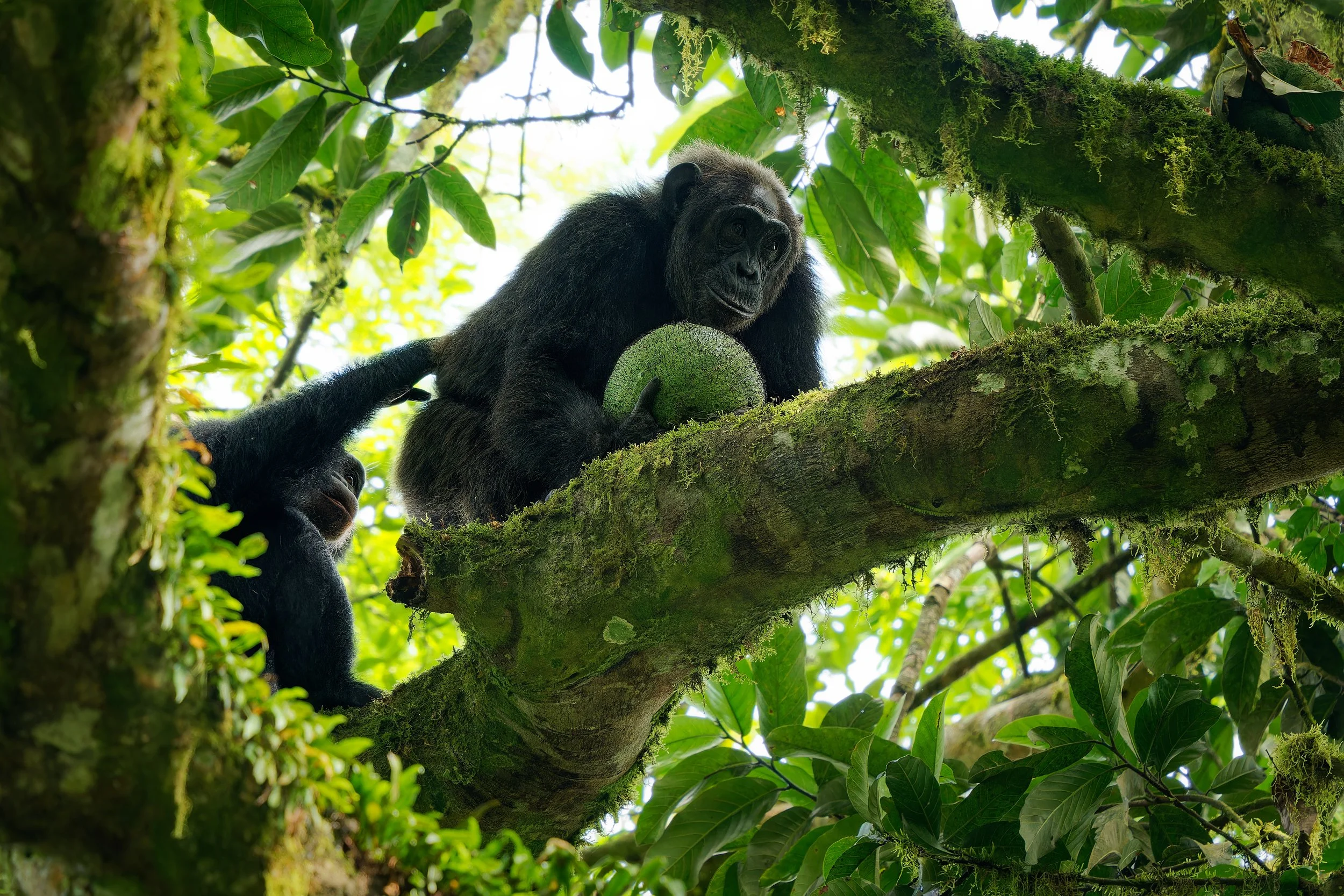
A chimpanzee carries a large fruit in the canopy of a large tree complex.
This proposal extends Global Conservation's five-year, year-three commitment to Minkébé—Gabon's largest national park and part of the country's forest elephant stronghold of over 95,000 individuals—building directly on our existing Dja Rainforest project in southern Cameroon to connect protection across the shared elephant range.
The project aligns directly with the Central Africa Elephant Action Plan's objectives and strengthens ongoing regional protection initiatives already supported by IWTCF/DEFRA, the EU NATURE AFRICA TRIDOM programme, and the Wildcat project—ensuring complementarity rather than duplication across funders working in this landscape.
It also sits within a broader global elephant strategy: GC is expanding protection across Uganda's Murchison Falls, Kidepo Valley, and Queen Elizabeth National Parks; Ruaha National Park in Tanzania; and planning elephant reintroduction into Senegal from Burkina Faso, alongside deployments in Malaysia, Sumatra, and Vietnam—working with leading elephant experts and the proven Global Park Defense system throughout.
Minkébé's approach builds on nearly a decade of population studies and validated tools—SMART patrol targeting, camera surveillance, and Conservation Justice investigations, which have already delivered one major trafficker's arrest. As a flagship within this global portfolio, Minkébé aims to demonstrate replicable, permanent transboundary protection for elephant strongholds across Africa and Asia.